One Simple Way to Recognize a Real Rolex Watch
Why Knowing How to Recognise a Real Rolex Watch Could Save You Thousands
Knowing how to recognise a real Rolex watch matters more today than it ever has, particularly within the growing Australian luxury market. Whether you are in Sydney, Melbourne, or Perth, the secondary market for high-end timepieces has seen a significant surge in activity. This increased demand has, unfortunately, been met with an influx of sophisticated counterfeits that can easily deceive the untrained eye. Here is a quick-reference checklist to answer the question directly:
- Check the seller's reputation and pricing before anything else
- Verify the serial and reference numbers match the watch and any paperwork
- Feel the weight - genuine Rolex watches often weigh between 100 and 200 grams depending on the model
- Inspect the Cyclops lens for about 2.5x date magnification
- Watch the second hand for a smooth 8-tick-per-second sweep, not a single quartz tick
- Look for a plain, unengraved caseback on most modern models
- Check the micro-etched crown logo at 6 o'clock on the sapphire crystal on many post-2002 models
- Treat box and papers as supporting evidence, not proof on their own
- Get a professional inspection for any high-value purchase
The problem is real, and it is getting harder to navigate. Industry estimates often place fake Swiss-watch output at tens of millions of pieces a year, while Rolex production is only a fraction of that. That gap tells you something important: counterfeit Rolexes far outnumber genuine ones in circulation. In Australia, where the passion for horology is strong, collectors must be especially vigilant when dealing with private listings or unverified sources.
It gets more complicated as technology improves. Modern fakes - sometimes called "super fakes" - are no longer the obvious, lightweight imitations of years past. Some use automatic movements, 904L-style steel, and sapphire crystals. Secondary market platforms have publicly noted high rejection rates for fakes and misrepresented watches in recent years. Even experienced buyers can get caught out by a well-made replica that mimics the weight and finish of the real thing. This is why a methodical approach is the safest way to separate a genuine piece from a fake.
Whether you are considering your first pre-owned Rolex or checking a watch you already own, understanding the nuances of the brand's manufacturing standards is essential. At WristWorks, we handle pre-owned luxury watches for clients across Australia with a strong focus on clear process and careful verification. If you want broader background on Rolex as a manufacturer, the official brand history is available at Rolex on Wikipedia. Below, I will walk through the practical checks that matter most when you are working out how to recognise a real Rolex watch.
How to Recognise a Real Rolex Watch Before You Inspect the Watch
Before you study the dial, bracelet or movement, start with the person selling it. This is the simplest and most reliable first filter. In the Australian market, the "buy the seller" mantra is more relevant than ever. Because the fake market is enormous, the easiest counterfeit to avoid is the one you never go to inspect in the first place. If millions of fake Swiss watches are made every year, and genuine Rolex production is only a fraction of that, weak seller screening is where many buyers run into trouble.
Start with the seller, not the watch
A genuine Rolex can still be presented poorly, but fake Rolexes are often sold with the same warning signs. When browsing listings in Australia, be wary of sellers who cannot provide a clear history of the piece. Common red flags include:
- stock photos instead of clear images of the actual watch
- vague descriptions with missing reference details
- pressure to buy quickly or meet in secluded locations
- reluctance to share the serial number or close-up photos
- refusal to meet at a watch specialist for a joint inspection
- no clear business history or contact details
- a price far below normal market levels (if it seems too good to be true, it usually is)
- inconsistent story about ownership or service history
If a seller says, "No time wasters, cash only, today only," that is not confidence. It is a warning sign. We recommend checking how long the seller has been operating and whether their business details are easy to verify. For private sales, the risks are usually higher. If you do proceed, insist on a face-to-face inspection with someone qualified to assess the watch properly. For more detail on process, see More info about how to verify Rolex.
Check the reference, serial and production details carefully
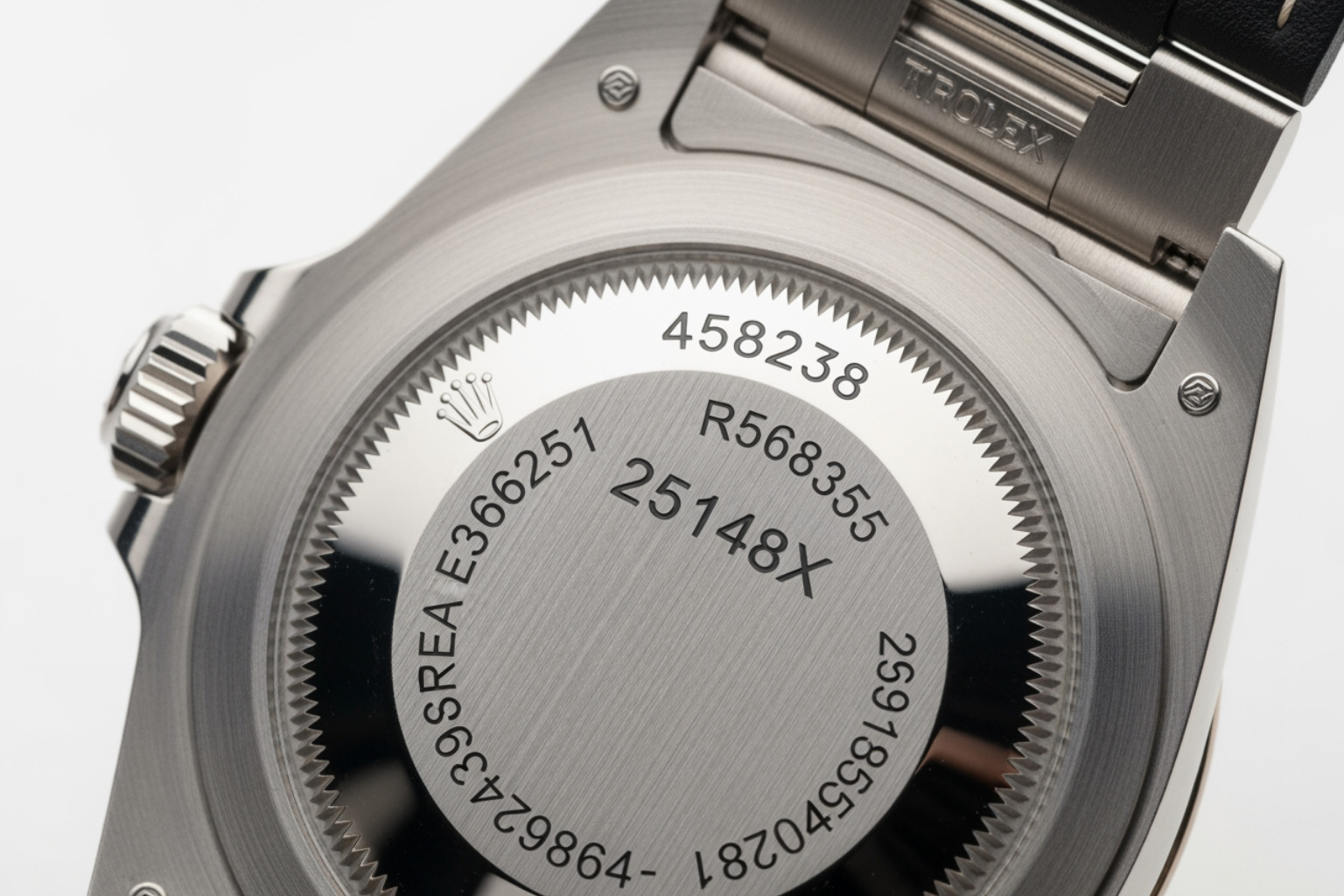
A Rolex should make sense as a complete package. The reference number, serial number, dial layout, bracelet, bezel and production period should all line up perfectly. Counterfeiters often mix and match parts from different eras, which is a major giveaway for those who know what to look for.
Here is the quick guide to serial locations:
- Pre-2005 models commonly have the serial engraved between the lugs at 6 o'clock and the reference between the lugs at 12 o'clock. This requires removing the bracelet to see.
- Around 2005 to 2008, Rolex began moving serials onto the inner rehaut (the metal ring between the dial and the crystal).
- Post-2008 modern models usually show the serial on the rehaut rather than between the lugs, making it much easier to check.
- After 2010, Rolex serials became randomised alphanumeric strings, moving away from the older system where the first letter indicated the year of production.
What to look for in the engraving is the quality of the labour. Rolex uses diamond cutters to achieve crisp, clean and precise lettering. There should be consistent depth and spacing with no fuzzy edges, dot-matrix look or acid-etched softness. Alignment must match the model and era perfectly. Also check whether the serial appears online across multiple watches. A quick exact-match Google search using quotation marks can sometimes reveal reused counterfeit serials. Most importantly, the serial and reference must match the watch in front of you. If the number points to a Datejust but the watch is built like a Submariner, walk away immediately.
How to Recognise a Real Rolex Watch by Its Build, Dial and Movement
| Checkpoint | Genuine Rolex | Common fake signs |
|---|---|---|
| Weight | Usually substantial, often 100 to 200 grams depending on model | Too light, poorly balanced |
| Cyclops lens | About 2.5x date magnification | Weak magnification, off-centre date |
| Caseback | Plain and solid on most modern models | Display back or random engravings |
| Seconds hand | Smooth 8-tick-per-second sweep | One-second quartz tick or uneven motion |
| Bezel | Precise clicks, little to no play | Loose, gritty, rattly action |
| Dial print | Sharp, even, perfectly aligned | Soft text, spacing errors, messy markers |
Check the weight, balance and overall feel
A genuine Rolex feels dense, solid and balanced. Rolex uses high-grade materials including Oystersteel (904L stainless steel), 18ct gold and platinum. This weight is hard to fake consistently because cheaper alloys simply do not have the same density. When you hold a real Rolex, the quality of the metal should be apparent in its lustre and heft.
As a rule:
- genuine Rolex watches typically weigh at least 100 grams
- many steel sports models sit in the 150 to 170 gram range
- some larger or precious-metal pieces exceed 200 grams
- a genuine stainless steel Submariner is commonly around 155 grams
- many cheap fake Submariners come in around 120 to 130 grams
That said, weight alone is no longer enough. Some better counterfeits use tungsten inserts or other tricks to mimic heft. So pay attention to the whole feel: does the bracelet feel solid rather than hollow? Do the links articulate smoothly without catching? Does the clasp close with a clean, mechanical click? A real Rolex usually feels refined and purposeful. A fake often feels a bit tinny, awkward or slightly off. Sometimes the clue is not dramatic; it is just the sense that the watch is trying too hard to look the part without the engineering to back it up.
Inspect the dial, hands, Cyclops lens and caseback
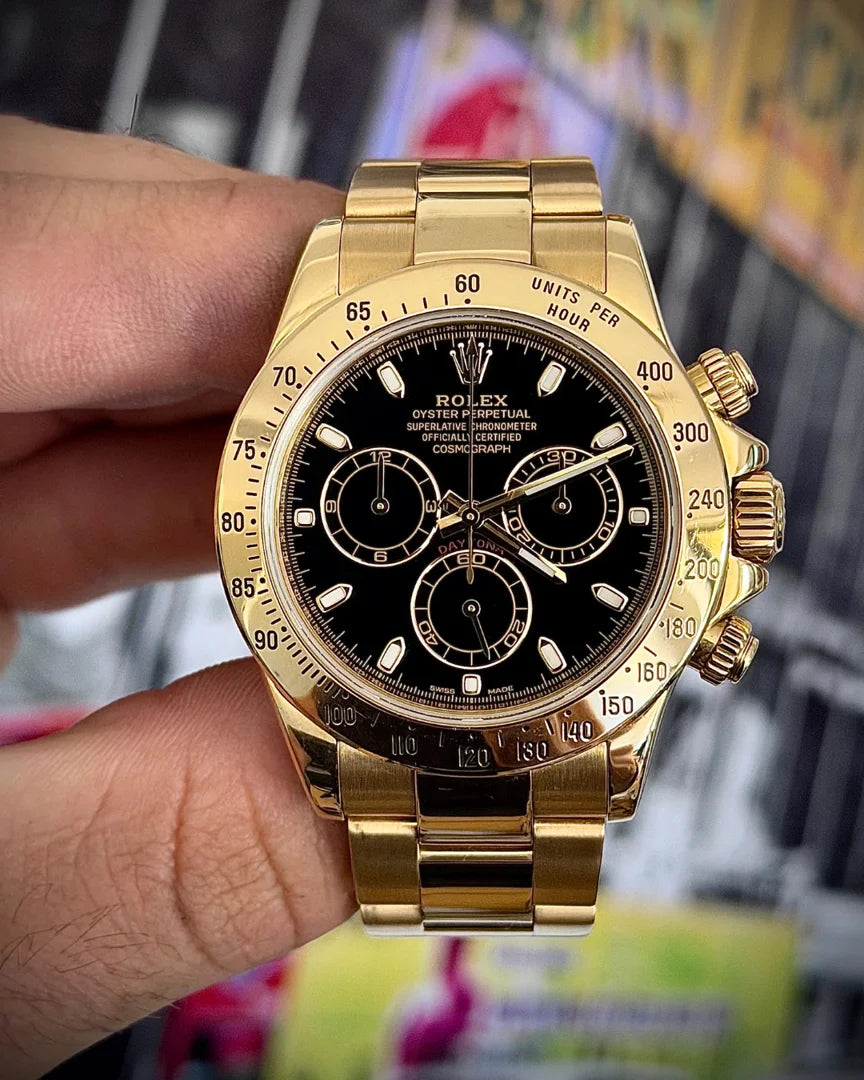
The dial is where Rolex quality becomes very obvious under close inspection. Rolex spends an incredible amount of time on dial production, ensuring every element is perfect. Look for razor-sharp text and perfect spacing between letters. The hour markers should be neatly applied with no visible glue or misalignment. On a genuine Rolex, the date under the Cyclops lens should appear enlarged by about 2.5 times. It should be centred and easy to read. On many fakes, the magnification is weaker, making the date look small and flat.
Modern Rolex crystals are sapphire, and many post-2002 models include a tiny etched crown at 6 o'clock on the crystal. It is subtle and hard to see without the right angle and light. If it is huge and obvious, that is not a good sign. Now check the caseback. Most modern Rolex watches have a plain, solid metal caseback with no display window and no decorative engraving. There are a few exceptions in Rolex history, such as the new Daytona 126506, but for everyday pre-owned buying, a clear caseback is usually a major red flag. For a broader visual checklist, see More info about Rolex watch checks.
Look at the second-hand sweep, movement clues and bezel action
Most Rolex watches use automatic mechanical movements, not quartz. The famous sweep is not perfectly continuous, but it moves at 8 ticks per second, which creates a smooth gliding look. This is achieved through high-frequency oscillators that are a hallmark of Rolex engineering. What that means in practice is that a genuine Rolex second hand should not jump once per second like a quartz watch. It should move smoothly with tiny rapid steps and should not visibly stutter or hesitate.
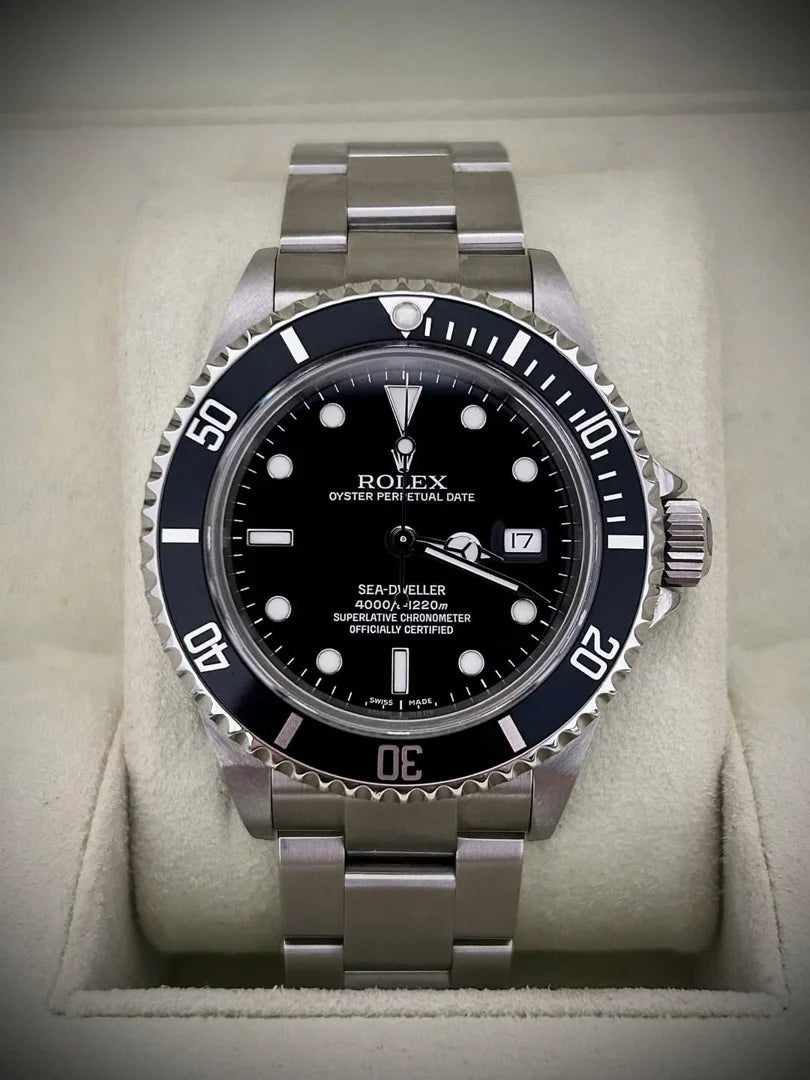
If the watch has a rotating bezel, test that too. A Submariner-style diver bezel should have 120 firm clicks and feel deliberate and precise. There should be little or no back play. A GMT bezel should rotate differently according to the model, but still feel controlled and high quality. Also inspect the rehaut engraving on modern models. The repeating ROLEX text should be aligned and neatly finished. Sloppy or uneven rehaut work is often a giveaway of a lesser factory. If anything still feels uncertain, that is usually a sign to pause rather than press ahead. On expensive watches, careful checking matters more than speed.
What Papers, Provenance and Professional Checks Can Confirm
Documents help, but they do not settle the question on their own. Counterfeiters now copy cards, boxes, tags and even convincing ownership bundles. In the Australian market, a "full set" is highly prized, but it must be scrutinised just as closely as the watch itself.
Use papers and provenance as supporting proof, not the only proof
Good supporting material includes the original card with a matching serial, the purchase receipt, and service records. What matters is consistency. A modern watch should not come with paperwork that belongs to a different production period. A card should match the watch details exactly, and the service history should make sense over time. But remember: forged cards exist, and a "full set" does not automatically mean the watch is genuine. We always tell buyers to trust the watch first, then the documents. If you want to go deeper, these guides help:
- More info about Rolex watch verification
- More info about how to tell if Rolex watch is real
- More info about verifying Rolex
For a neutral reference on Rolex serials, production and model history, the broader brand overview at Rolex on Wikipedia can also be useful as background reading.
Know when a professional inspection is the safest option
If you are buying a high-value Rolex, dealing with a private seller, or looking at a watch that seems right but still leaves questions, this is the point where outside inspection makes sense. This is especially true with modern super fakes or watches with mixed genuine and non-genuine parts. A general jeweller may spot a low-end fake quickly, but higher-end replicas can require case opening, movement inspection and specialist tools. That is often the only way to confirm what is really inside the case.
For buyers in Perth and across Australia, the safest path is usually dealing with a business that handles the process carefully. At WristWorks, our primary service is the outright purchase of luxury watches. We provide a direct and professional way for owners to sell their timepieces without the risks of the private market. While we also offer a secondary consignment service for those who prefer to wait for a specific price, our focus is on providing a straightforward and transparent buying experience. This ensures that every watch we handle is thoroughly vetted before it ever reaches a new owner.
If you are starting your search or looking to sell, our guide to Pre-owned Rolex Australia is a good next step. We focus on making luxury watch trading more transparent and easier to navigate online. If you want help assessing a Rolex, comparing a listing, or finding a pre-owned piece with confidence, you can Contact us, browse our pre-owned Rolex guide, explore our full collection, submit a watch enquiry, or view our watches.