How to Authenticate Rolex in 5 Simple Steps
Why Knowing How to Verify a Rolex Matters Before You Buy
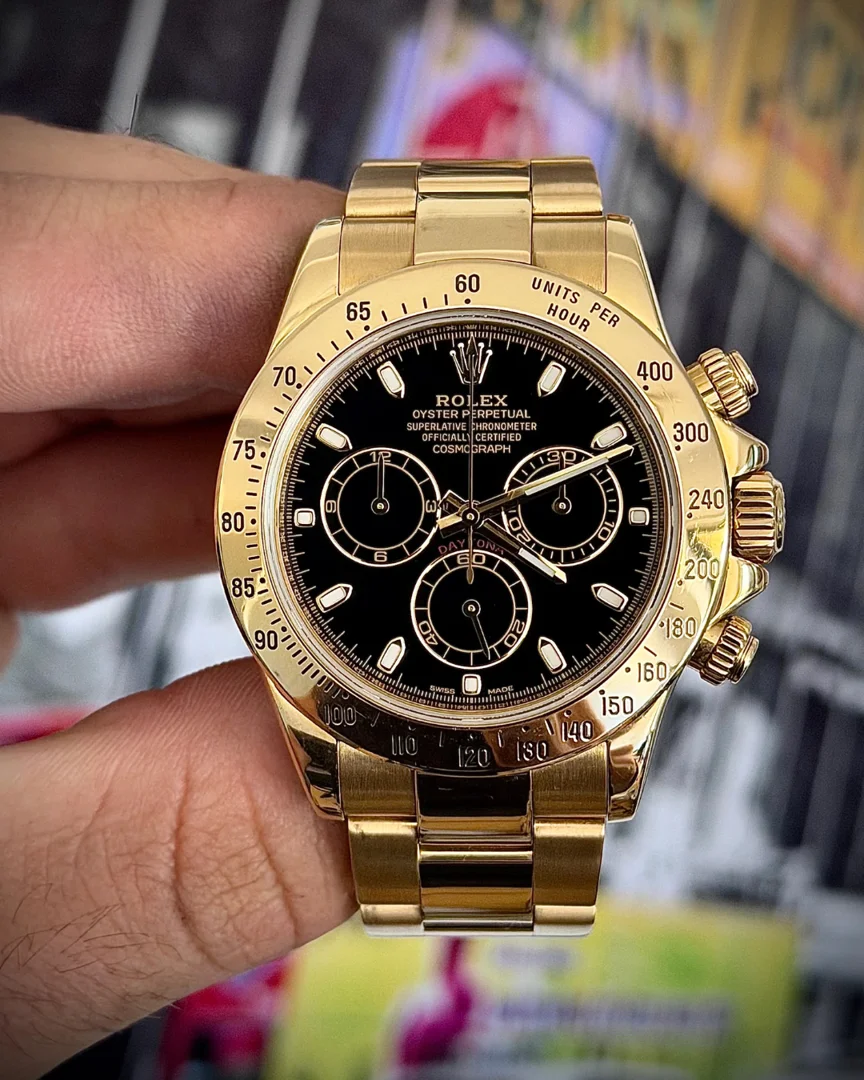
To quickly verify Rolex watches, check these five key indicators:
- Weight and second hand movement — genuine models weigh around 155g and sweep smoothly at 8 ticks per second
- Cyclops lens — must magnify the date exactly 2.5x, not 1.5x as seen on most fakes
- Serial and model numbers — laser-engraved cleanly between the lugs or on the rehaut (post-2005)
- Case, crown, and bracelet finishing — solid construction, precise edges, and a smooth-winding crown
- Movement internals — in-house calibre with a blue Parachrom hairspring and silent rotor operation
Rolex is the most counterfeited luxury watch brand in the world. A study by one watch trading platform found that nearly 27% of Rolexes submitted for inspection were rejected due to concerns regarding their genuineness. With high-quality "super fakes" now capable of fooling even experienced buyers at a glance, the stakes for getting it wrong have never been higher. For someone buying pre-owned — whether through a private seller, an online marketplace, or a reseller — the risk is real. Counterfeiters no longer just copy the look. They copy serial numbers, replicate dial printing, and source movements that mimic the sweep of a genuine Rolex. The difference between a real and fake watch is often measured in fractions of a millimetre.
That gap between what looks right and what is right is exactly why a structured approach to verification matters. When you are investing thousands of dollars into a timepiece, you are not just buying a status symbol; you are buying a piece of horological history that should hold its value for decades. Failing to recognise the subtle signs of a replica can lead to significant financial loss. This is why we prioritise education and transparency in every transaction we handle.
I'm Brad Purdy, founder of WristWorks, and having built a pre-owned luxury watch business from the ground up in Australia — including learning the hard way after being scammed early on — I've made it standard practice to open, test, and verify every watch before it changes hands. This guide is designed to help you verify Rolex watches with confidence. In the sections below, I'll walk you through a practical five-step process that covers everything from weight and dial details to movement internals and official certification. Our primary focus at WristWorks is the outright purchase of your luxury watches, providing a secure and efficient way to liquidate your assets without the uncertainty of the private market.
How to Verify a Rolex: A Technical 5-Step Guide
When we look at a timepiece, we aren't just looking for a logo; we are looking for the result of over a century of Swiss manufacturing standards. As of May 2026, counterfeiters have become incredibly skilled at mimicking the "first look," but they almost always fail when it comes to material science and precision engineering. To How to Verify a Rolex: A Comprehensive Guide - Watchdaydate.com, you need to move past the surface. Genuine Rolex watches use 904L stainless steel (Oystersteel), which is denser and more corrosion-resistant than the 316L steel found in most other watches and replicas. This material holds a higher polish and provides a specific "heft" that fakes lack.
Before we dive into the steps, here is a quick reference table of what to look for when you How To Spot Fake Rolex:
| Feature | Genuine Rolex | Common Counterfeit |
|---|---|---|
| Second Hand | Smooth sweep (8 ticks per second) | Jerky or "ticking" (1 tick per second) |
| Cyclops Lens | 2.5x magnification; centred | 1.5x magnification; off-centre |
| Materials | 904L Steel, 18k Gold, Platinum | 316L Steel, Gold plating |
| Serial Number | Deep, precise laser or diamond cut | Shallow, sandy, or etched look |
| Caseback | Solid, smooth metal (mostly) | Clear glass or engraved |
Step 1: Assess Weight and the Sweeping Second Hand
The "first handshake" with a watch tells you a lot. Because Rolex uses solid 904L Oystersteel and precious metals like 18k gold or 950 platinum, the watch should feel substantial. For example, a modern steel Submariner Date typically weighs around 155 grams. Counterfeits often use lighter alloys, frequently weighing in at only 110 to 120 grams. This weight difference is often the first red flag for seasoned collectors. The density of 904L steel is unique; it contains higher levels of chromium, molybdenum, nickel, and copper, which not only makes it harder but also gives it a distinct lustre when polished.
Next, observe the second hand. While it looks like it glides, it actually beats at 28,800 vibrations per hour (vph). This equates to 8 micro-ticks per second, creating a smooth sweeping motion. If the hand ticks once per second, it’s a quartz movement—a dead giveaway for a fake (with the rare exception of vintage Oysterquartz models). If the sweep looks "stuttery," it likely houses a low-quality mechanical movement. You can learn more about these tactile checks in our guide on How To Tell If Rolex Watch Is Real.
Step 2: Inspect the Cyclops Lens and Dial Precision
The Cyclops lens is the magnifying bubble over the date window. On a genuine Rolex, this lens provides exactly 2.5x magnification, making the date jump out and fill the window. Fakes often use a 1.5x lens, making the date look small and difficult to read. Furthermore, a real Cyclops has a distinct anti-reflective coating that creates a crisp view. If the date looks flat or lacks magnification, the watch is likely a replica.
The dial itself is a masterpiece. Rolex uses rubber pads and paint-filled metal templates to create 3D depth in their printing. Under a 10x loupe, the text should be sharp with no bleeding or smudging. Look for the laser-etched coronet (LEC)—a tiny Rolex crown etched into the sapphire crystal at the 6 o'clock position. Introduced around 2002, it is made of thousands of tiny dots at different heights and is nearly invisible to the naked eye. Our Rolex Watch Verification resources detail how these micro-features are the hardest for counterfeiters to replicate. The LEC is often positioned slightly off-centre on fakes, or the dots are too large and easily visible.
Step 3: Check Serial Numbers to Verify Rolex
Every Rolex has a unique identity. To verify Rolex watches properly, you must locate the serial and model numbers. On older models, these are engraved between the lugs (the serial at 6 o'clock and the model reference at 12 o'clock), requiring the bracelet to be removed. Since 2005, Rolex began engraving the serial number on the "rehaut"—the inner metal ring between the dial and the crystal. This engraving should align perfectly with the minute markers.
According to the Rolex Verification Guide — Is Your Rolex Real? | WatchScanning, modern serial numbers (post-2010) are randomized alphanumerics. The engraving should be "clean"—cut with a diamond-tipped tool or precise laser. If the numbers look "sandy" or shallow, as if they were etched with acid, it’s a major red flag. Always cross-reference these numbers with the official paperwork or databases to ensure the production timeline matches the watch's features. A common mistake for counterfeiters is using a serial number that corresponds to a different model or production year.
Step 4: Examine the Case, Crown, and Bracelet Finishing
Rolex finishing is world-class. When you run your finger along the edges of the case or bracelet, they should feel smooth, not sharp or "unfinished." The winding crown is another area of focus. Most modern Rolexes use either the Twinlock or Triplock system to ensure water resistance. When you unscrew the crown, the action should feel "buttery" and smooth. If it feels gritty, like "stirring a cup of sand," the internals are likely inferior. The Triplock system features an extra rubber O-ring gasket that is visible when the crown is fully unscrewed.
The bracelet should have zero "wiggle" where it meets the case. The links should be solid, and the clasp should close with a satisfying, high-pressure click. Features like the Glidelock adjustment or Easylink extension should operate perfectly, providing precise adjustments without the need for tools. Finally, almost all Rolex casebacks are smooth, polished metal. If you see a clear "exhibition" caseback showing the movement, it is almost certainly a fake, as Rolex rarely produces these outside of very specific modern models like the 1908 or the Platinum Daytona.
Step 5: Review the Movement and Internal Components
The movement is the ultimate test. A genuine modern Rolex houses a calibre such as the 3135 or the newer 3235. These are entirely in-house movements featuring proprietary parts like the blue Parachrom hairspring, which is highly resistant to magnetic fields and shocks. Newer movements also feature the skeletonized Chronergy escapement, which improves efficiency by 15%.
When inspecting the movement, look for the signature red anodized reversing wheels and the "Rolex Geneva" engravings. The rotor (the part that spins to wind the watch) should be virtually silent. If you shake the watch and hear a loud "clunking" or spinning sound, it’s likely a cheap imitation. Professional verification often involves checking the beat rate on a timing machine; a genuine Rolex should be incredibly accurate, often within -2/+2 seconds per day. For those in Australia, seeking Professional Watch Verification Services Australia | Buy Your Watch is a wise move for high-value pieces. Our team at WristWorks specialises in these deep technical inspections to ensure every watch we buy outright meets the highest standards of genuineness.
Why Expert Verification is Essential to Verify Rolex
While DIY checks are a great first line of defence, the rise of "super-clones" means that some fakes now require a watchmaker’s eye to detect. At WristWorks, we specialise in making luxury watch trading transparent and secure for Australians. Based in Perth, we operate as a 100% online dealer, which allows us to focus on value rather than flashy boutique overheads. Our primary business model is the outright purchase of luxury watches. We prefer this method because it offers the seller immediate certainty and a streamlined exit from their investment. We own 95% of our inventory outright, meaning we have already done the hard work of verifying every piece before it ever reaches our site.
While we do offer consignment options as a secondary service for specific high-value or rare pieces, our outright sale model remains the most popular choice for those looking for a professional and efficient transaction. By following this guide on How To Verify Rolex, you are already ahead of most buyers. However, when you're ready to make a move in the market, we are here to ensure that every transaction is built on a foundation of integrity and radical transparency. We handle the entire process, from the initial valuation to the final transfer of funds, ensuring you receive a fair market price for your timepiece without the risks associated with private sales.
Explore our collection of verified luxury watches at WristWorks