Is Your Rolex Real? A Step-by-Step Authentication Checklist
Why Knowing How to Authenticate a Rolex Matters Before You Buy

How to authenticate a Rolex comes down to a handful of key checks you can do before calling in a professional:
- Feel the weight: genuine Rolex watches are heavy and well-balanced due to 904L Oystersteel or precious metals
- Check the second hand: it should sweep smoothly and silently, not tick
- Inspect the serial and model numbers: engravings should be sharp and precise, not dotted or blurry
- Examine the Cyclops lens: it magnifies the date exactly 2.5x with no distortion
- Look at the caseback: it should be solid metal with no transparent window (on most models)
- Check the dial: fonts, spacing, and the Rolex crown logo should be perfectly crisp
- Verify the documentation: a 2020 or later warranty card includes an NFC tag and UV-reactive barcode
The pre-owned Rolex market is estimated to be worth around $20 billion globally. That kind of value attracts counterfeiters — an estimated 30 to 50 million fake Rolex watches enter circulation every year, compared to roughly one million genuine pieces produced annually. The odds are not in a buyer's favour when shopping without a solid process.
Modern fakes have become increasingly difficult to detect. So-called "super clones" are now manufactured with tolerances tight enough to fool even experienced buyers at a glance. Spotting one requires more than a quick look — it takes a systematic approach.
I'm Brad Purdy, founder of WristWorks, and learning how to authenticate a Rolex properly came from hard experience — including a $13,000 loss early in my career that reshaped how I approach every transaction. In this guide, I'll walk you through exactly what to look for, step by step.
Spotting a Genuine Rolex: Physical and Technical Indicators

When we look at a Rolex, we aren't just looking at a watch; we are looking at a masterclass in material science. Rolex is the only watchmaker in the world that uses 904L stainless steel exclusively across its entire range—a material they brand as "Oystersteel." While most luxury brands use 316L steel, 904L is harder, more corrosion-resistant, and takes a higher polish. If a watch feels "tinny" or the steel looks slightly dull or greyish, it’s a major red flag.
The same applies to precious metals. Rolex operates its own foundry to ensure its 18k gold and 950 platinum meet exact standards. This results in a distinct "heft." A genuine gold Day-Date or a platinum Daytona will feel significantly heavier than a steel counterpart. If you pick up a "gold" Rolex and it feels light, it is likely a gold-plated lead or steel fake.
A hallmark of Rolex design is the solid caseback. With very few exceptions—such as the Rolex Cosmograph 60th Anniversary Platinum Daytona ref. m126506-0001 or the 1908 Collection—Rolex watches do not have transparent exhibition casebacks. Furthermore, they are almost always plain. If you see engravings on the back (other than specific Sea-Dweller models or Milgauss), you should proceed with extreme caution. For a deeper dive into these physical tells, you can read our guide on how to spot fake rolex watches.
Examining the Movement and Sweep for Expected Characteristics
The heart of the watch is where most counterfeiters fail. A Rolex movement is a marvel of precision, typically beating at 28,800 vibrations per hour (vph). This high frequency creates the signature "smooth sweep" of the second hand.
When we observe a genuine Rolex, the second hand should move effortlessly around the dial. It actually "ticks" eight times per second, but to the naked eye, it looks like a continuous glide. If the hand "stutters" or ticks once per second, it’s a quartz movement—something Rolex has rarely produced since the Cellini lineup and the Oysterquartz era.
Another auditory check is the sound. Because of the high-quality mechanical parts, a real Rolex is remarkably quiet. If you hold the watch to your ear and hear a loud "tick-tick-tick," it’s likely a cheap imitation. Genuine movements are also finished with a level of cleanliness that fakes cannot match. Even "super clones" often leave tiny burrs on the gears or dust on the bridges that are visible under a loupe.
Materials, Weight, and Case Construction
Rolex cases are engineered for waterproofness, a legacy that began with the first Oyster case in 1926. This construction relies on a screw-down crown and caseback. We always check the "feel" of the crown when unscrewing it. It should be buttery smooth.
Rolex uses specific crown systems:
- Twinlock: Identified by a single bar or two dots under the Rolex crown logo.
- Triplock: Found on divers like the Submariner, identified by three dots.
The materials used also dictate the model's identity. "Rolesor" is the Rolex term for a combination of Oystersteel and gold, while "Rolesium" refers to the mix of steel and platinum found in the Yacht-Master. Counterfeiters often use "PVD" coating to mimic these metals, but this coating eventually wears off at the edges of the links—something that never happens with solid 18k gold.
Dial Details and the Cyclops Lens
The "Cyclops" lens is perhaps the most famous Rolex feature. This magnifying glass sits over the date window at 3 o'clock. On a genuine watch, it magnifies the date by exactly 2.5 times. The date should fill the entire bubble and be perfectly centered. Many fakes only achieve 1.5x magnification, making the date look small and hard to read.
On the dial itself, look for:
- The Font: Rolex uses a proprietary typeface. The letters should be sharp, opaque, and slightly raised (three-dimensional).
- The Lume: Modern Rolexes use "Chromalight," which glows a distinct electric blue. Older models use green Super-LumiNova.
- The Rehaut: This is the inner rim between the dial and the crystal. Since roughly 2005, Rolex has engraved "ROLEX ROLEX ROLEX" around this ring, with the serial number at the 6 o'clock position.
- Micro-etched Crown: On models made after 2002, there is a tiny Rolex crown etched into the sapphire crystal at 6 o'clock. It is so small it is almost invisible to the naked eye; you’ll need a loupe and a specific light angle to find it.
Checking Serial and Model Numbers for Correctness
One of the most reliable ways of how to authenticate a Rolex is by examining the engravings between the lugs. You will need to remove the bracelet to see these on older models.
| Feature | Genuine Rolex Engraving | Counterfeit Engraving |
|---|---|---|
| Method | Diamond-cut or laser-etched | Acid-etched or stamped |
| Appearance | Sharp, fine lines that reflect light | Dotted, blurry, or "sandy" texture |
| Depth | Deep and consistent | Shallow and uneven |
| Alignment | Perfectly centered | Often slightly crooked |
The model (reference) number is located at 12 o'clock, while the serial number is at 6 o'clock. On modern watches (post-2008), the serial is exclusively on the rehaut. We always cross-reference these numbers with known databases to ensure the production year matches the watch's features.
Professional Confirmation and Documentation

While physical checks are vital, the "full set"—the watch, box, and papers—provides an extra layer of security. However, counterfeiters are now faking paperwork just as aggressively as the watches themselves. Understanding what genuine documentation looks like is essential for any collector in Australia. You can learn more about why this matters in our article on the rolex-full-set.
Official Documentation and Reputable Sellers
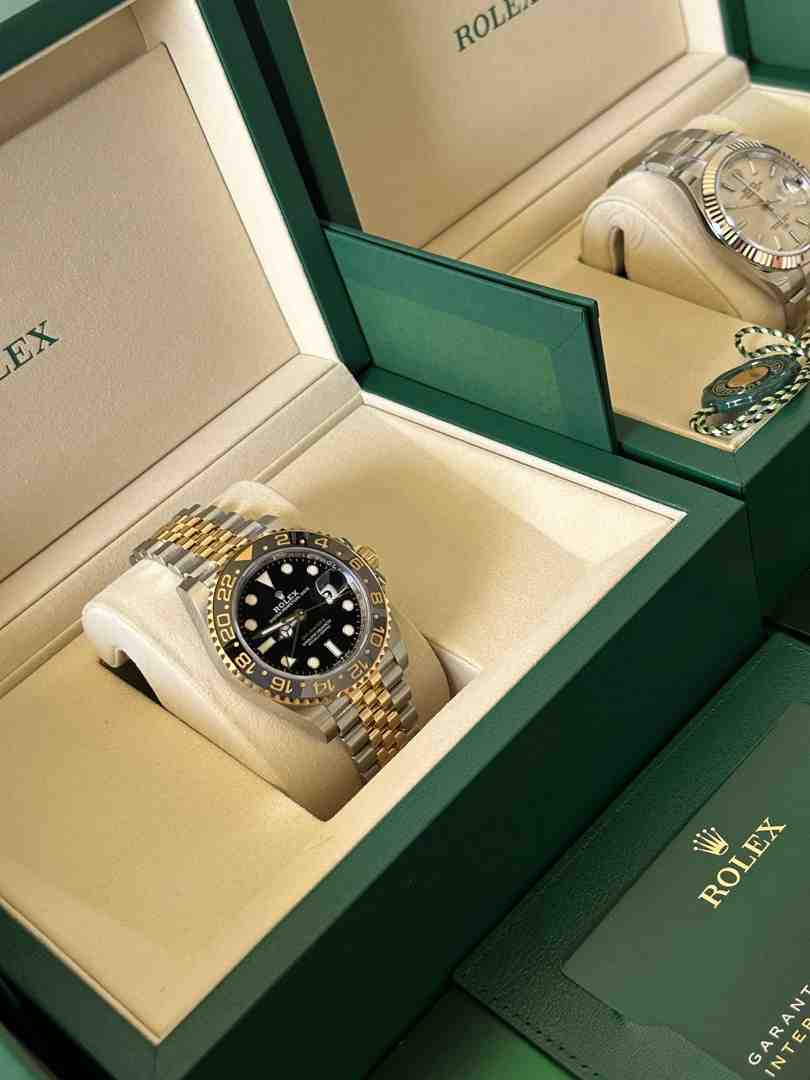
The 2020 Rolex warranty card was a massive leap in security. These cards feature a dark green gradient and gold trim. They contain an embedded NFC chip; if you tap the card with a modern smartphone, it should automatically open a link to the official Rolex website.
Furthermore, under a UV (black) light, a genuine 2020 card will reveal a hidden "moiré" pattern and a barcode. The gold foil on the card is also tactile—you can feel the texture of the serial number with your fingernail.
At WristWorks, we operate on a model of radical transparency. We believe the best way to buy is from a dealer who owns their inventory and stands by every piece. Whether you are looking for a pre-owned-rolex-australia or a specific vintage-rolex-review, we ensure every watch is verified against these rigorous standards.
If you're unsure about a watch you currently own or are looking to sell, the safest route is to deal with a specialist who understands the Australian market. We provide a straightforward guide-to-buying-rolex watches to help you navigate the process safely.
If you are ready to move a piece from your collection, we specialise in direct-to-dealer purchases. This is the most secure and efficient way to sell-pre-owned-rolex without the risks associated with private marketplaces. You can start by getting a watch valuation through our secure online portal.
Authenticating a Rolex is about more than just avoiding a loss; it’s about respecting the craftsmanship of one of the world’s most iconic brands. By following this checklist, you can move forward with confidence, knowing your investment is the real deal.
Explore our current Rolex collection or contact us for a valuation today.