How to Spot a Fake Rolex and Compare It with a Real One
If you are buying or selling a Rolex in Australia, it pays to slow down and inspect the watch properly. A direct-to-dealer sale through an established specialist gives you a clearer process than an unverified private transaction, while consignment remains a secondary option.
Key Takeaways
- Start with the dial, date lens, case, bracelet, and engraving rather than relying on photographs alone.
- A serial number, digital card, or online listing supports an inspection but does not prove the watch is genuine.
- A qualified watchmaker can inspect the movement when visual checks leave questions unanswered.
- When buying or selling in Australia, work with an established dealer that can explain its inspection process.
- For a practical checklist, read our Rolex Verification Guide 2026.
Working out whether a Rolex is genuine takes far more than a casual glance at the dial or listening for a ticking second hand. Modern counterfeit manufacturing has advanced significantly, closely duplicating the outward look of popular Rolex models, including their physical weight, 904L steel finish, ceramic bezels, and complex internal movement components. Understanding these physical nuances ensures buyers and collectors can make well-informed decisions when navigating the pre-owned market.
A genuine Rolex is verified through multiple matching physical checks: precise dial typography and rehaut engraving, correct case and bracelet construction, a properly functioning mechanical calibre, and documentation that matches the watch. For high-grade counterfeits, detailed movement inspection by a qualified watchmaker provides the definitive test.
Counterfeit watches remain common in pre-owned channels, so photographs, serial numbers, and digital cards should be treated as supporting information only. A proper in-hand inspection gives you a far clearer basis for deciding whether to proceed.
I am Brad Purdy, founder of WristWorks. After a fraudulent deal early in my watch-trading career, I developed a careful physical inspection process for every Rolex we assess. Each watch we handle is opened and checked before sale so clients can make an informed decision.
Technical Checks That Help Identify a Fake Rolex
To tell a fake Rolex from a real one, look beyond the first impression. Basic counterfeits may have light cases, ticking quartz movements, or hollow bracelet links, while more convincing replicas can imitate steel finishes, ceramic bezels, and weight. That is why a careful technical inspection matters.
A stronger check starts with fundamental metallurgical construction. Rolex manufactures stainless steel timepieces using 904L Oystersteel, a specialised alloy high in chromium, nickel, molybdenum, and copper. This blend provides superior corrosion resistance and a distinctive warm lustre compared with standard 316L stainless steel.
Dial, Cyclops Lens, and Rehaut Details
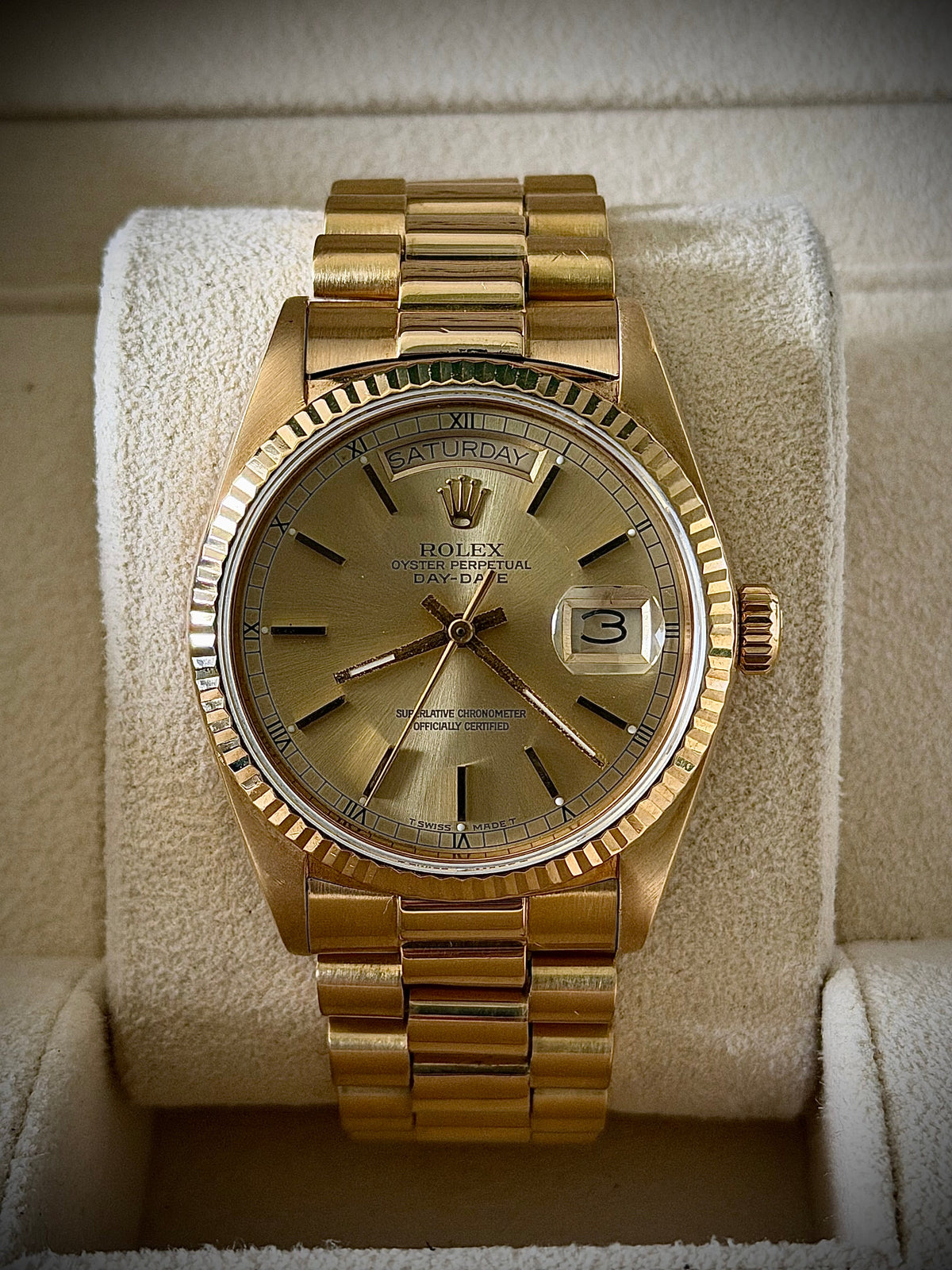
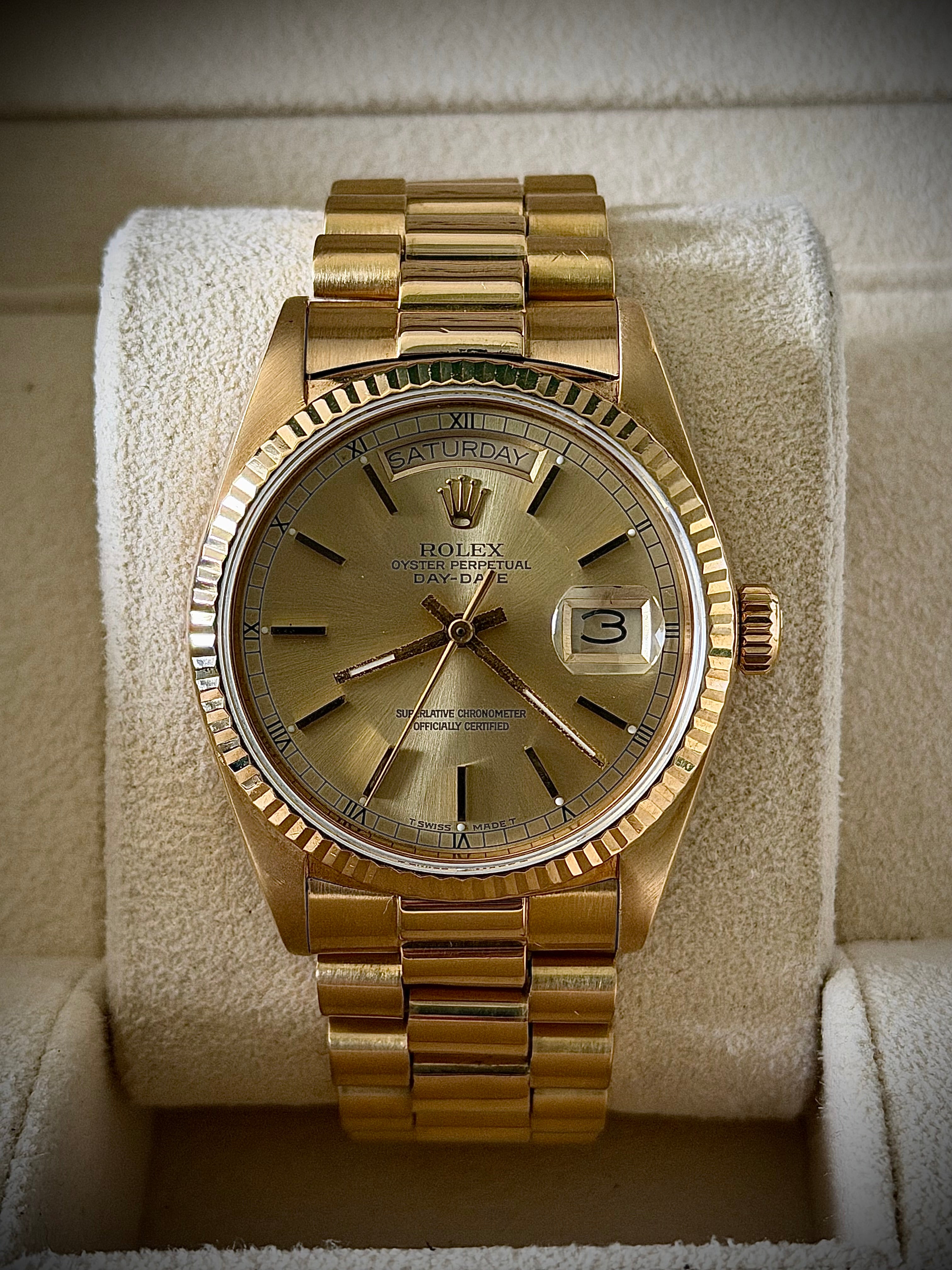
The dial of a genuine Rolex shows exacting precision. Under a 10x jeweller's loupe, dial printing displays clean, sharp text edges with slight raised relief beneath protective lacquer.
Key visual dial anomalies on fake models include:
- Misaligned hour markers or uneven Chromalight luminous paint application across indices.
- Incorrect font kerning or unexpected formatting in depth rating lines.
- Colour bleeding where two shades meet on dual-tone ceramic bezels.
- Rough, unpolished hand edges lacking a smooth, bevelled finish.
The date window Cyclops lens is another clear physical indicator. A genuine Cyclops lens delivers true 2.5x magnification so the date fills the aperture cleanly. Replicas often show weaker magnification or lack dual-sided anti-reflective coating, creating obvious glare.
On newer models, inspect the inner flange, known as the rehaut. The word 'ROLEX' is laser engraved around the ring, and the lettering should align cleanly with the minute markers. The serial number should sit neatly at the six o'clock position. Misaligned lettering or shallow etching can be warning signs.
Movement Architecture, Microstella System, and Sweep Rate
Opening the solid caseback is often the clearest way to tell a fake Rolex from a real one. Genuine mechanical Rolex movements produce a smooth second-hand sweep, but this check should be carried out by a qualified watchmaker to avoid damaging the watch.
The key engineering signature is the free-sprung balance wheel regulated by the proprietary Rolex Microstella system. Genuine balance wheels feature four small star-shaped gold adjustment screws on the inner rim. Counterfeit movements often use index-regulated balances with a traditional adjustment lever, which becomes obvious under magnification. Furthermore, modern Rolex movements feature blue Parachrom hairsprings and Paraflex shock absorbers that counterfeits struggle to clone accurately.
On a diagnostic Timegrapher, genuine movements show high amplitude, tight daily rate consistency, and low beat error. Learn more in our Fake Rolex Daytona Identification Guide.
Materials, Weight, and Bracelet Construction Differences
Handling a genuine watch reveals high structural density and smooth bracelet articulation. Genuine bracelets use solid metal links attached by threaded screws, whereas fakes may use press-fit pins.
| Rolex Model Type | Material Standard | Typical Weight Range | Common Counterfeit Difference |
|---|---|---|---|
| Submariner Date | 904L Oystersteel | 158g - 165g | Often noticeably lighter |
| Platinum Daytona | 950 Platinum | About 280g | Often substantially lighter |
| GMT-Master II on Jubilee bracelet | 904L Oystersteel | 154g - 160g | Often noticeably lighter |
| Datejust 41 in steel and white gold | 904L Steel and 18k White Gold | 152g - 158g | Often noticeably lighter |
Precious metal models can show larger weight differences. Bracelet clasps should engage with a firm click, while Glidelock or Easylink mechanisms should move smoothly. Ceramic Cerachrom bezels have engraved numerals with a clean metallic lustre.
Serial Numbers, Laser-Etched Crowns, and NFC Card Scams
Modern security features offer additional verification checkpoints:
- Laser-Etched Crown (LEC): Embedded into the sapphire crystal at 6 o'clock, this micro-etched coronet is made of tiny laser dots placed at varying depths. Counterfeits often etch this on the crystal surface, making it look chalky and oversized.
- Serial Number Typography: Modern models use randomised alphanumeric serial numbers on the rehaut. Genuine markings are laser engraved with fine, even depth, while fake serials may look crudely stamped.
- NFC Card Spoofing: Counterfeiters include fake NFC cards leading to spoofed websites displaying fraudulent confirmation pages. Genuine cards connect exclusively to official dealer network systems.
Read our guide on How to Recognize a Real Rolex Watch.
What to Do If You Suspect a Counterfeit and How to Buy Safely
Discovering potential red flags on a luxury watch requires calm, calculated steps. Private peer-to-peer sales, unvetted online marketplaces, and public auction platforms present significant risks of fraudulent transactions, undisclosed damage, missing documentation, or counterfeit replacement parts. Choosing a direct-to-dealer outright purchase or sale remains the safest, most transparent way to acquire or trade a luxury watch, sparing buyers the uncertainties of unverified secondary markets.
Watch out for 'Franken watches', which combine genuine dials or bezels with replica cases and cloned movements. These assemblies can pass a basic visual check, so compare the components closely and use our How to Spot a Fake Rolex guide when you need a second reference point.
Buying a Pre-Owned Rolex More Safely
Navigating the pre-owned market safely comes down to working with established, transparent businesses. Private peer-to-peer sales leave buyers completely vulnerable to sophisticated scams, lack formal recourse, and offer zero safety nets. In contrast, working directly with a trusted dealer provides clear accountability and total clarity.
At WristWorks, based in Perth, Western Australia, we address these marketplace risks through a dedicated direct-to-dealer outright business framework:
- Direct Inventory Ownership: 95% of our watch inventory is owned directly by WristWorks, while all consigned pieces are physically held in our secure possession. Consignment is available as an optional secondary service, but direct-to-dealer outright purchase is always our primary recommended path for maximum security, speed, and simplicity.
- Direct Payment Handling: All transactions are processed directly through secure bank transfer channels with complete GST invoice transparency.
- Comprehensive Physical Verification: Every single timepiece undergoes caseback removal, detailed internal movement inspection under magnification, and serial verification matching against registry databases.
Buying or selling outright through an established dealer gives you a clearer and more secure way to handle a fine timepiece in Australia.
Next Steps When a Rolex Raises Concerns
If you suspect you have bought a fake timepiece from an unverified seller or private platform, take immediate protective measures. Request an official physical inspection report from a qualified watchmaker. If the seller refuses a resolution, contact your banking institution to initiate a payment dispute based on fraud documentation.
When maintaining your collection, care recommendations vary depending on the era of the timepiece: light polishing is perfectly acceptable for restoring high-polish finishes on modern 904L Oystersteel references, whereas vintage timepieces should generally avoid polishing to preserve original case geometry, bevels, and historical patina.
For further help with buying or trading securely, speak with an established Australian watch specialist before committing to a transaction.
Whether you want to acquire your next timepiece or sell an existing watch directly to a trusted Australian specialist, WristWorks provides simple, transparent, and direct-to-dealer transactions. Explore our current curated collection at WristWorks Watches or submit a direct valuation request to deal with our team today.