More Than Just Time: Do Expensive Watches Really Keep Their Worth?
Beyond the Hype - A Look at Luxury Watch Value
Do luxury watches hold their value? Yes, many do, with some models even appreciating over time. Unlike a new car that depreciates instantly, certain timepieces have proven to be resilient assets. The pre-owned luxury watch market has, on the whole, outperformed many traditional investment classes over the last decade, though performance varies significantly between brands and models. This isn't to say watches are a guaranteed path to profit; they are subject to market fluctuations just like any other asset.
This guide cuts through the hype to give you the facts. We’ll explore which watches hold their value, why some appreciate, and what to look for when buying or selling in Australia’s growing secondary market.
What Factors Determine if Luxury Watches Hold Their Value?
The question of whether luxury watches hold their value is complex, but understanding the contributing factors can help you make informed decisions. A luxury watch can be more than a time-telling device; it can be a tangible asset. But what makes one watch a good investment while another depreciates? It’s a combination of brand power, scarcity, physical condition, and market trends.
The "holy trinity" of watchmaking – Patek Philippe, Audemars Piguet, and Vacheron Constantin – are consistently cited for their exceptional quality and strong value retention. These brands represent the pinnacle of horological artistry, combining centuries of tradition with groundbreaking innovation. However, even within these esteemed brands, specific models and market conditions play a crucial role. For those exploring the investment potential, understanding these nuances is key.
The Power of the Brand and Model Scarcity
When we talk about do luxury watches hold their value, brand reputation is the cornerstone. Renowned brands like Rolex, Patek Philippe, and Audemars Piguet have a long-standing history of producing high-quality, desirable watches. Their reputation is built on decades of meticulous craftsmanship and innovative design. They aren't just selling watches; they're selling heritage and a promise of enduring excellence. While these names often dominate the conversation, other brands like A. Lange & Söhne and Jaeger-LeCoultre also command immense respect and demonstrate strong value retention due to their technical prowess and commitment to quality.
However, brand power alone isn't enough. Scarcity plays a massive role. When demand outstrips supply, prices on the secondary market can soar above retail. This is common with limited editions, discontinued models, and certain highly desirable stainless steel sports watches. Models like the Rolex Submariner or Patek Philippe Nautilus consistently demonstrate strong appreciation due to their iconic status and controlled production. This combination of a prestigious brand and genuine scarcity is a powerful formula for value retention.
Condition, Completeness, and Provenance
Even the most prestigious brand and rarest model won't hold its value if it hasn't been cared for. The physical condition of a luxury watch is paramount. Watches that are well-maintained, with original parts and minimal wear, tend to retain or even increase in value. A documented history of regular servicing also provides reassurance of its mechanical integrity and is highly favoured by discerning collectors.

Polishing is a nuanced topic: light, professional polishing can be acceptable for modern watches to restore their look. However, for vintage pieces, over-polishing can wear down the case and destroy its original lines, significantly reducing its value. Many collectors prefer vintage watches to remain unpolished, which you can learn more about in The Hidden Costs of Vintage Watch Restoration.
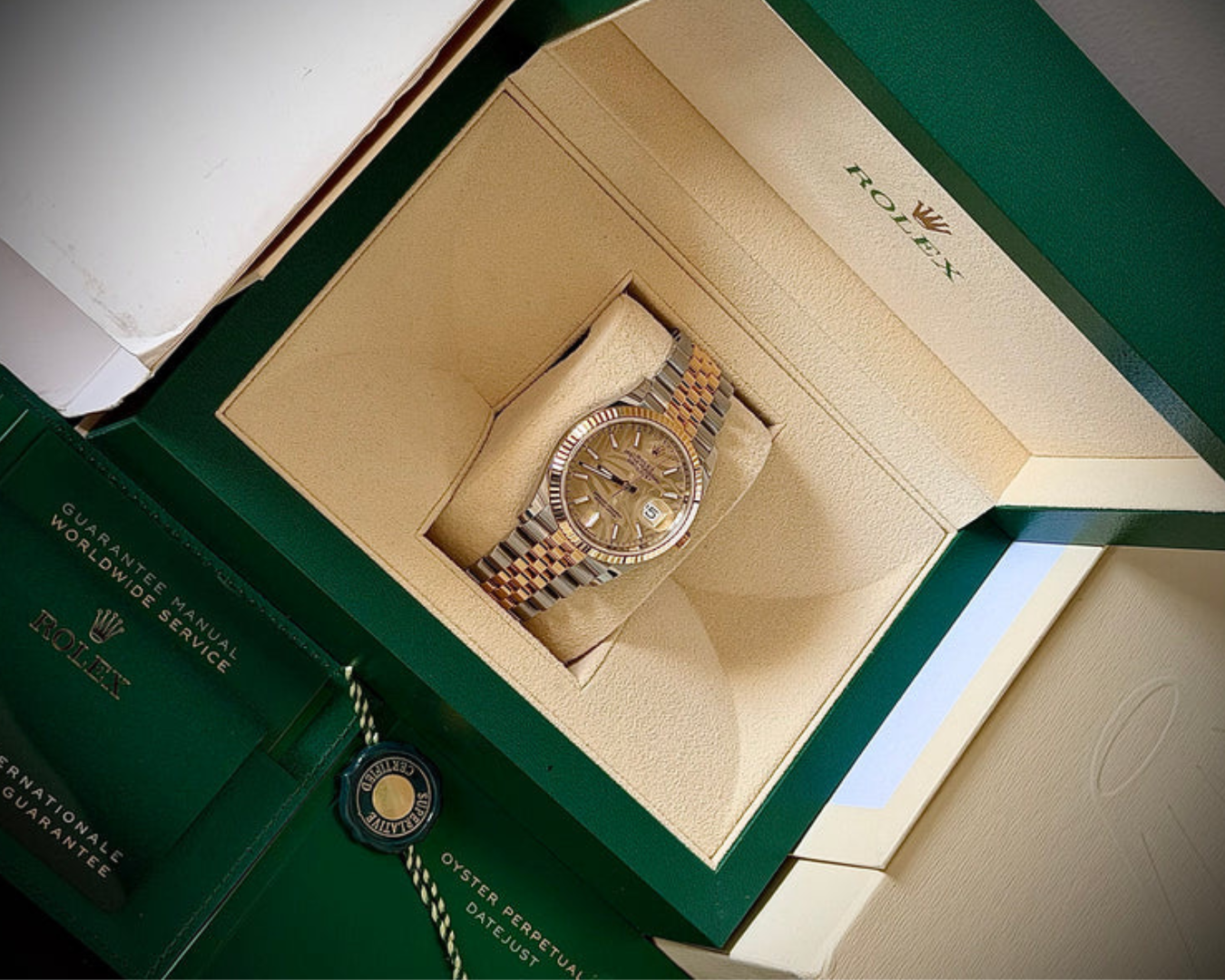
Beyond the watch itself, having the original box and papers—often called a “full set”—is crucial. These items help confirm the watch’s origins and provide a complete history, significantly increasing its resale value. Finally, a watch’s provenance, or ownership history, can add a unique layer of value, especially if it was owned by a notable figure or has a compelling story.
Understanding Market Dynamics and Historical Trends
The luxury watch market is dynamic and influenced by wider economic trends. Historically, the "quartz crisis" of the 1980s paradoxically solidified the value of traditional mechanical watches as collectable assets. More recently, the market saw an unsustainable boom between 2018 and early 2023. During this time, prices for top models from Rolex, Patek Philippe, and Audemars Piguet rose at an annual rate of 20%, according to a report from Boston Consulting Group.
This was followed by a market correction, where many of those same watches saw values soften. This wasn't a crash, but a return to more stable, long-term growth. Current trends show that while steel sports watches remain popular, there is growing interest in dress watches and vintage-inspired designs. The influence of social media and online collector communities cannot be overstated; they can create overnight demand for specific models, influencing market dynamics in real time.
So, do luxury watches hold their value as an investment?
The answer is yes, many do, making them a compelling alternative investment. However, it’s crucial to approach this with a clear understanding of the risks. A key distinction lies between buying new and pre-owned. A new watch often depreciates the moment it leaves the store, whereas buying pre-owned allows you to bypass this initial drop in value. This is a core argument in The Case for Investing in Pre-Owned Watches.
A long-term view is essential. The market fluctuates, but over time, well-chosen pieces from top brands have proven to be solid assets. The best approach combines diligent research with a genuine passion for the watch itself. It’s an investment you can enjoy wearing.
Making an Informed Decision in the Australian Market
Navigating Australia’s luxury watch market requires confidence, especially when buying and selling online. The biggest gap in the market isn’t supply—it’s trust. Fears of counterfeits, unclear pricing, and poor service can be daunting. The key is to work with a trusted dealer who prioritises transparency and has a deep understanding of the local and global market.
At WristWorks, our approach is built on making the process simple and secure. We provide transparent information on every timepiece, clear listings, and straightforward communication about value. We specialise in helping collectors and first-time buyers alike navigate the complexities of the pre-owned market with confidence.
Navigating Your First Purchase or Sale
Whether buying or selling, due diligence is the first step. For buyers, this means researching the model you want, understanding its market value, and knowing what a "full set" includes. For sellers, it means getting an honest valuation based on current market data, not guesswork. Private sales can be fraught with challenges, from time-wasting negotiations to the risks associated with payment and shipping.
Choosing a trusted dealer is the most critical decision. In Australia, a reputable online dealer gives you access to a wider, curated selection of fine watches and provides a secure way to sell. A good dealer acts as your partner, offering expert guidance that saves you time and removes uncertainty from the transaction. To learn more about buying safely, read our Complete Guide to Buying Watches Online.
When selling, we offer clear options. Our primary recommendation is an outright sale, which provides a secure, prompt payment and removes the uncertainty of private sales. We acquire 95% of our inventory this way because it's the most efficient and secure method for sellers. Consignment is also available as a useful secondary option, where we handle the entire process for you, from photography and listing to dealing with prospective buyers. Our guides can help you understand How to Sell Your Luxury Watch Without the Guesswork and How to Buy and Sell Watches Like a Pro.
Final Verdict: Do luxury watches hold their value?
After exploring the key factors, the answer is a nuanced yes. While not every watch is a guaranteed investment, the right pieces from top brands, kept in excellent condition, have a strong history of value retention and appreciation over the long term.
We've seen that brand reputation, model scarcity, physical condition, and market trends are the critical elements. Understanding these dynamics is key whether you are driven by passion or investment potential. A luxury watch is a piece of art and engineering that can also be a smart asset. By making informed choices and working with a trusted partner, you can steer the market with confidence. For a deeper dive, see our Modern Guide to Buying, Owning, and Selling Luxury Watches in Australia.
Ready to find your next timepiece?