Don't Get Ticked Off: How to Spot a Fake Rolex
The Counterfeit Rolex Problem Every Buyer Needs to Understand
Knowing how to spot a fake Rolex watch could save you thousands of dollars in a market that is increasingly flooded with high-quality replicas. In Australia, the demand for luxury timepieces has never been higher, but this popularity has also attracted sophisticated counterfeiters who specialise in deceiving even seasoned collectors. Understanding the nuances of Swiss engineering is the first step in protecting your investment.
Here is a comprehensive checklist of the most reliable indicators used by professionals to identify a genuine timepiece:
- The Second Hand Motion: A genuine Rolex movement beats at 28,800 vibrations per hour. This means the second hand sweeps smoothly at 8 tiny ticks per second. It should never jerk or tick once per second like a standard quartz watch.
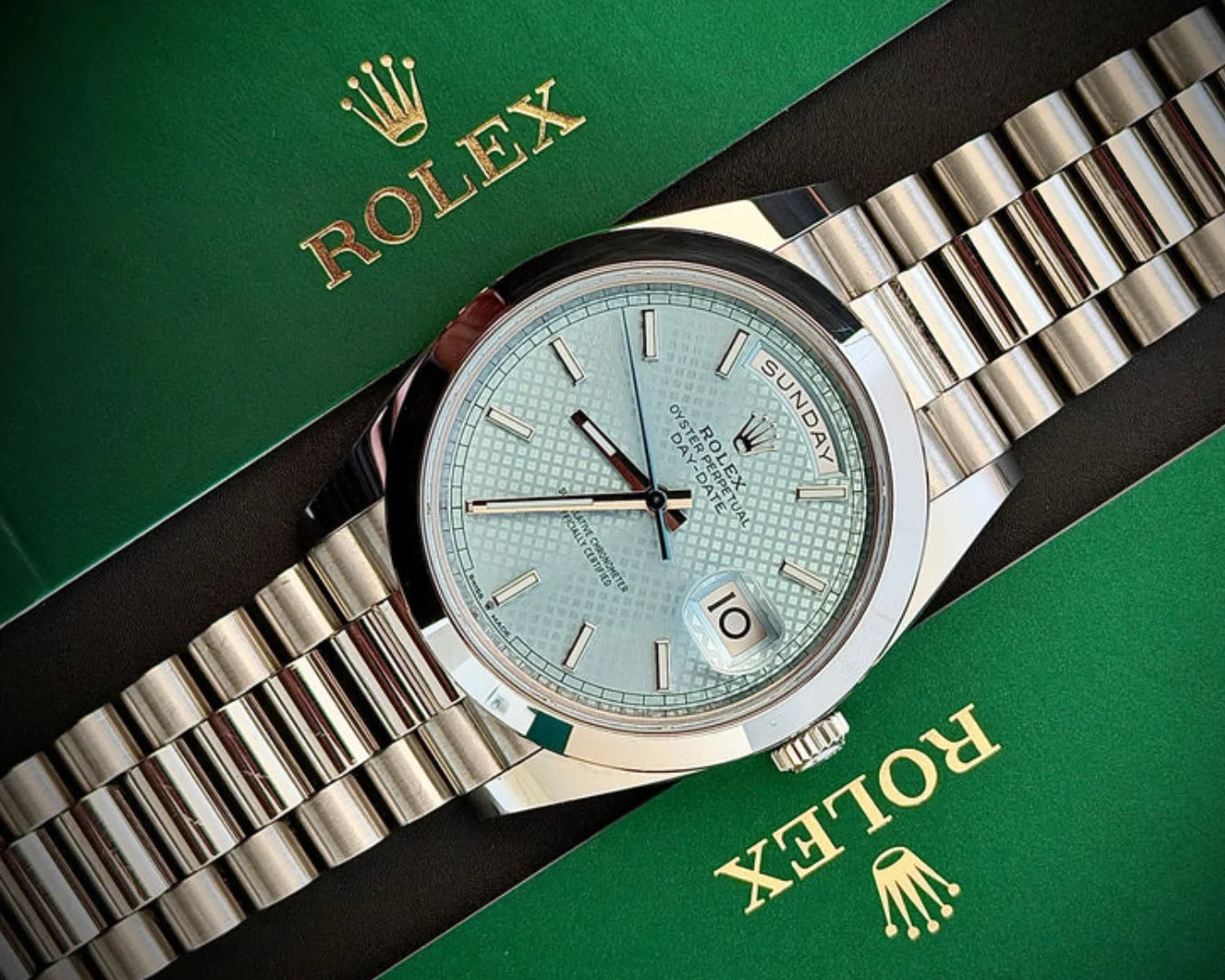
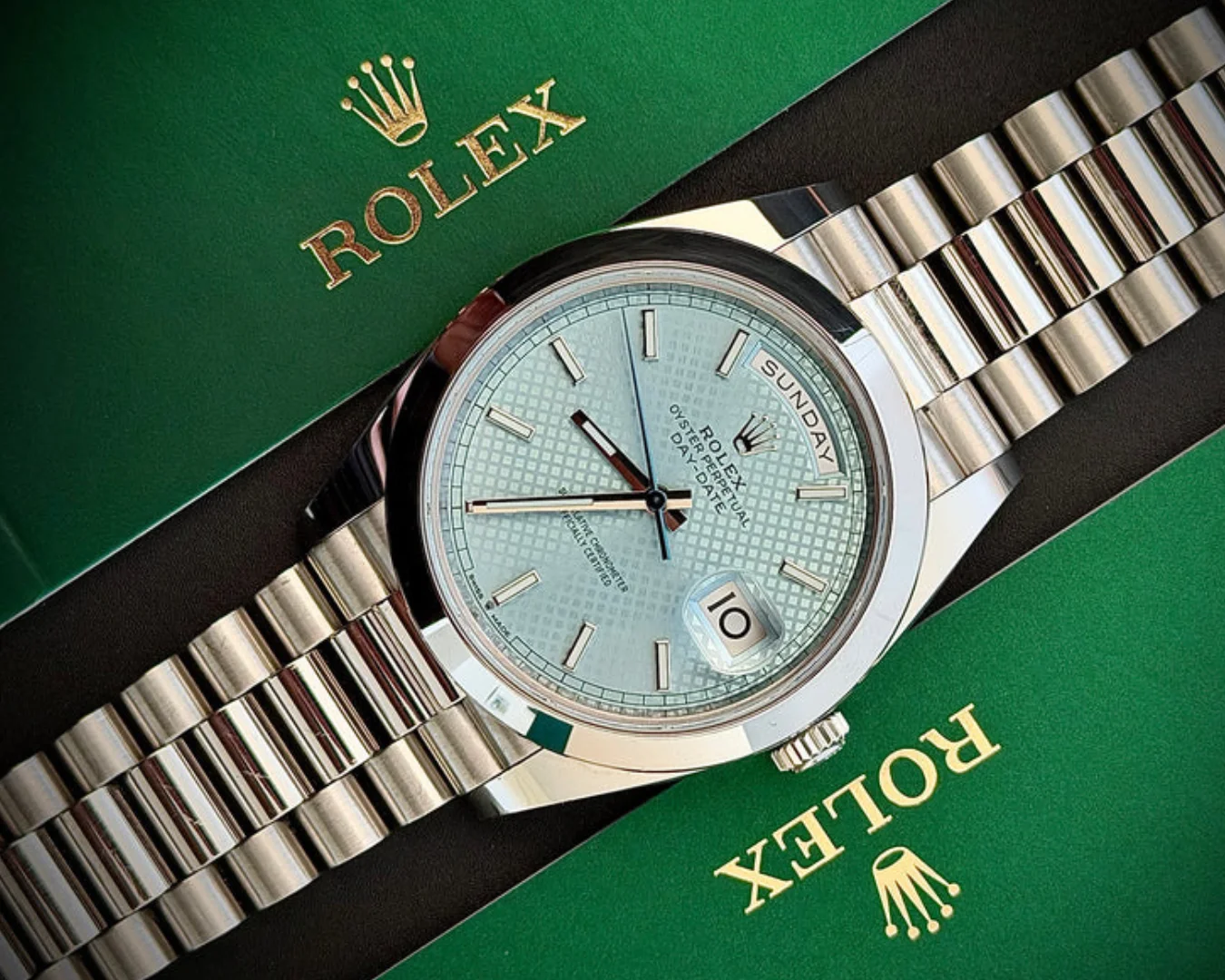
- The Cyclops Magnification: The signature magnifying lens over the date window should enlarge the numerals exactly 2.5 times. On a genuine piece, the date will fill the window and appear crisp, with no distortion or blurring at the edges.
- Precision Engravings: Serial and model number engravings located between the lugs or on the rehaut are laser-sharp. They should reflect light cleanly and appear deeply etched rather than shallow or sandblasted.
- The Caseback Standard: With very few historical exceptions, a Rolex caseback is solid, sterile, and blank. If you see a transparent display back or decorative engravings, it is almost certainly not a genuine modern production.
- The Micro-Etched Coronet: On models produced after 2002, a tiny Rolex crown is etched into the sapphire crystal at the 6 o'clock position. This is so small it often requires a jeweller's loupe to see.
- Material Density: A real Rolex feels substantial and heavy. This is due to the use of 904L Oystersteel or solid precious metals like 18k gold and platinum. Replicas often use lighter 316L steel or lead-filled alloys.
- Dial Typography: The text on the dial must be crisp, perfectly spaced, and free of any smudging. Even under high magnification, the paint should be consistent and the alignment should be flawless.
- The Rehaut Engraving: On post-2008 models, the inner bezel ring (rehaut) repeats "ROLEXROLEXROLEX" with surgical precision. The "R" in Rolex should align perfectly with the 9 o'clock marker, and the "X" should align with the 3 o'clock marker.
Various industry estimates suggest counterfeit Swiss watches are produced in massive volumes each year, often exceeding the total output of the genuine Swiss watch industry. This imbalance shows how large the replica market has become and why a meticulous inspection process is vital for any buyer.
What makes this harder than it used to be is the rise of so-called "super fakes." Counterfeiters now use advanced optical scanning, 3D printing, and precision CNC machining to produce replicas that can look convincing in photos and feel reasonably well-made in the hand. A watch that comes with a box and papers can still be a replica, as these accessories are often easier to forge than the watch itself.
I'm Brad Purdy, founder of WristWorks. Early in my career, I was scammed for $13,000 on a deal that looked perfect on the surface. That experience taught me that there is no substitute for a structured, detail-focused inspection. At WristWorks, we prioritise the outright purchase of luxury watches, which allows us to maintain a curated inventory that we have personally inspected and verified. While we do offer consignment as a secondary service, our primary focus is on direct acquisition to ensure the highest standards for our clients.
Glossary for how to spot a fake Rolex watch:
How to Spot a Fake Rolex Watch: Key Physical Indicators
When we evaluate a timepiece at WristWorks, we look for absolute consistency. Rolex is world-renowned for maintaining incredibly tight manufacturing tolerances. If a watch exhibits even the slightest flaw—a microscopic smudge on the dial, a slightly crooked letter in the "Swiss Made" text, or a gritty feel when turning the winding crown—it is a signal that the piece requires much closer scrutiny.
| Feature | Genuine Rolex | Common Counterfeit Flaw |
|---|---|---|
| Material | 904L Oystersteel, 18k Gold, or Platinum | 316L Steel, Gold plating, or Tungsten |
| Date Window | 2.5x magnification; fills the lens | 1.5x magnification; small or blurry |
| Second Hand | Smooth 8-ticks-per-second sweep | Jerky ticking motion or 1-tick-per-second |
| Caseback | Solid, sterile, and smooth | Engravings or transparent see-through glass |
| Lume | Chromalight (Blue) or Super-LumiNova | Dim, uneven, or quickly fading glow |
One of the first things you will notice is the material quality. Rolex uses 904L Oystersteel, a high-density alloy that is harder and more corrosion-resistant than the 316L steel used by almost every other watchmaker and counterfeit operation. This steel takes a higher polish and has a distinct lustre. If a sports model like a Submariner feels unusually light or the steel has a dull, greyish hue, it is a significant warning sign.
Examining the Cyclops Lens and Dial Details
The Cyclops is the magnifying lens positioned over the date window. On a genuine Rolex, this lens is made of sapphire and provides a powerful 2.5x magnification. The date should appear large, filling the window, and the numerals should be perfectly centred. Many fakes still struggle with this, often using a lens with only 1.5x magnification, which makes the date look small and difficult to read. Furthermore, the Cyclops on a real Rolex features an anti-reflective coating that helps eliminate glare, a detail often omitted on cheaper replicas.
Beyond the date, you must inspect the dial printing with a jeweller's loupe. Real Rolex text is printed using a sophisticated 3D process that results in crisp, raised lettering. Counterfeits often show slight bleeding around the edges of the letters or uneven ink distribution. You can find more info about how to tell if a Rolex watch is real by checking the coronet at the 12 o'clock position. On a genuine watch, this logo is a separate piece of metal that is polished to a mirror finish and applied with perfect symmetry.
Verifying Weight and Material Quality
Weight remains a useful indicator, particularly for precious metal models. Because Rolex uses solid 18k gold and platinum, a genuine Day-Date or Daytona in gold will have a significant "heft" that is nearly impossible to replicate with gold-plated steel or tungsten. A genuine modern Submariner Date (ref. 126610LN) weighs approximately 160 grams. If the watch feels light for its size, it is likely because the internal components and the case itself are made from inferior, less dense materials.
Check the bracelet and clasp assembly as well. Real Rolex bracelets feature solid end links (SEL) that fit against the case with no visible gaps. If you hold the watch sideways and the bracelet droops excessively, it indicates poor construction or extreme wear. You can find more info about how to spot a fake Rolex by looking closely at the clasp; the Rolex crown on the clasp should be embossed, not just etched, and the folding mechanism should operate with a smooth, mechanical click.
Inspecting the Movement and Caseback
The sound of the movement is a classic tell-tale sign. Most Rolex watches are mechanical and self-winding, meaning the second hand moves in a fluid sweep. While it actually ticks 8 times per second, the motion appears smooth to the naked eye. If you hear a distinct "tick-tick-tick" once per second, the watch is powered by a quartz movement, which Rolex has not used in its main collections for decades.
Finally, look at the caseback. Rolex prides itself on the "Oyster" case, which is hermetically sealed. The caseback is always solid metal and features fine fluting around the edges, designed to be opened only by specialised Rolex tools. If you see a clear window showing the movement, or if the caseback is engraved with logos or model numbers, proceed with extreme caution. For further details on deeper checks, see more info about verifying a Rolex.
At WristWorks, we recognise that DIY checks have their limits. This is why we specialise in the outright purchase of watches, allowing us to perform internal movement inspections and pressure tests before any piece is added to our collection. This direct ownership model ensures that we stand behind every watch we sell.
Advanced Features and Professional Verification
As counterfeiters have become more sophisticated, Rolex has introduced increasingly complex features to stay ahead. One of the most effective anti-counterfeiting measures is the laser-etched coronet (LEC). Since 2002, Rolex has used a high-precision laser to etch a microscopic crown logo into the sapphire crystal at the 6 o'clock position. This etching is not on the surface but is actually composed of thousands of tiny bubbles at different depths within the crystal.
How to Spot a Fake Rolex Watch Using Micro-Engravings
Modern Rolex models produced after 2008 also feature the "rehaut" engraving. The rehaut is the inner metal ring located between the dial and the sapphire crystal. On a genuine watch, the word "ROLEX" is engraved with absolute precision around this ring. The alignment is key: the letters should line up perfectly with the minute markers. Furthermore, the watch's unique serial number is engraved on the rehaut at the 6 o'clock position.
When checking these engravings, look for the quality of the finish. Genuine Rolex engravings are clean, deep, and have a reflective quality. Fakes often look like they have been stamped or chemically etched, resulting in a soft, "sandy" appearance. The serial number on the rehaut must also match the paperwork and the engravings found between the lugs exactly.
Checking the Bracelet, Clasp, and Water Resistance
The winding crown is another area where Rolex demonstrates its engineering prowess. Most sports models use the Triplock triple waterproofness system, identified by three tiny dots located below the Rolex coronet on the crown. This system involves multiple O-ring seals to ensure the watch remains watertight even when the crown is unscrewed.
While we never recommend DIY water testing, a genuine Oyster Perpetual is rated to a minimum of 100 metres (330 feet). Counterfeits almost always fail professional pressure tests because they lack the precision machining required to create a true hermetic seal. You can find more info about our guide to buying Rolex to understand why these technical specifications are so difficult for counterfeiters to replicate.
How to Spot a Fake Rolex Watch: Final Verification Steps
The most effective way to ensure you are buying a genuine timepiece is to "buy the seller." While private listings on various marketplaces might seem to offer a bargain, they carry significant risks. If a price is significantly lower than the current market value, it is a major red flag. In the world of luxury watches, if a deal seems too good to be true, it almost certainly is.
A DIY inspection is an excellent way to rule out low-quality replicas, but it may not be enough to identify a high-end "super clone" that uses a genuine-style movement. This is why buying through an established dealer is the preferred route for serious collectors. At WristWorks, we operate an online-first model that focuses on transparency and security.
Our primary service is the outright purchase of luxury watches. By buying watches directly from sellers, we take full ownership of the inventory, which allows us to conduct exhaustive inspections and ensure every piece meets our rigorous standards. Consignment is available as a secondary service for those who prefer it, but our core business is built on the speed and certainty of direct sales. For sellers in Perth and across Australia, this provides a secure and professional way to exit a watch position. If you are looking to upgrade your collection, you can explore our verified collection today. Whether you are buying or selling, focusing on professional standards is the only way to navigate the luxury watch market with confidence.