Is Luxury Watch Consignment Right For You?

What Is Luxury Watch Consignment - and Is It Worth It?
Luxury watch consignment is when you hand your watch to a dealer or specialist who sells it on your behalf, then takes a commission from the final sale price. You keep ownership of the watch until it sells.
Here is a quick summary of how it works:
- You submit your watch for valuation
- A consignment agreement is set with an agreed asking price
- The dealer markets and sells the watch
- You receive the sale proceeds minus the dealer's commission
It can return more than a direct sale in some cases, but it usually takes longer and involves more steps than selling outright to a dealer. For that reason, consignment is best viewed as one selling pathway, not the default choice for every owner.
If you need a fast, straightforward transaction, an outright sale to a trusted dealer is usually the better path. If you have time and want to test the market for a higher return, consignment is worth understanding properly. Whether you are leaning towards consignment or a direct sale, the most practical starting point is to sell your luxury watch through WristWorks, where you can explore both selling options — outright purchase and consignment — and receive a valuation tailored to your timepiece.
Deciding which route to take is not always obvious, and the Australian market has fewer clear options than sellers often expect. The pre-owned watch space here is growing fast, but it is still small by global standards, and the quality of consignment services varies widely.
I'm Brad Purdy, founder of WristWorks, and before building one of Australia's more transparent luxury watch selling services, I spent years in automotive sales and finance learning how trust and margins interact in high-value transactions. In this guide, I'll walk you through what consignment involves, how it compares with a direct sale, and when each option may make sense.
Luxury watch consignment terms at a glance:
The Mechanics of Luxury Watch Consignment
When you choose to consign a timepiece, you enter into a partnership with a dealer. Unlike a direct sale where the transaction is completed in a matter of minutes, consignment is a journey. To understand if this route suits your lifestyle, it helps to look closely at the underlying mechanics of consignment luxury watches explained.
At its core, the consignment model relies on the dealer’s ability to present your watch to a much larger, more targeted audience than you could reach on your own. Instead of listing the watch on public classified sites—where you might deal with lowball offers and security risks—you hand the watch over to a professional.
In Western Australia, security is a paramount concern for collectors. A reputable service will hold your watch in highly secure, off-site storage. For example, our Perth secure watch consignment process ensures that timepieces are protected in specialised secure vaults, fully covered by transit and storage insurance from the moment they enter our care.
The dealer then takes over the heavy lifting: professional photography, listing preparation, digital marketing, and managing enquiries from potential buyers. Throughout this period, the watch remains your legal property. If the watch does not sell within the agreed contract period, it is simply returned to you.
Consignment vs Outright Sales: Why Direct Selling Often Wins
For most collectors, the choice comes down to a fundamental trade-off: do you prefer maximum convenience and immediate financial security, or are you willing to wait for a potentially higher return?
While consignment can indeed yield up to 20% more than a direct trade-in, outright sales remain our primary and most highly recommended method of selling. When you sell directly to a dealer, the deal is closed immediately. There is no waiting for a buyer, no market fluctuations to worry about, and no lingering anxiety over where your watch is stored.
To help you weigh these two options, we have outlined the key differences below:
| Feature | Consignment Service | Outright Sale (Direct-to-Dealer) |
|---|---|---|
| Transaction Speed | Can take weeks or months (average 34 days) | Immediate |
| Financial Security | Payment is deferred until the watch sells | Funds are transferred immediately upon agreement |
| Pricing Control | You set a collaborative reserve price | The dealer offers a fixed buy price |
| Process Effort | Minimal, but requires ongoing communication | None; one-off transaction |
| Risk of Market Shift | High; watch value can fluctuate during listing | None; price is locked in |
As noted in the Deloitte Swiss Watch Industry Study, secondary market dynamics are shifting rapidly in 2026. While some rare references hold their value incredibly well over long periods, more common luxury models can experience price adjustments. When you choose an outright sale, you insulate yourself from these sudden market drops.
For those who value their time and want absolute certainty, selling directly is almost always the superior choice. However, if you are holding a highly desirable reference and are under no time pressure, consignment serves as a useful secondary option. For a deeper analysis of this comparison, you can read more about why outright sales beat consignment or explore our detailed breakdown of consignment vs selling watches.
How a Luxury Watch Consignment Service Works
If you decide that consignment fits your goals, the process typically follows a structured, five-step path to ensure clarity and security for both parties.
First, you submit the details of your timepiece online. This includes the brand, model, reference number, and overall condition. Using real-time market data, we work with you to establish a realistic market value.
Second, we agree on a pricing strategy. This is a collaborative effort. You will establish a "reserve price"—the absolute minimum net return you are willing to accept. The dealer cannot sell the watch below this threshold without your explicit, written permission.
Third, you hand over the watch. All consigned pieces must be held physically by the dealer. This is crucial because serious buyers expect immediate dispatch, and physical inspection is a key part of the sales process.
Fourth, the marketing phase begins. The watch is meticulously cleaned, photographed under professional lighting, and listed across premium sales channels. At WristWorks, we leverage our digital reach to put your watch in front of active collectors across Australia.
Finally, when a buyer is secured and their payment clears, the sale is finalised. The agreed commission is deducted, and the remaining balance is transferred directly to your bank account. To begin this journey, you can register your interest to sell on consignment and discover how we manage high-end watch consignment with absolute care.
Typical Fees and Timelines in Luxury Watch Consignment
Understanding the financial structure of consignment is essential to avoid surprises. Dealers do not work for free, but their fees should always be completely transparent.
Commission rates across the industry generally range from 5% to 15%, depending on the value of the timepiece. Some dealers charge a flat 10% commission, while others use a sliding scale or tiered fees where the commission percentage decreases as the watch's value increases. There may also be a minimum fee (often around $500) to cover the basic administrative, photography, and insurance costs of listing a watch.
When it comes to timelines, patience is required. While popular sports models from major Swiss brands can sell within a week, the average consignment sale is completed in approximately 34 days. Rarer, highly specialised pieces may take several months to find the right collector.
According to research by McKinsey on the Luxury Watch Market, digital sales channels are playing a massive role in speeding up these transaction times. By utilising established online networks rather than relying solely on foot traffic in a physical boutique, modern dealers can connect with buyers nationwide.
Once a sale is successfully completed, the payout process begins. After the buyer's payment has cleared and any standard return windows have passed, your funds are sent securely via bank transfer. If you want to compare different structures, you can read our guide on the best luxury watch consignment options available.
Maximising Value: Box, Papers, and Watch Care
To achieve the highest possible return on your consigned watch, preparation is key. The presentation and completeness of your timepiece directly impact how quickly it sells and the price it can command.
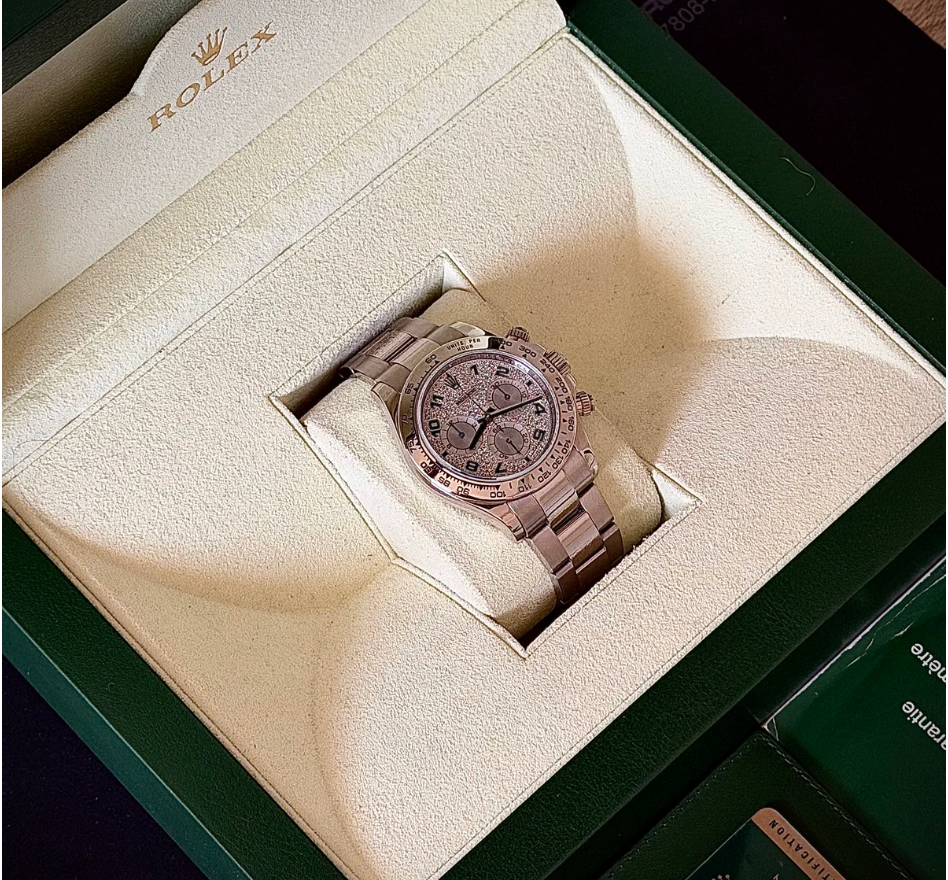
Having the original box, papers, and service records is highly beneficial. While you can consign a watch without them, a "full set" naturally inspires more confidence in buyers and can increase the final sale value by 10% to 20%. Service records are equally valuable, as they prove the watch has been maintained properly.
When preparing your watch, care must be taken regarding physical restoration:
- Modern Watches: Light polishing is generally acceptable and can remove minor surface hairlines, making the watch far more appealing to retail buyers.
- Vintage Watches: Polishing should be strictly avoided. Vintage collectors place an immense premium on original, unpolished cases with sharp bevels and natural patina. Polishing a vintage piece can inadvertently destroy its market value.
For a complete checklist of how to prepare your timepiece for the market, review our guide on the 5 things to do for watch consignment.
Is Consignment Right for You?
Consignment can be a useful secondary option if you own a highly desirable watch, have no immediate need for funds, and are comfortable waiting for the right buyer. It may suit less common pieces where a targeted sales approach could achieve a stronger result over time.
For most collectors, though, the waiting period, potential market shifts, and lack of immediate closure make consignment less practical than a direct sale. Selling outright gives you a clear agreed price, a simpler process, and direct handling of payment without waiting for a third-party buyer to commit.
At WristWorks, we keep this distinction clear. Around 95% of our inventory is owned directly by us, which means our primary focus is buying watches outright from collectors and then managing the onward sale ourselves. This approach gives sellers a simpler experience and allows buyers to receive watches that are already in our care and ready to dispatch.
Consignment remains available as an optional service for selected watches that genuinely suit a longer sales strategy. All consigned pieces are held by WristWorks while listed, and payments are handled directly once a sale is complete.
Ready to find the best selling route for your luxury watch, whether that is a direct sale or consignment? Visit our sell your watch page to get a valuation and we will help you compare both options based on the watch, the current market, and your timing.