
Time to Decide: Consignment vs Selling Watches
Consignment vs selling watches: A strategic comparison

Consignment vs selling watches is a pivotal decision Australian collectors face when it is time to move a timepiece on. The method you choose affects more than just the headline price; it fundamentally changes your timeline, how much market risk you carry, and the level of admin you need to manage. Whether you are looking to sell your watch to fund a new acquisition or simply want to realise the value of an asset, understanding these trade-offs is essential for a successful outcome.
In the Australian market, the choice often boils down to a preference for speed and certainty versus the potential for a higher net return. While both paths have their place, we generally favour the outright sale for its simplicity and the immediate closure it provides to the seller. Below is a practical comparison of the two most common routes.
| Factor | Direct sale (to a dealer) | Consignment |
|---|---|---|
| Payment timing | After the dealer purchases the watch (typically once terms are agreed) | After the watch sells (often 60-120 days) |
| Typical return | Lower, but more certain | Potentially 10-15% higher |
| Ownership | Transfers to the dealer | You retain ownership until sold |
| Effort required | Minimal | Minimal (dealer manages the listing and enquiries) |
| Best for | Speed, simplicity, and certainty | Maximising return on high-demand or higher-value pieces if you can wait |
In Australia, both approaches can be sensible depending on your watch and your timeframe. It is also worth recognising that demand can shift rapidly. Industry reporting from the Federation of the Swiss Watch Industry shows that export trends vary over time, which can flow through to secondary-market pricing and buyer appetite. When the market is volatile, the consignment vs selling watches decision becomes even more critical, as the seller bears the risk of price drops during the consignment period.
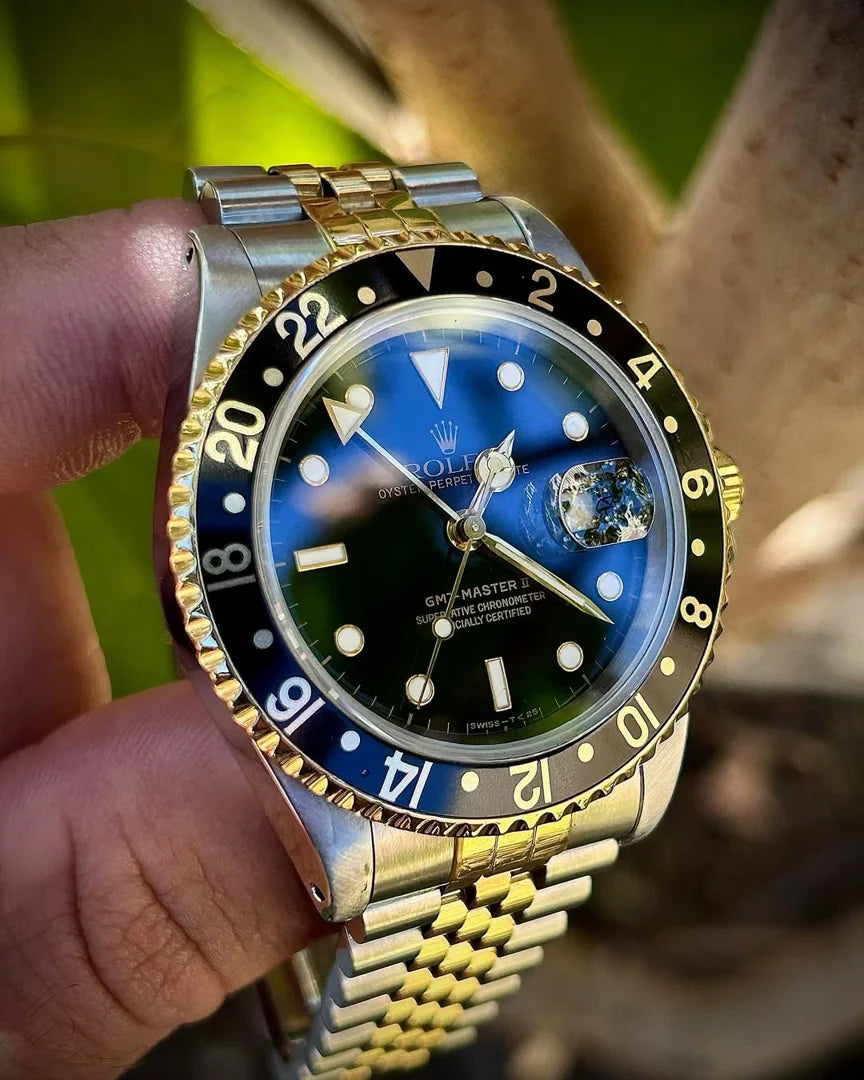
This is where the consignment vs selling watches decision becomes practical. A current-production Rolex sport model with strong liquidity is usually straightforward to price and sell outright. Conversely, a rarer vintage piece or an unusual configuration may need longer exposure to find the right buyer, making consignment a secondary consideration for those who are not in a rush.
I'm Brad Purdy, founder of WristWorks. My background spans mechanical work, sales, and finance, and it influences how we approach trade-offs like timing, risk, and realistic pricing. We specialise in providing a transparent process that prioritises the seller's needs. The goal in the sections below is to explain what each option typically means in day-to-day terms, not just in theory.
Consignment vs selling watches terminology:
When we look at the consignment vs selling watches landscape in Australia, it is essentially a choice between certainty and potential upside. With an outright sale (selling directly to a dealer), you present your watch for assessment, the dealer reviews condition and current market comparables, and then provides a firm offer. If you accept, the dealer purchases the watch and takes on the responsibility of reselling it, including all the associated market risks.
Consignment is different. You retain legal ownership while the dealer acts as your agent, marketing the watch, managing enquiries, and handling negotiation. You are paid once the watch sells, and the final result depends on the market response during the listing period. This means if the market for your specific model softens while it is sitting in the dealer's display case, you may be forced to lower your price or wait even longer for a buyer.
| Feature | Direct-to-dealer (outright) | Consignment (sale or return) |
|---|---|---|
| Risk profile | Dealer takes market risk once purchased | Seller retains market risk until sold |
| Liquidity | Higher | Lower (depends on finding a buyer) |
| Price certainty | Locked in when the offer is accepted | Estimate based on market, may need adjustment |
| Marketing | Dealer markets after purchase | Dealer markets on your behalf |
| Insurance while held | Dealer's responsibility | Dealer covers while in possession |
The financial realities of watch consignment vs selling watches
The main appeal of consignment is the chance of a higher net return. In a direct sale, a dealer has to factor in operating costs, the possibility that the market softens while the watch is held, and the time involved in finding the next buyer. That is why a direct offer is typically below a future retail sale price. However, this discount is the price paid for immediate liquidity and the removal of risk.
In the consignment vs selling watches debate, commission commonly sits in the 15% to 30% range, with around 20% often referenced as a market norm in Australia. Depending on the brand, model, and how quickly it sells, a seller may net roughly 10% to 15% more than an outright offer. The trade-off is time: while some in-demand models move quickly, a typical end-to-end consignment process in Australia often runs 60 to 120 days, during which your capital is tied up in the timepiece.
The advantages of direct selling
For many sellers, the direct route is simply easier to manage and more efficient. The most important benefit is price certainty. When you accept an outright offer, you are not waiting for a buyer to appear or for the market to cooperate. You avoid the stress of watching market fluctuations and the potential disappointment of a failed consignment.
Direct selling also reduces the risk of delays from third-party negotiations, changing buyer preferences, or a listing that needs repeated price adjustments. That is why we have explained why outright sales beat consignment for most collectors who prioritise certainty and a clean process. If you are comparing options, it also helps to understand the steps and checks involved in a dealer-led transaction. This is covered in how to sell your luxury watch without the guesswork.
Timelines and market fluctuations
The luxury watch market is not static. Pricing for major brands can move based on global economic conditions, changes in availability, and shifting collector interest. When you consign, you remain exposed to those movements until the watch sells. If it takes 90 days and the market softens, you may have to adjust expectations and the asking price, which can negate the original financial benefit of choosing consignment over an outright sale.
This opportunity cost is central to the consignment vs selling watches decision, and it is one reason many sellers prefer an outright sale when they value certainty. For a broader overview of the selling process and timing considerations, see our sell luxury watches complete guide.
Selecting the best path for your timepiece
Choosing between consignment vs selling watches often comes down to the specific watch in front of you. Not all models behave the same way on the secondary market, and understanding the liquidity of your specific reference is key to making the right choice. In the Australian context, certain brands like Rolex and Patek Philippe often command more immediate interest, whereas niche independent brands may require a more patient approach.
As a general rule:
- A high-volume, modern steel sports model with plenty of recent sales data is easier to price and usually suits a direct-to-dealer sale. These pieces are highly liquid, meaning dealers are often happy to purchase them outright because they know they can find a buyer quickly.
- A rare, highly complicated, discontinued, or niche vintage piece may take longer to match with the right buyer, which can make consignment worth considering if you are prepared to wait for the perfect collector to emerge.
The key concept is liquidity: how reliably a watch sells at a predictable price within a reasonable timeframe. For most sellers, the goal is to maximise this liquidity while minimising the time spent managing the sale.
When to favour consignment for high-value assets
Consignment can make sense for watches where the buyer pool is narrower or where a seller is aiming to test the top end of the market. This is often the case for pieces that are more like art than commodities. Examples include:
- Rare references or uncommon dial/configuration combinations that do not appear frequently on the market.
- High-complication pieces from brands like A. Lange & Söhne or Vacheron Constantin.
- Certain vintage models where condition and originality have a disproportionate impact on value, requiring a specialist to explain the nuances to a potential buyer.
In these cases, a dealer's audience and sales channels can help the watch reach the right buyers, which is often the main justification for a commission-based arrangement. For an overview of when this structure can be appropriate, see our high-end watch consignment services.
Preparing your watch for the secondary market
Whether you choose consignment vs selling watches, preparation affects the outcome. Buyers tend to pay more readily when the watch is presented clearly and the inclusions are straightforward. A well-prepared watch not only sells faster but often achieves a higher price because it reduces the perceived risk for the buyer.
- Documentation: Box and papers usually help value and buyer confidence. The premium varies by brand and model, but for some modern pieces, it can be meaningful. If you have the original purchase receipt, this can also add to the provenance of the piece.
- Condition: For modern watches, a light professional polish can be reasonable if it improves presentation without compromising the case lines. For vintage watches, polishing is generally avoided because it can soften case lines and reduce the originality that collectors prize.
- Service history: If you have service paperwork from a brand-authorised centre, keep it. Clear service history can reduce buyer uncertainty about the mechanical condition and the need for immediate maintenance.
From a seller's perspective, the safest transactions are the ones with a clear process and communication, where you do not need to manage multiple private enquiries or deal with the risks of the open market. If you are considering consignment, these practical steps can help you avoid delays and misunderstandings: 5 things to do for watch consignment. If you are weighing private sale options, this guide outlines common risk areas to watch for: how to sell your watch without getting scammed.
In either approach, it is worth confirming in writing who holds the watch during the process, what happens if the market moves, and how and when funds are paid out once a sale is completed. Transparency is the foundation of a good relationship between a seller and a dealer.
Partnering with WristWorks for a transparent sale
The consignment vs selling watches debate does not have a single winner for every scenario, but for the vast majority of Australian collectors, the outright sale offers the best balance of value and convenience. The right choice depends on your timeframe, the model you are selling, and how comfortable you are carrying market risk while you wait for a third-party buyer.
At WristWorks, we focus on a straightforward, online-first process designed for Australian sellers who want clarity and a clean transaction. For most watches, our recommended option is a direct-to-dealer (outright) sale because it prioritises speed, simplicity, and price certainty. We believe that providing a firm offer and taking on the market risk ourselves is the best way to serve our clients. Consignment remains available as a secondary option for select higher-value or harder-to-price pieces where extra market exposure may be beneficial to the final result.
A practical point that matters to sellers: approximately 95% of the inventory we list is owned directly by WristWorks. This reflects our commitment to the outright purchase model. When we make an offer, we are purchasing the watch ourselves and taking full responsibility for the resale process, allowing you to move on to your next timepiece without delay.
If you are deciding what to do next, the simplest starting point is an upfront valuation discussion based on the current market and the specifics of your watch. We aim to provide a realistic assessment that reflects the true value of your timepiece in today's climate.
Ready to move your timepiece? Sell your watch with WristWorks to request a valuation and discuss whether an outright sale or consignment is the better fit for your situation. It is the quickest way to get a clear, no-obligation assessment of what your watch is worth on today's market.