How to Spot a Fake Rolex Like a Pro
The Reality of Buying a Pre-Owned Rolex in 2026
Knowing how to spot a fake Rolex is one of the most important skills you can have before buying a pre-owned luxury watch. Here is a quick summary of the key checks:
- Check the dial for crisp, clean printing and verify the Cyclops lens magnifies the date by exactly 2.5x.
- Feel the weight; genuine Rolex watches are built from solid 904L Oystersteel or precious metals and feel substantial.
- Inspect the serial number and rehaut engraving for laser-sharp precision.
- Observe the second hand; it should sweep smoothly, not tick.
- Examine the bracelet and clasp for solid construction and correct engravings.
Rolex is the most counterfeited watch brand in the world. The global counterfeit watch market is worth an estimated $1.8 billion annually, and Rolex sits squarely at the centre of it. In 2023 alone, U.S. Customs and Border Protection seized over 23,000 fake Rolex watches with a combined retail value exceeding $30 million.
What makes this harder than it used to be is the rise of so-called superclones. These are high-end replicas built with Swiss-made movements, 904L steel cases, and sapphire crystals, the same materials used in genuine Rolex watches. The old tricks, like checking the weight or listening for a tick, are no longer enough on their own.
Over 60% of counterfeit Rolex watches are sold through online marketplaces, making digital purchases the highest-risk channel for buyers. If you are considering a pre-owned Rolex in 2026, understanding what separates a genuine piece from a convincing fake is not optional. It is essential.
I'm Brad Purdy, founder of WristWorks, and learning how to spot a fake Rolex is something I have had to learn the hard way, including a $13,000 loss early in my career that reshaped how I approach every transaction. That experience is what drives the rigorous inspection process behind every watch we sell today.
How to Spot a Fake Rolex: The 5-Step Verification Guide
To protect yourself from getting caught out, you need a systematic approach. Counterfeiters have become incredibly skilled at mimicking the outward appearance of luxury timepieces, but they still struggle to match the uncompromising manufacturing standards of the Geneva giant.
By breaking down your inspection into five distinct areas, you can systematically evaluate any watch to determine if it is genuine. For a deeper dive into the basics, you can read our detailed guide on How to Tell If a Rolex Watch Is Real. For a broader overview of counterfeit trends, you can also explore this Complete Guide to Spotting Fake Watches.
Step 1: Examine the Dial and Cyclops Lens Magnification
The dial is the face of the watch, and it is where the legendary precision of the brand shines brightest.
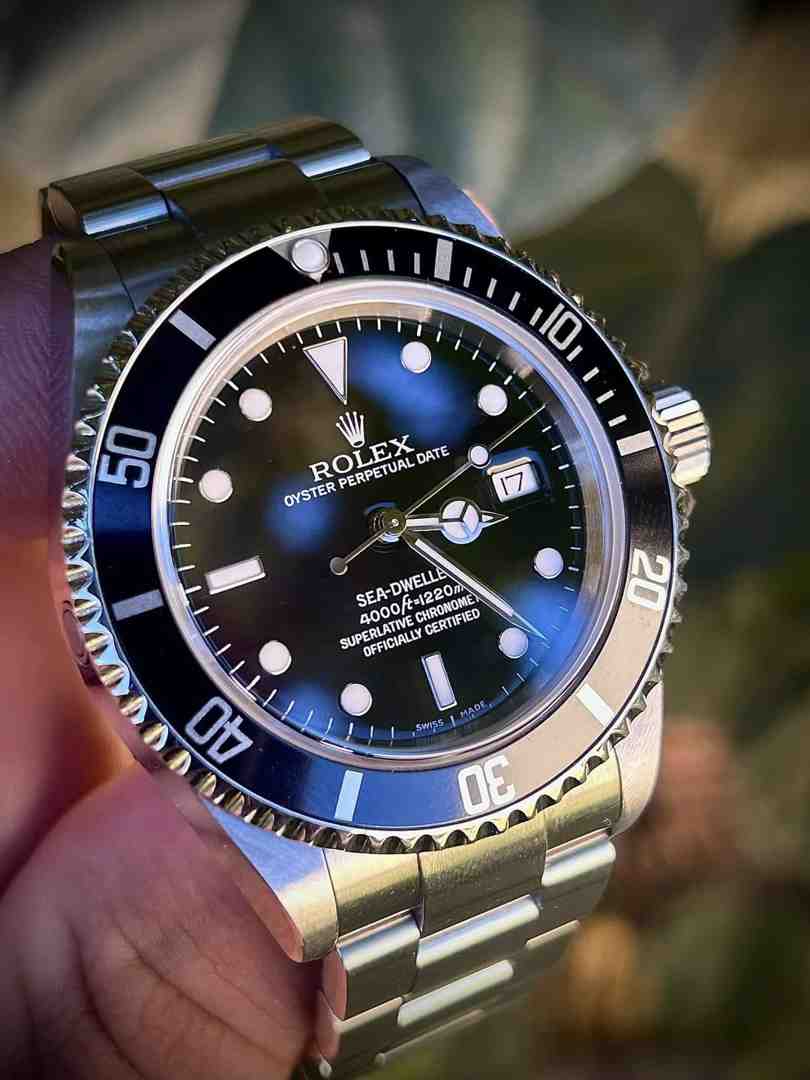
Start by looking at the Cyclops lens over the date window. On a genuine Rolex, this lens is a distinct dome that magnifies the date by exactly 2.5 times, making the numbers fill almost the entire window. It also features a subtle anti-reflective coating that prevents glare. Many counterfeits use flat glass with weak magnification, often only 1.5 times, which leaves the date looking small, flat, and difficult to read.
Next, look closely at the printing on the dial. The brand uses a specialised rubber pad printing process from deeply etched, paint-filled metal templates. The result is ink that is crisp, perfectly opaque, and slightly raised. Under a magnifying glass, a fake watch will often reveal fuzzy edges, uneven ink distribution, or slight misalignments in the text. According to experts in this Detailed Breakdown of Counterfeit Tells, even tiny errors in font spacing or the shape of the iconic coronet logo are immediate giveaways.
Step 2: Inspect the Case, Weight, and Materials
The physical feel of a watch tells a story that counterfeiters find very difficult to rewrite. Since 2003, the brand has used 904L Oystersteel for all its steel models. This alloy is denser and much more corrosion-resistant than the standard 316L steel used by almost every other watchmaker and replica factory.
Because of this high-quality steel and the use of solid precious metals like 18k gold and 950 platinum, a genuine sports model on its bracelet typically weighs between 150 and 170 grams. Cheap replicas will feel noticeably light and hollow. While high-end superclones can match this weight within a gram or two in steel, they fail completely when mimicking gold or platinum models, which are incredibly heavy.
Another crucial area is the caseback. With very rare exceptions, the brand only produces plain, solid metal casebacks. If you see a clear glass window showing the movement, or heavy decorative engravings on the back of a modern model, you are almost certainly looking at a fake.
| Material Component | Genuine Rolex | Common Counterfeit |
|---|---|---|
| Steel Type | 904L Oystersteel (dense, highly corrosion-resistant) | 316L Stainless Steel (less dense, cheaper) |
| Precious Metals | Solid 18k Gold, 950 Platinum | Gold-plated brass or steel |
| Caseback | Solid, plain metal (almost always unengraved) | Clear glass window or incorrect engravings |
| Weight (Gold/Platinum) | Heavy, substantial (e.g. Day-Date is over 200g) | Noticeably light, hollow feel |
Step 3: Check the Serial Number and Rehaut Engravings
One of the most reliable physical tests is checking the engravings on the case. On modern models (produced from 2004 onwards), the inner bezel under the crystal, known as the rehaut, features "ROLEX ROLEX ROLEX" engraved all the way around. The letters should align perfectly with the hour markers: the "X" should line up with the markers on the right side, and the "R" should line up on the left side.
On older models, the serial and model reference numbers are engraved between the lugs where the bracelet meets the case. To see these, you must remove the bracelet.
Genuine engravings are cut deeply into the metal with diamond-tipped tools. They catch and reflect the light sharply. Counterfeits often use cheap acid etching or light laser marking, resulting in a faint, sandy, or dotted appearance. You can learn more about verifying these markings in our guide on How to Spot a Fake Rolex.
Step 4: Observe the Movement and Winding Feel
The heart of the watch is its mechanical movement. A genuine model features a sweeping second hand that glides smoothly around the dial. This is because the mechanical movement beats at 28,800 vibrations per hour, which translates to exactly eight tiny ticks per second. If the second hand jumps or ticks once per second, it is powered by a cheap quartz movement, a clear sign of a fake, as the brand has only produced a handful of quartz models in its history.
Next, unscrew the crown and wind the watch. The winding action should feel buttery smooth with consistent, gentle resistance. Setting the time and date should feel precise, and the date should click over instantly at midnight (or within a few minutes of it). If the winding feels gritty, loose, or makes a loud grinding noise, the internal gears are likely of poor quality. You can see a live comparison of these movement differences in this Video Guide on Verifying Luxury Watches.
Step 5: Assess the Bracelet and Clasp
The bracelet and clasp are often where counterfeiters cut corners to save on production costs.
Examine the solid end links (SEL) that connect the bracelet to the watch case. On a genuine watch, these links fit flush against the case with absolute precision. There should be no visible gaps, play, or rattling when you shake the watch.
The clasp itself should open and close with a reassuring, crisp click. The engraved coronet logo on the clasp should be sharp, beautifully proportioned, and raised, rather than looking flat or poorly stamped. The inside of the clasp should also feature clean, legible engravings with no rough or sharp edges that could irritate your wrist.
Understanding the Risks of Spotting a Fake Rolex Online
Buying a luxury watch online comes with inherent risks, especially when dealing with unverified private sellers on peer-to-peer marketplaces. Because counterfeiters have access to advanced 3D printing and optical scanning, "superclones" can easily pass a casual visual check in low-resolution photos.
To protect yourself when shopping online, look out for these critical red flags:
- The Price is Too Good to Be True: Luxury watches hold their value remarkably well. If someone is offering a popular model at a massive discount, there is always a catch.
- Blurred or Limited Photos: Sellers hiding something will often provide low-quality images or refuse to send close-up macro shots of the dial, rehaut, and engravings.
- No Proof of History: Genuine sellers can usually provide a clear history of the watch, even if the original box and papers are missing.
- Pressure to Pay Quickly: Be wary of sellers who push for immediate payment or refuse to meet at a secure, professional location for verification.
Why Buying from a Trusted Dealer Beats DIY Verification
While learning the physical tells of a fake watch is incredibly useful, the reality is that counterfeit technology is constantly evolving. Attempting to verify a watch yourself at home carries a high risk of error, especially when high-end replicas can fool even seasoned collectors on a surface-level inspection.
That is why the safest, most secure way to buy or sell a luxury watch is to work directly with an established dealer. At WristWorks, we operate a 100% online model from Perth, Western Australia, focusing on transparency, simplicity, and value for local collectors.
We own 95% of the inventory we sell, meaning every watch has been thoroughly inspected, verified, and prepared to the highest standards before it ever reaches our website. We believe that direct-to-dealer sales are the primary, most recommended method for both buying and selling because they offer unmatched speed, simplicity, and security. You avoid the stress of private meetups, shipping risks, and the constant worry of fraud.
For those who prefer a different route, we also offer a secure consignment service as a secondary option. When you consign with us, we hold the watch securely in our Perth facilities and handle the entire transaction and payment process directly on your behalf.
We also understand the nuances of preserving these incredible machines. For modern watches, careful polishing is a fantastic way to restore their original lustre and shine. However, when it comes to vintage pieces, we favour leaving them in their original, unpolished state to preserve their historical character, sharp bevels, and long-term value.
If you are ready to find your next timepiece with complete peace of mind, we invite you to Explore Our Collection of Genuine Watches or reach out to our team in Perth today.