How to Spot a Fake Luxury Watch in 5 Easy Steps
The Counterfeit Watch Problem Every Buyer Should Know About
Knowing how to spot a fake luxury watch could save you thousands of dollars. Here is a quick checklist before you buy:
- Check the weight: genuine luxury watches feel noticeably heavier than fakes
- Inspect the dial: look for crisp, evenly spaced text and no smudging
- Examine the movement: a smooth sweeping seconds hand suggests a mechanical movement
- Verify the serial number: check it appears in multiple locations and matches the paperwork
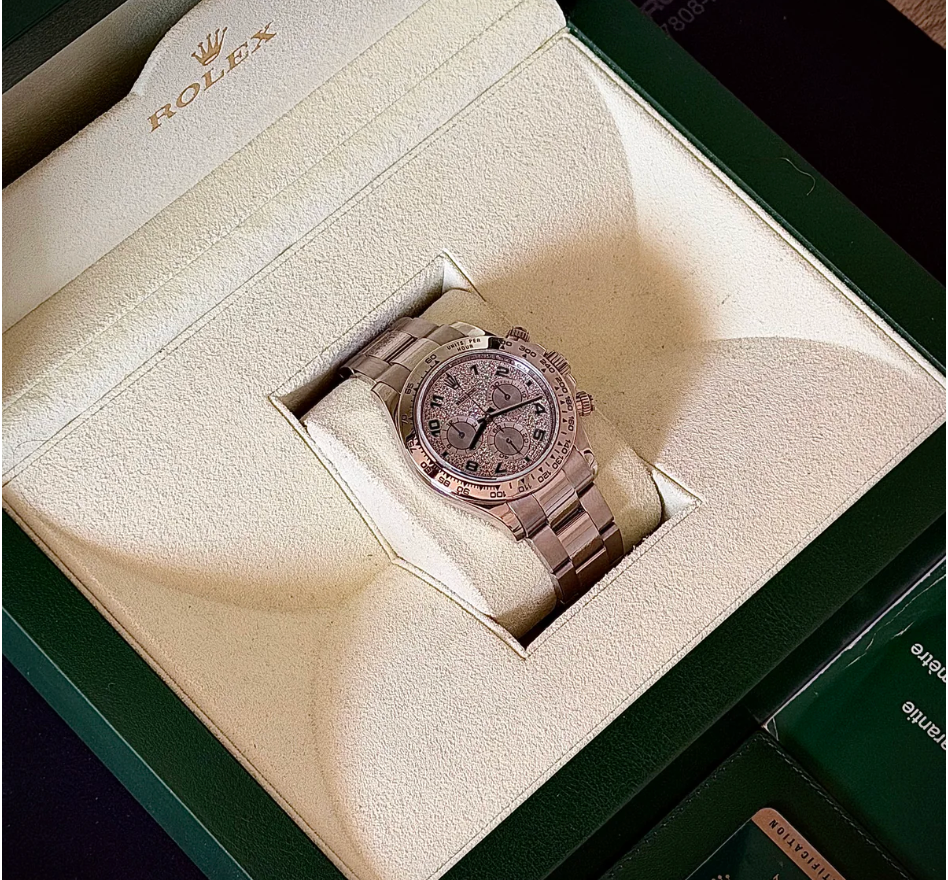
- Review the packaging: original box, papers, and official documentation should all match the watch
Counterfeit watches are a massive global problem. Between 30 and 50 million fake watches enter the market every year, and estimates suggest there are more fake Rolexes on wrists worldwide than genuine ones. In the US alone, over 23 million counterfeit watches are thought to be in circulation, more than Rolex has sold in the past 15 years combined.
The fakes are getting harder to catch. What used to be obvious knock-offs sold in tourist markets have evolved into so-called "super clones": counterfeits built with improved materials, near-identical finishing, and movements that can fool even experienced buyers at a glance. Even major auction houses have been deceived.
For someone buying a pre-owned luxury watch in Australia, whether through a private sale, an online marketplace, or a dealer, the risk is real and worth taking seriously.
I'm Brad Purdy, founder of WristWorks, and having personally lost $13,000 to a watch scam early in my career, I know why understanding how to spot a fake luxury watch is one of the most important skills any buyer can develop. That experience shaped every part of how WristWorks operates today, and this guide shares what I've learned so you can buy with confidence.
Quick how-to-spot-a-fake-luxury-watch resources:
How to Spot a Fake Luxury Watch: The 5-Step Inspection Guide
When evaluating a timepiece, relying on a single detail is rarely enough. Counterfeiters have grown incredibly skilled at replicating individual features. Instead, we recommend a systematic, five-step inspection process to examine the physical, visual, tactile, and functional properties of the watch.
Taking your time to review each of these areas is your best defence against being caught out. For those looking to learn more about industry-wide efforts to protect buyers, the Federation of the Swiss Watch Industry's resources on fighting counterfeiting and buying safely offer valuable insights into global enforcement and essential safety practices for consumers.
Step 1: Weight and Materials: How to Spot a Fake Luxury Watch
The first thing you will notice when holding a genuine luxury watch is its heft. High-end manufacturers use premium, solid materials such as 904L Oystersteel, 18k gold, 950 platinum, and scratch-resistant sapphire crystal. These metals are dense, heavy, and meticulously finished.
In contrast, counterfeiters often use cheaper alloys or hollow components to save on production costs. While some advanced replicas add lead inserts inside the case or bracelet to mimic the correct weight, the overall weight distribution is almost always uneven. The bracelet on a fake watch will often feel light, loose, and cheap compared to the solid, balanced feel of a genuine piece.
| Feature | Genuine Luxury Watch | Counterfeit / Replica |
|---|---|---|
| Primary Metals | Solid 904L/316L stainless steel, 18k gold, or platinum | Base metals, gold-plated steel, or cheap alloys |
| Crystal | Scratch-resistant sapphire crystal with anti-reflective coating | Mineral glass or low-grade sapphire |
| Weight Distribution | Substantial, balanced weight across the head and bracelet | Front-heavy or light, with a rattling bracelet |
| Metal Finishing | Flawless, sharp, mirror-polished or satin-brushed surfaces | Soft edges, visible machining marks, or uneven plating |
Step 2: Dial Details and Brand-Specific Markers

The dial is the face of the watch, and it is where the extreme precision of luxury watchmaking is most visible. Under a simple magnifying loupe, a fake dial will almost always reveal its flaws. Look closely at the printing, spacing, and alignment. Genuine luxury dials feature crisp, raised lettering with perfectly sharp edges, whereas replica dials often show bleeding paint, uneven fonts, or misaligned hour markers.
To protect their designs, major brands incorporate specific, hard-to-replicate details:
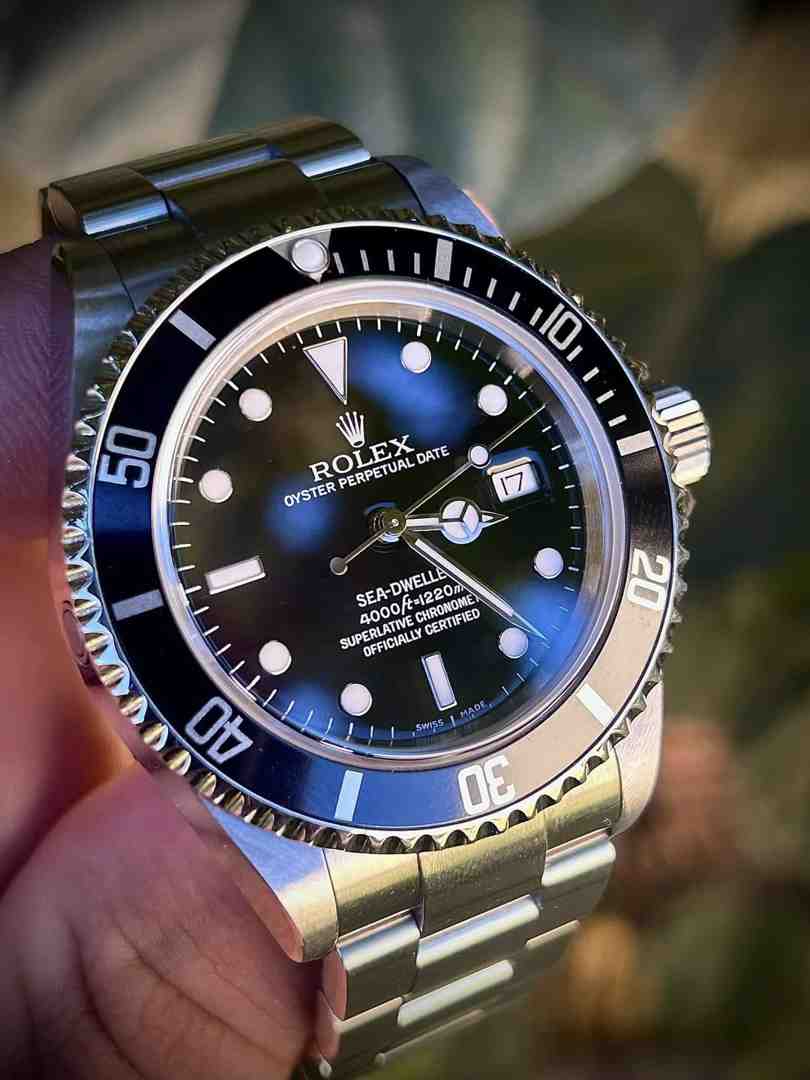
- The Rolex Cyclops and Crystal: The magnifying Cyclops lens over the date window on a genuine Rolex magnifies the date exactly 2.5 times, making the numbers fill the window perfectly. It also features an anti-reflective coating that creates a distinct "black hole" effect. Furthermore, modern Rolex crystals feature a tiny, micro-etched crown logo at the 6 o'clock position, which is incredibly difficult for counterfeiters to replicate cleanly.
- Cartier Roman Numerals: Cartier hidden details are legendary. If you look closely at the VII or X hour markers on a genuine Cartier dial, you will find the word "Cartier" micro-engraved into one of the thin lines of the Roman numeral.
- Omega Co-Axial and Lume: Omega dials feature flawless alignment of the hands and hour markers. Their luminous material, much like Rolex's proprietary Chromalight, provides a bright, long-lasting glow, often electric blue or green, that charges quickly and shines evenly for hours. Fakes often use cheap luminous paint that fades within minutes.
Step 3: Movement and Sweep: How to Spot a Fake Luxury Watch
The movement is the heart of a luxury watch, and it remains the most reliable indicator of its origin. Genuine mechanical watches rely on highly complex, precision-engineered movements.
On a mechanical watch, the seconds hand should move in a smooth, sweeping motion around the dial. This is because high-quality Swiss mechanical movements beat at high frequencies, typically 28,800 vibrations per hour (vph), which equates to 8 micro-steps per second. Many cheap counterfeits use quartz (battery-powered) movements that cause the seconds hand to make distinct, loud ticking jumps every second.
If the watch has a display caseback, you can view the movement directly. Genuine movements feature beautiful, hand-applied finishing, such as bevelled edges, polished surfaces, and intricate decorative patterns like Côtes de Genève stripes. Counterfeits, even those with display backs, usually show rough, machine-stamped parts, unpolished gears, or fake decorative plates glued on top of cheap movements.
To understand the immense level of engineering that goes into genuine movements, you can read about Omega Co-Axial Escapement Technology.
Step 4: Serial Numbers and Engravings
Every genuine luxury watch is marked with unique serial and model numbers. On a real watch, these engravings are executed with incredible precision. They are deep, clean, and perfectly aligned, often appearing as if they were carved with a diamond tipped tool. Counterfeit engravings are frequently shallow, sandy, or dotted in appearance because they are made using cheap acid etching or low-grade lasers.
When verifying these numbers, look for the following:
- Location: Rolex typically places serial numbers between the lugs at 6 o'clock or engraved on the inner bezel (the rehaut). Omega often engraves them on the back of the lugs or the caseback.
- Uniqueness: Counterfeiters often produce fakes in large batches and reuse the same serial number across thousands of watches. A quick search of the serial number online will often reveal if it has been flagged on counterfeit databases.
- Polishing Considerations: When inspecting pre-owned watches, keep in mind that modern watches are occasionally polished to remove surface scratches. However, for vintage watches, polishing is generally avoided. Collectors prefer vintage watches to remain unpolished to preserve their original sharp bevels, historical integrity, and case proportions. Over-polishing a vintage watch can soften the serial number engravings and significantly lower its value.
Step 5: Packaging and Documentation
While a watch should always be judged on its own merits, the accompanying presentation box and paperwork offer important clues. A genuine "full set" includes the outer box, inner presentation box, manual, leather pouch, and the original registration card or papers.
Counterfeiters have become skilled at replicating paper documents and plastic cards, but they still struggle with the tactile quality of luxury packaging. Real luxury boxes are crafted from high-quality wood, leather, or heavy-duty textured paper with flawless stitching and gold-leaf printing. Fake boxes often feel light, emit a strong chemical glue odour, or feature misaligned logos and bubbling in the imitation leather.
Many modern brands also include interactive cards. However, you should still rely on a physical inspection of the watch itself, as paper and plastic are far easier to replicate than a precision Swiss movement.
Securing Your Investment: Where to Buy and Sell Safely
Navigating the pre-owned watch market can feel daunting, especially with the sheer volume of high-quality replicas in circulation. Peer-to-peer platforms, classified sites, and unverified online marketplaces carry the highest risk of fraud. Buyers on these platforms have very little recourse if they accidentally purchase a replica, and sellers often face payment scams or personal safety risks.
To protect yourself, we highly recommend dealing with established professionals. Selling your watch directly to a trusted dealer is the fastest, safest, and most convenient way to trade. At WristWorks, based in Perth, Western Australia, our primary service is buying watches outright, offering a secure transaction that removes the stress, delays, and risks of private sales. For clients who prefer to explore other avenues, we also offer a secure consignment service as a secondary option, where your timepiece is held safely in our custody and marketed directly to our national network of collectors.
When trading timepieces, it is also helpful to understand your protections under Australian consumer law. You can review your options through the Australian Competition and Consumer Commission Consumer Rights portal.
Professional Valuation vs DIY Checks
While DIY checks are a fantastic starting point, they have their limitations. The rise of "super clones" means that some counterfeits are now so visually accurate that they can easily slip past a casual inspection. Truly verifying a watch often requires specialised tools, such as a timegrapher to measure beat error, or opening the caseback to inspect the gear train directly.
If you want absolute peace of mind before buying or selling a high-value timepiece, we are here to help. Our team at WristWorks uses a rigorous, multi-step assessment process to evaluate every watch, ensuring you receive an honest, accurate, and fair valuation.
Ready to verify your watch or looking to sell? Get a professional watch valuation or contact the team today. If you are ready to find your next genuine timepiece, explore our collection of hand-selected, verified luxury watches.