Inside the Economy of Second-Hand Luxury Watches
Why the Pre-Owned Watch Market Matters More Than Ever
Selling pre-owned watches has become a global economy driven by collectors, investors, and everyday enthusiasts looking to upgrade or liquidate.
Quick Answer: Best Ways to Sell Pre-Owned Watches
- Direct Sale to a Dealer: Fast, secure, guaranteed payment. No waiting, no fees.
- Online Marketplace: Potential for higher price, but involves listing fees (6.5%–10%+), shipping logistics, and buyer risk.
- Consignment: A secondary option where a dealer sells on your behalf—ideal for rare or high-value pieces.
- Trade-In: Often the smartest move if you're upgrading, as dealers may offer stronger value when facilitating a new sale.
Selling a luxury watch can feel as intricate as the timepiece itself. Unlike most second-hand goods, pre-owned watches—especially from brands like Rolex, Patek Philippe, and Omega—can appreciate in value. But only if you understand what drives that value and how to steer the market.
The pre-owned economy isn't just about getting cash for a watch you no longer wear. It's about timing, trust, and choosing the right channel. Whether you're a first-time seller or a seasoned collector, the decisions you make will determine whether you walk away with a fair price or leave money on the table.
This guide breaks down how the second-hand luxury watch market works, what determines your watch's worth, and how to sell with confidence—whether you're going direct to a dealer or testing the waters online.
How to Sell Pre-Owned Watches for Maximum Value
Understanding Your Watch's True Worth
When you decide to sell pre-owned watches, the first step is understanding what makes your timepiece valuable. It's not guesswork—there are clear factors that drive price in the secondary market, and knowing them puts you in control.
Brand reputation matters enormously. A Rolex, Patek Philippe, or Omega will always hold value better than lesser-known names. Within those brands, certain models stand out: the Rolex Submariner and Patek Philippe Nautilus, for instance, are consistently in demand, often appreciating over time rather than depreciating like most luxury goods.
Condition is critical, but not always in the way you'd expect. For modern watches, a well-maintained piece in excellent condition will fetch top dollar. Professional polishing is acceptable and even expected. But for vintage watches, the rules flip—originality trumps cosmetic perfection. An unpolished case with honest wear is often more valuable than one that's been heavily restored or over-polished. Collectors prize authenticity over shine.
Rarity drives desire. Limited editions, discontinued models, or watches with unique dial variations command premiums. If your watch is hard to find, that scarcity works in your favour. The market rewards what's rare.
Market trends shift constantly. Demand for specific styles or complications can surge based on collector interest, celebrity endorsements, or broader economic factors. What's hot today might cool tomorrow, which is why timing your sale matters.
And then there's provenance—the original box and papers. This is often underestimated but incredibly significant. A 'full set' acts as your watch's birth certificate. It verifies authenticity, confirms history, and dramatically boosts value and buyer confidence. A watch with its original packaging and documentation will always outperform the same model sold on its own.

These factors combine to determine your watch's true worth. Understanding them means you can approach a sale with realistic expectations and the confidence to negotiate fairly.
Choosing Your Sales Channel: Direct-to-Dealer vs. Online Marketplace
Once you know what your watch is worth, the next decision is how to sell pre-owned watches. You have two main paths: selling directly to a specialist dealer or listing on an online marketplace. There's also consignment, which can be useful as a secondary option.
Selling directly to a dealer is the fastest, most secure route. You submit your watch details, receive a firm offer based on current market value, and if you accept, you're done. We provide a pre-paid, fully insured shipping label so your watch arrives safely. Once it's evaluated and approved, payment follows quickly—no waiting, no uncertainty, no fees eating into your payout.
The trade-off? Dealers factor in operating costs and margins, so the offer might be slightly less than what you could theoretically achieve if you sold privately and everything went perfectly. But that "if" is doing a lot of work. The security, speed, and guaranteed price often make direct sales the smarter choice for most sellers.
Online marketplaces promise wider reach—millions of potential buyers worldwide. That exposure can lead to a higher sale price, especially if you're patient and your watch is in demand. But there are real costs, both financial and practical.
Commission fees typically range from 6.5% to over 12.5%, directly reducing your net payout. You're also responsible for creating compelling listings, managing buyer enquiries, negotiating terms, arranging shipping, and handling disputes. Public marketplaces carry risks: fraudulent buyers, payment reversals, disagreements over condition. The process can drag on for weeks or months, and there's no guarantee you'll get the price you're hoping for.
Consignment sits in between. We sell the watch on your behalf, taking a percentage of the final sale price. All consigned pieces are held and authenticated by WristWorks, and payments are made directly to us, ensuring a smooth, secure transaction. It's a useful secondary option if you have a rare or high-value piece and you're willing to wait for the right buyer to maximise your return.
Here's how the two main options compare:
| Factor | Direct Sale to a Dealer | Selling on an Online Marketplace |
|---|---|---|
| Speed | Fast | Variable, can be slow |
| Security | High | Variable, depends on platform |
| Final Price | Competitive, guaranteed | Potentially higher, but with fees |
| Effort | Low | High |
| Fees | None (price is net) | 6.5% - 10%+ |
| Risk | Low | High |
The highest offer isn't always the best if it comes with risk. A guaranteed, secure sale often beats a potentially higher price that might never materialise—or that comes with hidden costs and stress.
Discover why outright sales often beat consignment for most sellers.
The Benefits of Trading In vs. an Outright Sale
If you're upgrading your collection or simply ready for a change, trading in your current watch can be smarter than selling it outright.
A trade-in is streamlined. Instead of selling your watch, waiting for payment, then using those funds to buy another, you complete everything in a single transaction. It's faster, simpler, and often more financially efficient.
Here's the hidden advantage: dealers can often offer more competitive value on a trade-in because it facilitates a new sale. When your watch becomes part of a larger transaction, there's room to improve the deal on both sides. You get stronger value for your trade, and you're one step closer to the watch you actually want.
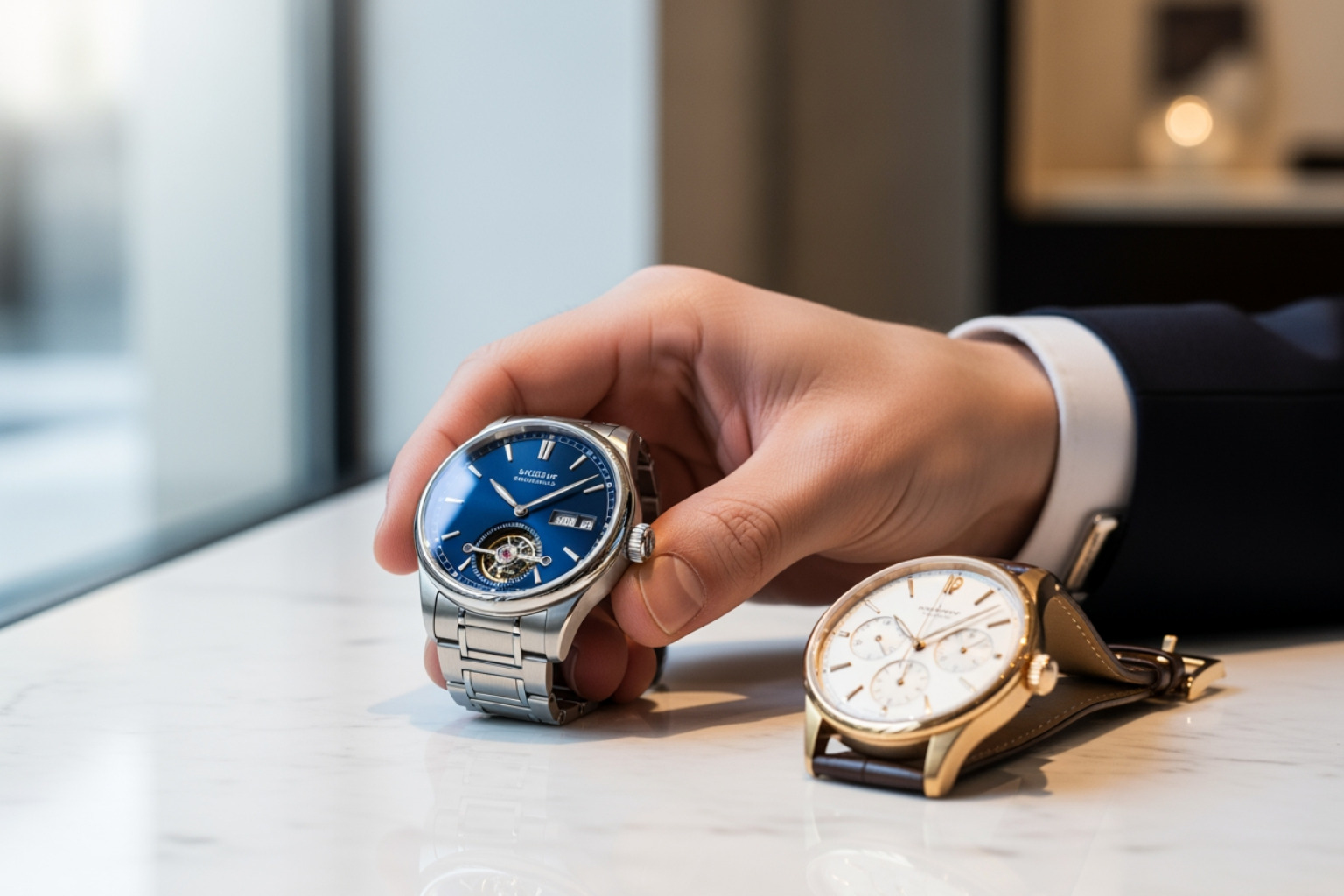
For collectors who know what they want next, trading in removes hassle and uncertainty. You're not hunting for a buyer, negotiating with strangers, or worrying about scams. You're simply moving from one watch to another with confidence and clarity.
Making Your Final Decision: Securing a Safe and Profitable Sale
The Critical Role of Authentication
If there's one non-negotiable in the luxury watch world, it's authenticity. When you sell pre-owned watches, proving they're genuine isn't just about getting a better price—it's about building trust and ensuring the entire transaction is legitimate from start to finish.
The market is unfortunately flooded with counterfeits that range from laughably obvious to disturbingly convincing. That's why authentication matters so deeply. A verified timepiece gives buyers confidence, speeds up the sale, and often commands a significantly higher price than one without clear provenance.
When a watch has been properly authenticated—whether by a trusted dealer or through a manufacturer program—it instils confidence that translates directly into value. Buyers know what they're getting, sellers know what they're offering, and the transaction moves forward smoothly. That peace of mind is worth its weight in gold.
Finalising the Sale: Logistics, Payments, and Avoiding Pitfalls
You've decided where to sell, you've received an offer, and now it's time to actually complete the transaction. This is where things can either go very smoothly or become frustratingly complicated, depending on who you're dealing with.
Getting your watch to the buyer safely is the first hurdle. If you're selling to a specialist dealer like us, we make this as simple as possible. We provide a pre-paid, fully insured shipping label, which means your watch is protected from the moment you hand it over to the courier until it arrives safely at our office. You don't need to worry about arranging insurance, choosing the right courier, or paying for postage—it's all taken care of.
Receiving payment should be straightforward and transparent. Reputable dealers offer clear payment methods and fast, secure payouts. The key is to remember that the highest offer isn't always the best one—especially if it comes with risk, delays, or unclear terms. A slightly lower but guaranteed payment from a trusted buyer is almost always preferable to a theoretical higher price that may never materialise.
Ensuring you're getting a fair price requires a bit of homework. Look at what similar watches in comparable condition are selling for. Understand the factors that influence value: brand reputation, model desirability, condition, rarity, and whether you have the original box and papers. The secondary market for luxury timepieces has exploded in recent years, and demand for brands like Rolex remains exceptionally strong. Interestingly, an unpolished vintage watch with honest wear can often be worth more than a heavily restored one, as originality is prized by collectors.
Avoiding scams is unfortunately a necessary consideration when you sell pre-owned watches through public marketplaces. Common tactics include fraudulent buyers who pay with fake cheques, reversed electronic payments after receiving the watch, or buyers who claim the watch was damaged in transit to force a refund. Always verify payment before shipping, use secure platforms with buyer and seller protections, and be extremely wary of anyone pressuring you for quick, off-platform deals.
Dealing with an established business that specialises in pre-owned timepieces largely eliminates these risks. You get a streamlined, professional process without the anxiety of wondering whether you're about to be scammed.
Why Choosing the Right Buyer Matters Most
At the end of the day, when you sell pre-owned watches, the buyer you choose determines the entire experience. It's not just about the price—it's about trust, transparency, expertise, and how much hassle you're willing to endure.
We built WristWorks to make luxury watch trading transparent, trustworthy, and accessible in Australia. Our approach isn't about flashy boutiques or inflated margins. It's about moving high-quality timepieces with honesty, efficiency, and integrity. Every transaction reflects that philosophy, whether you're buying, selling, or trading.
When you work with a specialist dealer like us, you get a secure, straightforward process with a fair market value offer. You avoid the uncertainty and risks that come with private sales—the endless messaging with potential buyers, the negotiating, the shipping concerns, and the nagging worry that something might go wrong.
We own 95% of our inventory, which means we're buying watches outright every day. We know the market intimately, and we're committed to offering competitive prices. Consignment is available as an optional service if it better suits your needs—particularly for rare or high-value pieces where you're willing to wait for the right buyer. All consigned pieces are held and authenticated by WristWorks, and payments are made directly to us, ensuring a secure and professional experience throughout.
Our approach means you're dealing directly with experts who understand the market and value your timepiece appropriately. We're not middlemen trying to extract maximum commission—we're buyers who want to make the process as painless as possible for sellers.
Ready to sell pre-owned watches with confidence? Get a transparent, no-obligation quote from WristWorks today. We'll help you choose the right buyer to secure the best value.