

How to Tell if Rolex Watch is Real, Even if You've Never Tried it Before
Understanding the Risks in the Pre-Owned Rolex Market
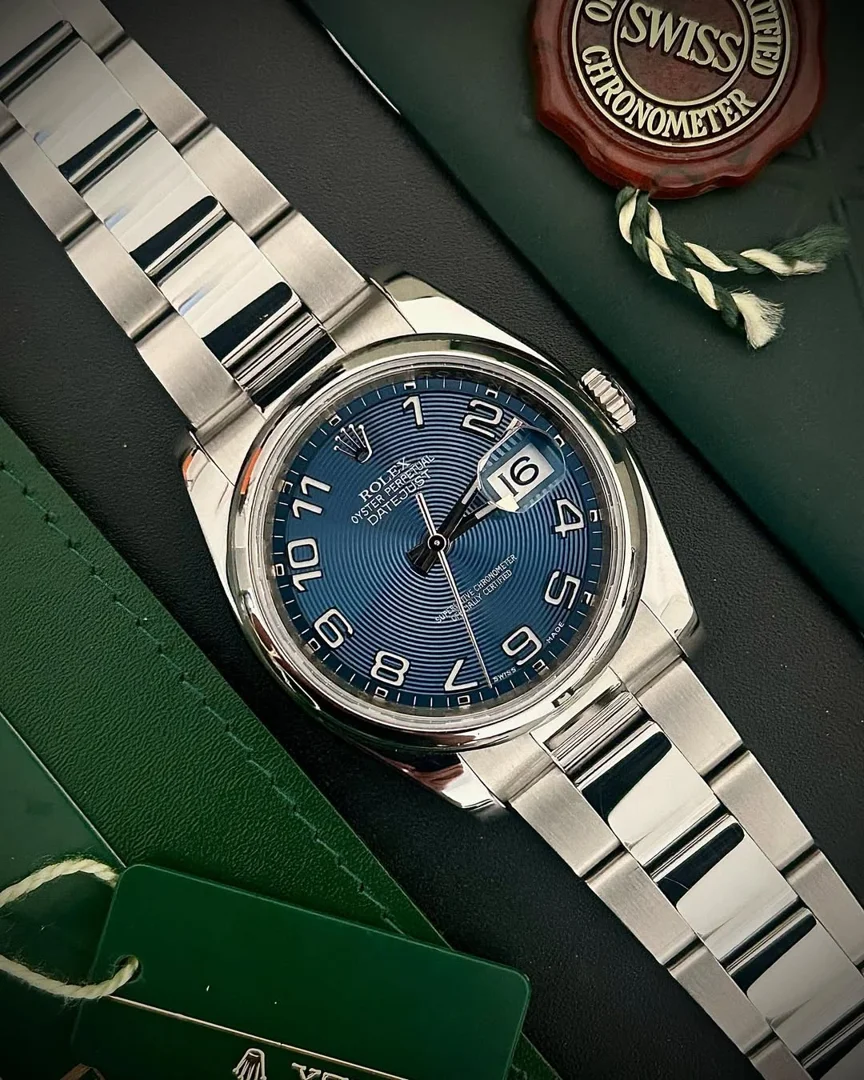
How to tell if a Rolex watch is real is a fundamental question for anyone considering a significant investment in a pre-owned timepiece. The global market for these watches is vast, and with that scale comes a sophisticated industry of counterfeiters. While many fakes are easily identified, the emergence of high-quality imitations requires a more detailed approach to verification.
Before committing to a purchase, it is essential to perform several key checks:
- Serial Number Inspection — Look for laser-engraved markings with sharp, diamond-cut edges.
- Cyclops Lens Evaluation — Genuine models provide a specific 2.5x magnification of the date window.
- Material Weight — Real Rolexes possess a substantial feel due to the use of 904L Oystersteel or solid precious metals.
- Movement Observation — The seconds hand should glide smoothly, reflecting a high-frequency mechanical movement.
- Caseback Design — Modern Rolex models feature solid, plain casebacks rather than transparent windows.
- Micro-etched Coronet — A tiny crown etched into the crystal at 6 o'clock, present on models produced since 2002.
- Dial Precision — Text should be crisp, opaque, and perfectly aligned without any smudging.
In the Australian market, private sales often lack the security found in professional environments. I am Brad Purdy, founder of WristWorks. Having navigated the luxury watch sector in Australia for years, I have developed rigorous processes to identify genuine pieces. This guide provides a practical framework for evaluating a Rolex, comparing DIY methods with the security of professional trading.
Physical Hallmarks: How to Tell if Rolex Watch is Real
When evaluating a Rolex, the quality of materials is the first indicator of its origin. Rolex does not use standard stainless steel; since 1985, they have utilised 904L steel, known as Oystersteel. This alloy is denser and more resistant to corrosion than the 316L steel used by most other manufacturers. It also allows for a higher polish, giving the watch a distinct lustre.
For models crafted from gold or platinum, Rolex operates its own foundry to ensure the integrity of its alloys. A genuine gold Rolex will never show signs of fading or base metal peeking through the links. If you observe any silver-coloured metal at the edges of a gold bracelet, it is a clear sign of a plated imitation. For a deeper understanding of these standards, you may refer to this Official Guide to Identifying Genuine Models.
Examining the Dial and Cyclops Lens
The dial is often where imitations falter. Rolex uses a precise pad-printing process that results in slightly raised, razor-sharp text. Under magnification, any signs of bleeding, uneven spacing, or wobbly lettering are significant concerns.
The Cyclops lens is another signature feature. On a genuine Rolex, this lens:
- Magnifies the date exactly 2.5 times, filling the window.
- Is convex and feels like a distinct, smooth bump on the crystal.
- Includes a subtle anti-reflective coating.
Counterfeit models often use flat glass that only magnifies 1.5x or 2x, leaving the date looking small. Furthermore, modern Rolex watches use Chromalight, a luminous material that emits a long-lasting electric-blue glow. Many imitations use cheaper materials that glow green and fade quickly. These Technical Details on Rolex Materials are essential for identifying genuine models.
Decoding Serial Numbers and Engravings
Every Rolex has a unique identifier, but its location has evolved over time. Counterfeiters often fail to match the correct engraving style with the production era.
| Production Era | Serial Number Location |
|---|---|
| Pre-2005 | Engraved between the lugs at 6 o'clock (requires bracelet removal). |
| 2005 – 2008 | Engraved both between the lugs and on the rehaut (the inner ring). |
| Post-2008 | Engraved exclusively on the rehaut at the 6 o'clock position. |
Genuine engravings are diamond-cut, appearing deep and clean. Imitations often use acid etching, which results in a dotted or blurry appearance. When verifying your timepiece, ensure the "ROLEX" text on the rehaut aligns perfectly with the hour markers.
Weight, Movement, and Maintenance
A genuine Rolex is a substantial object. Due to the density of Oystersteel and precious metals, most models weigh between 100g and 200g. A watch that feels light or "tinny" is likely constructed from hollow links or inferior alloys.
The movement is the heart of the machine. Almost all Rolex watches are mechanical and self-winding, with a seconds hand that sweeps at 8 ticks per second. This creates a smooth glide to the naked eye. If the hand ticks once per second, it is a quartz movement, which is only found in rare vintage Oysterquartz models. Additionally, a genuine movement is nearly silent; a loud ticking sound is a common sign of a non-genuine piece. You can find more tips on spotting non-genuine pieces to avoid these common errors.
Regarding maintenance, it is important to note that while professional polishing is often favoured for modern watches to maintain their original appearance, it is generally avoided for vintage pieces to preserve their historical value and case proportions.
The Bracelet, Clasp, and Crown
The winding crown is a highly engineered component. Rolex uses the Twinlock (two dots or a bar) or Triplock (three dots) systems to ensure water resistance. On the crystal, models made after 2002 feature a micro-etched crown at 6 o'clock. This is so small it typically requires a jeweller's loupe and specific lighting to see. If it is easily visible to the naked eye, it is likely an imitation.
The bracelet should feel smooth and move freely without binding. The clasp should close with a distinct, high-quality click. Inside the clasp, the hallmarks should be crisp and deeply struck, never faint or laser-etched.
Common Red Flags
Even as imitations improve, certain indicators remain common:
- Transparent Casebacks: Rolex has only produced a few models with clear backs (such as the 2023 Daytona). If you see the movement through the back of a Submariner, it is not genuine.
- Engraved Casebacks: Standard Rolex casebacks are plain, brushed steel. External logos or text on the caseback are suspicious.
- Rough Edges: A genuine Rolex is finished to a mirror polish or perfect brush. Sharp or unfinished edges on the lugs are a red flag.
Why Professional Inspection is Necessary
While DIY checks are useful, "super fakes" produced in recent years are incredibly deceptive. To be certain, a watch must be inspected internally. A genuine Rolex movement features purple or red Teflon-coated reversing wheels and a blue Parachrom hairspring. Cloned movements lack this fine finishing and use inferior metals that are prone to failure. Professional inspection involves rigorous processes, including pressure testing and timegrapher analysis, to ensure the watch meets factory specifications.
Professional Inspection and Secure Trading in Australia
In the Australian luxury watch market, moving away from the uncertainties of private sales is the most secure path for collectors. At WristWorks, we operate an online-first model that prioritises transparency and security. By avoiding the overheads of a traditional Perth boutique, we provide better value while maintaining a focus on the integrity of every timepiece.
We specialise in direct-to-dealer sales, which we recommend as the primary method for those seeking speed and financial security. When you sell to us, you are dealing with a team that understands the nuances of Oystersteel finishes and mechanical movements. We also offer consignment as a useful secondary option for specific collections. It is important to note that 95% of our inventory is owned directly by WristWorks. For consigned pieces, we hold the items securely and manage all payments directly to ensure a smooth transaction.
Whether you wish to sell your collection or explore our collection of pre-owned Rolex watches in Australia, we ensure the process is straightforward and GST-inclusive. The luxury watch market should be defined by the quality of the machine rather than the risk of the fake. By combining your own checks with a trusted partner, you can trade with total confidence.
Get a valuation for your Rolex today or browse our full range of genuine timepieces.


