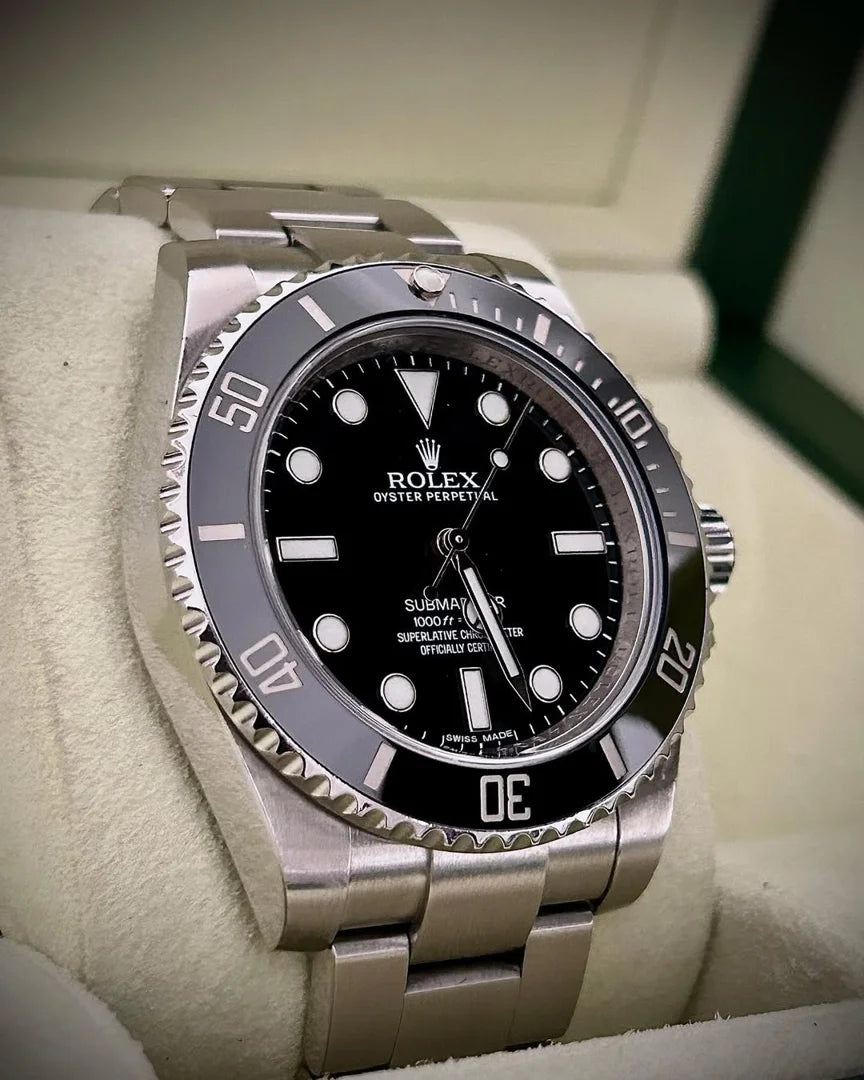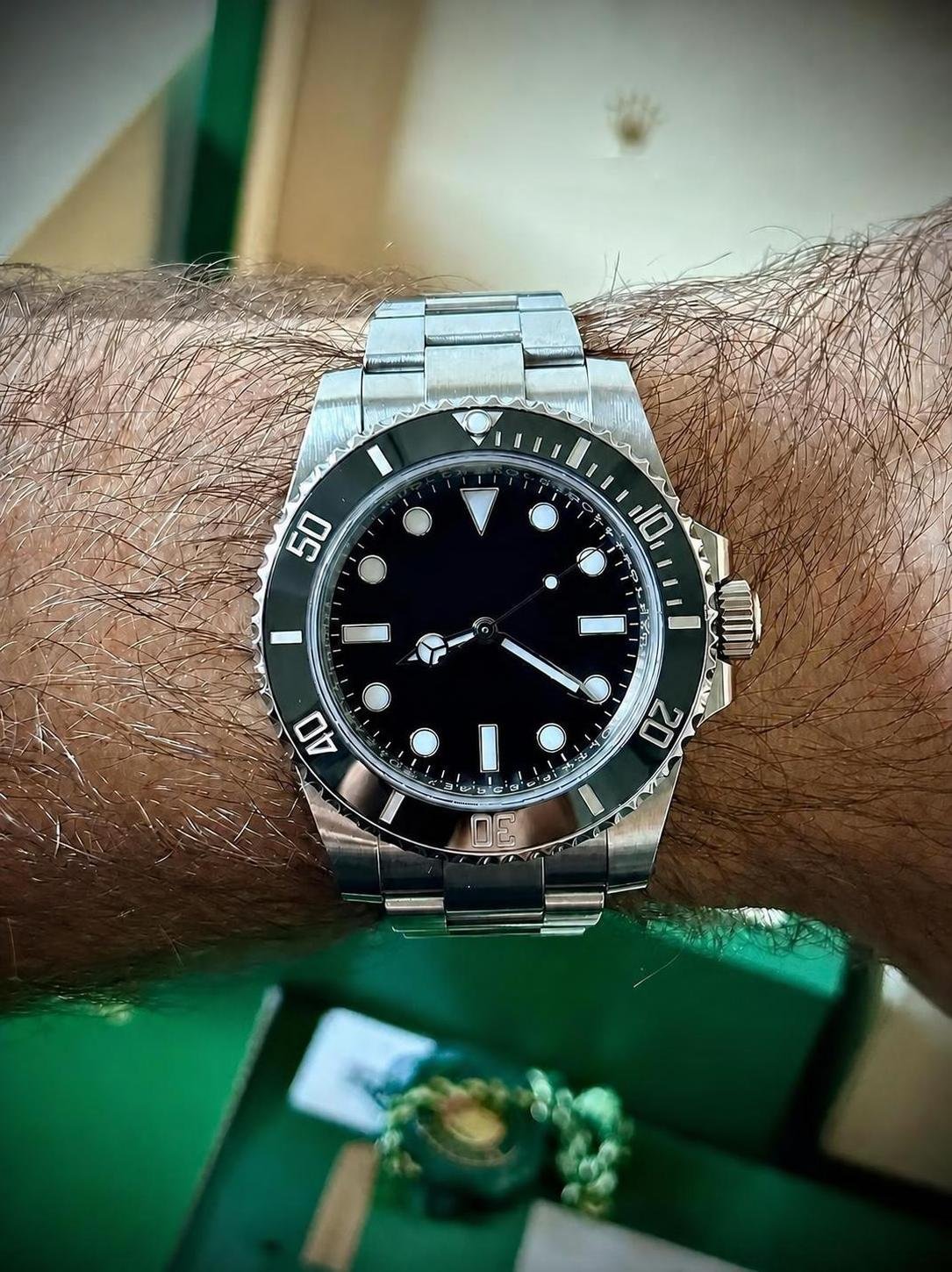
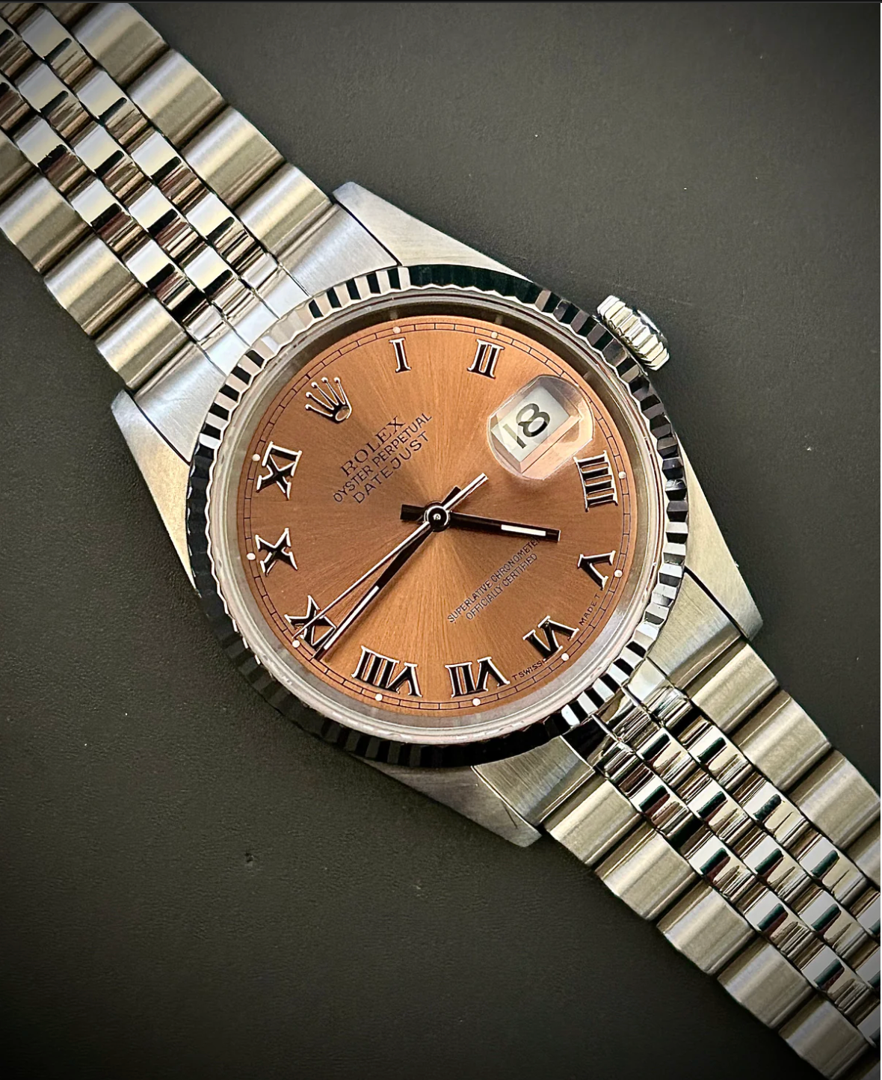
Does a Rolex Tick? The Truth Behind the Famous Sweep

Yes, a modern mechanical Rolex does tick, usually in eight small steps per second. To the eye, those fast movements create the smooth sweep most people associate with the brand.
Key Takeaways
- Most modern mechanical Rolex watches move the seconds hand eight times per second.
- A smooth-looking sweep does not mean the hand moves continuously.
- Oysterquartz and vintage Tru-Beat models are genuine exceptions that move once per second.
- The seconds hand is only one clue, so use several checks before forming a view on a watch.
- For a broader inspection guide, see How to Recognise a Real Rolex Watch.
I am Brad Purdy, and I founded WristWorks. When people ask whether a Rolex ticks, I draw on the careful inspection and testing of the luxury timepieces we handle to explain what the seconds hand can, and cannot, reveal about a mechanical movement.
How a Modern Rolex Movement Creates Its Sweep
When you look closely at a modern Rolex, the seconds hand can appear to glide around the dial. It is not moving in one continuous line. Instead, the escapement releases energy in rapid, even steps, creating the familiar sweep effect.
Most modern Rolex automatic movements run at 28,800 beats per hour, or 4 Hz. That rate produces eight visible steps each second, which is fast enough to look fluid in normal use.
Rolex tests its current Superlative Chronometer watches to a stated accuracy of -2 to +2 seconds per day after casing. You can read the manufacturer’s Superlative Chronometer Certification Standard for the official details.
| Movement type | Typical rate | What the seconds hand looks like |
|---|---|---|
| Modern mechanical Rolex | 28,800 beats per hour | A fast, smooth-looking sweep |
| Vintage Rolex Tru-Beat | Deadbeat seconds mechanism | One distinct step each second |
| Rolex Oysterquartz | Quartz-controlled movement | One distinct step each second |
| Standard quartz watch | Quartz-controlled movement | One distinct step each second |
Why a Rolex Ticks Eight Times Per Second
The movement stores energy in a mainspring, then sends that energy through a train of gears to the escapement. The escapement releases the energy in controlled increments while the balance wheel and hairspring regulate the rhythm.
Each swing of the balance wheel lets the pallet fork release part of the escape wheel’s motion. At the usual modern Rolex rate, this happens eight times per second, moving the seconds hand forward in tiny, regular steps.
If you listen closely, a mechanical watch produces a quick, light series of beats rather than one isolated click each second. That can help you understand the type of movement inside, although sound alone is never enough to judge a watch.
When a Rolex Moves Once Per Second
Some genuine Rolex models are designed to make one visible step each second. The Oysterquartz Datejust uses Calibre 5035, while the Day-Date uses Calibre 5055. Both use quartz movements, so their seconds hands pulse once per second.
The vintage Rolex Tru-Beat is a mechanical exception. Its Calibre 1040 uses a deadbeat seconds mechanism, which makes the hand jump once per second and was intended to make pulse timing easier to read.
Movement Details That Support the Sweep
Rolex has refined its mechanical movements over time, but the familiar eight-step sweep remains common across modern automatic models. Calibre 3135, for example, runs at 28,800 beats per hour and uses a Parachrom hairspring with a 48-hour power reserve.
Calibre 3235 also runs at 28,800 beats per hour. Its Chronergy escapement and updated barrel design support a 70-hour power reserve while keeping the same smooth-looking seconds-hand motion.
Case finishing is another point to consider when assessing a watch. Polishing can be appropriate for many modern references when it restores their intended appearance, while vintage pieces are usually better left with their original bevels, case lines and patina intact.
How to Assess a Rolex Movement
A smooth-looking seconds hand is helpful, but it is only one part of the picture. If you are considering a Rolex, take a measured approach and look for several movement and condition clues together.
Step 1: Listen to the Movement
Hold the caseback near your ear in a quiet setting and listen for the rhythm. A standard quartz movement usually makes one isolated click per second, while a mechanical movement produces a quicker sequence of beats.
That difference can help you identify the movement type, but it does not settle every question. Other mechanical movements can create similar sounds, so treat this as an early observation rather than a final answer.
Step 2: Watch the Seconds Hand Under Magnification
A 10x loupe makes the seconds-hand motion easier to see. On a modern mechanical Rolex, look for small, regular steps as the hand passes the minute markers, rather than uneven pauses or abrupt stuttering.
For more detail on movement warning signs and other inspection points, read Rolex Movement Red Flags.
Step 3: Check the Winding Feel
Unscrew the crown carefully and turn it in the manual-winding position. A well-functioning mechanical movement should feel controlled and consistent as it winds.
Roughness, slipping or excessive free-spinning can indicate wear or a movement that needs closer assessment. Avoid forcing the crown or opening the case yourself, particularly if you are unsure of the watch’s service history.
Finally, review the watch’s documentation, serial details and presentation set where available. Together with the movement observations, these details give you a more complete basis for deciding whether to seek a professional inspection.
Next Steps for Buying, Selling or Trading a Rolex
Whether a Rolex ticks eight times per second or moves once per second, the seconds hand is only one part of the movement story. Use it alongside the model reference, winding feel, condition and supporting documentation when you are assessing a watch.
If you are ready to sell or trade a luxury watch in Perth, an outright sale to an established specialist is the clearest option for a straightforward and secure process. Private listings and auctions can involve more back-and-forth, platform administration and security considerations.
WristWorks buys most of its stock outright, with 95% of inventory owned by WristWorks. Consignment is available as an optional service for selected collectors, and consigned pieces remain securely held by WristWorks while payments are handled directly.
To discuss your watch with the Perth team, Contact WristWorks or Request a Watch Valuation.