The Ultimate Guide to Watch Condition Grading Standards
If you are comparing pre-owned watches, condition grading gives you a clearer way to judge what you are actually buying or selling. It helps separate light, honest wear from deeper issues that can affect long-term value.
Key Takeaways
- Watch condition grading should look at both cosmetic wear and mechanical performance, not just how clean the watch appears in photos.
- Original case shape, dial condition, handset, bracelet integrity, paperwork, and service history all influence buyer confidence.
- Vintage watches are usually judged differently from modern watches because originality and untouched details often matter more than a freshly polished look.
- Before you sell your watch, avoid unnecessary polishing and gather clear photos, paperwork, and service records.
- WristWorks focuses on direct-to-dealer outright purchases, giving Australian sellers a straightforward way to receive a considered valuation.
How Watch Condition Grading Works
The pre-owned watch market uses condition grading to set fair expectations between buyers, sellers, and dealers. There is no single global rulebook for grading, so the wording can vary from one dealer or marketplace to another.
A proper assessment usually looks at two areas. First, there is cosmetic condition, including surface scratches, dents, bracelet stretch, case shape, and signs of past polishing. Second, there is mechanical condition, including timing performance, movement health, service history, and whether the parts suit the model and production period.
Common Watch Condition Grades
Most dealers use descriptive tiers to explain the overall condition of a watch. The exact wording may differ, but the following guide gives you a practical way to understand what those grades usually mean.
| Condition Tier | Cosmetic Benchmarks | Mechanical Standards |
|---|---|---|
| Brand new or unworn | Flawless case and bracelet, no sizing marks, and no signs of wear. | Expected to perform to factory standards where applicable. |
| Mint or super mint | Almost flawless, with only tiny handling marks visible under close inspection. | Strong movement performance and full power reserve where tested. |
| Near mint or excellent | Clean case lines, faint surface marks, no deep dents, and minimal bracelet play. | Reliable operation with timing that should be checked against the maker’s expected tolerances. |
| Very good | Noticeable light scratches, minor nicks, light bracelet stretch, and generally intact case lines. | Running and wearable, though service history may need closer review. |
| Fair or poor | Heavy scratches, obvious dents, softened bevels, bracelet sag, or visible dial ageing. | May need a service, repair, or fuller restoration before regular use. |
Understanding watch condition grading standards helps you read listings with a more careful eye. A watch described as excellent should still be supported by clear photographs, honest disclosure, and, where possible, recent testing.
The Details That Change a Watch’s Real-World Value
Two watches with the same reference number and similar age can feel very different once you look closely. Small details, such as a soft lug edge, a swapped handset, or missing paperwork, can change how collectors and buyers respond to the piece.
Polishing, Case Shape, and Honest Wear
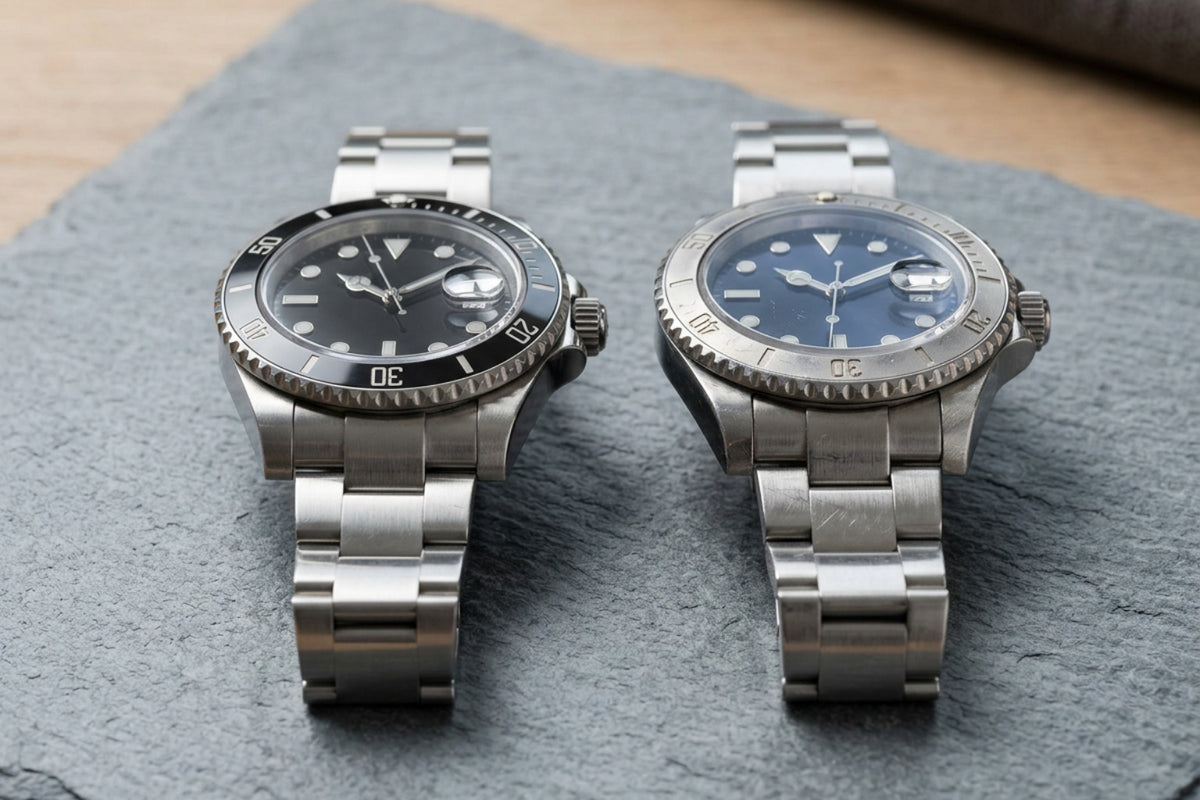
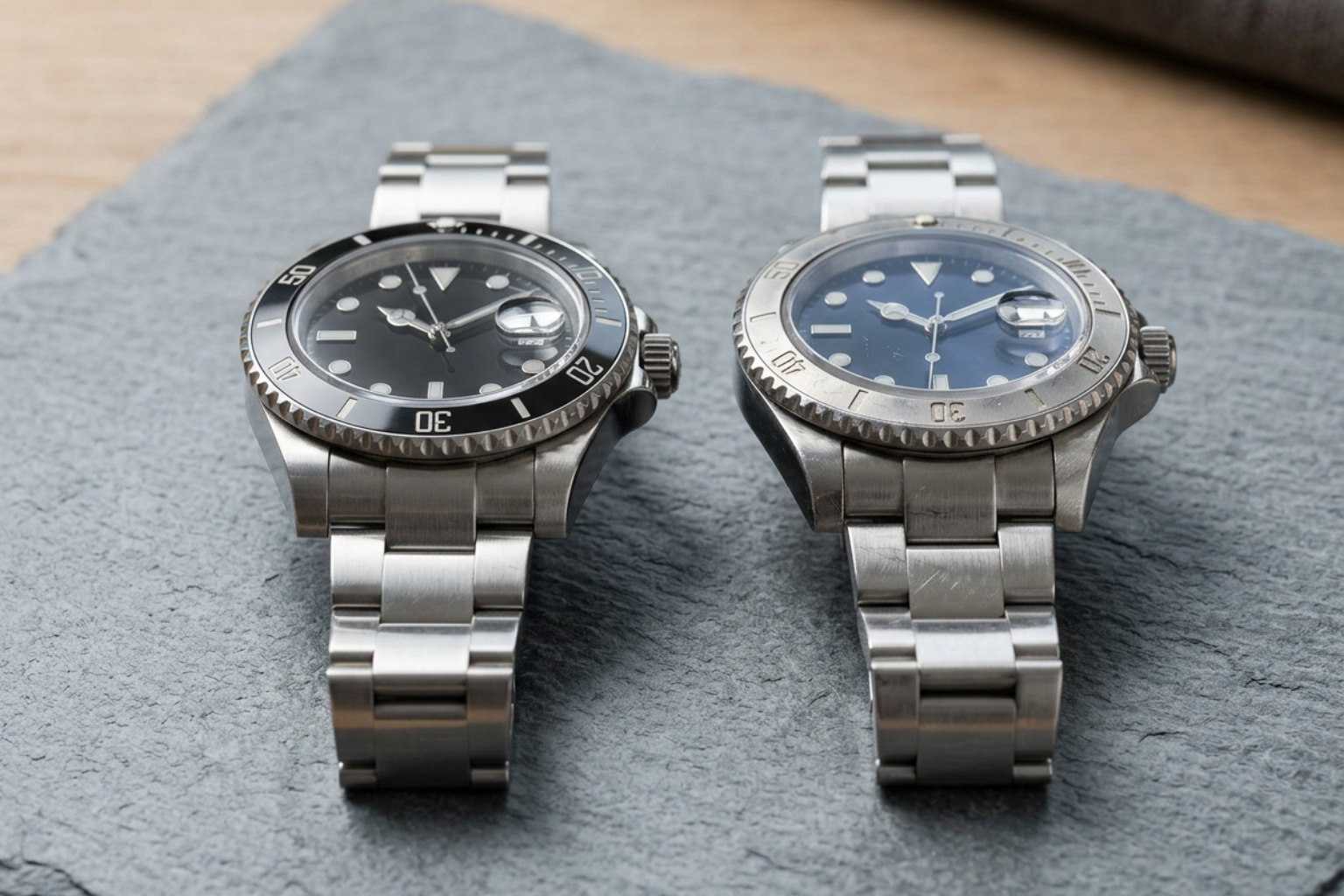
Polishing is one of the biggest factors in watch condition grading. Each time a case or bracelet is refinished, a small layer of metal is removed. Done carefully, this can refresh a modern daily-wear watch. Done too often, or too heavily, it can round the lugs, soften the bevels, and blur the factory lines that make the watch attractive.
For modern watches, light professional refinishing can be acceptable when the goal is a clean, wearable finish. For vintage watches, collectors usually prefer original case geometry and honest wear over a watch that has been made to look newer through heavy polishing.
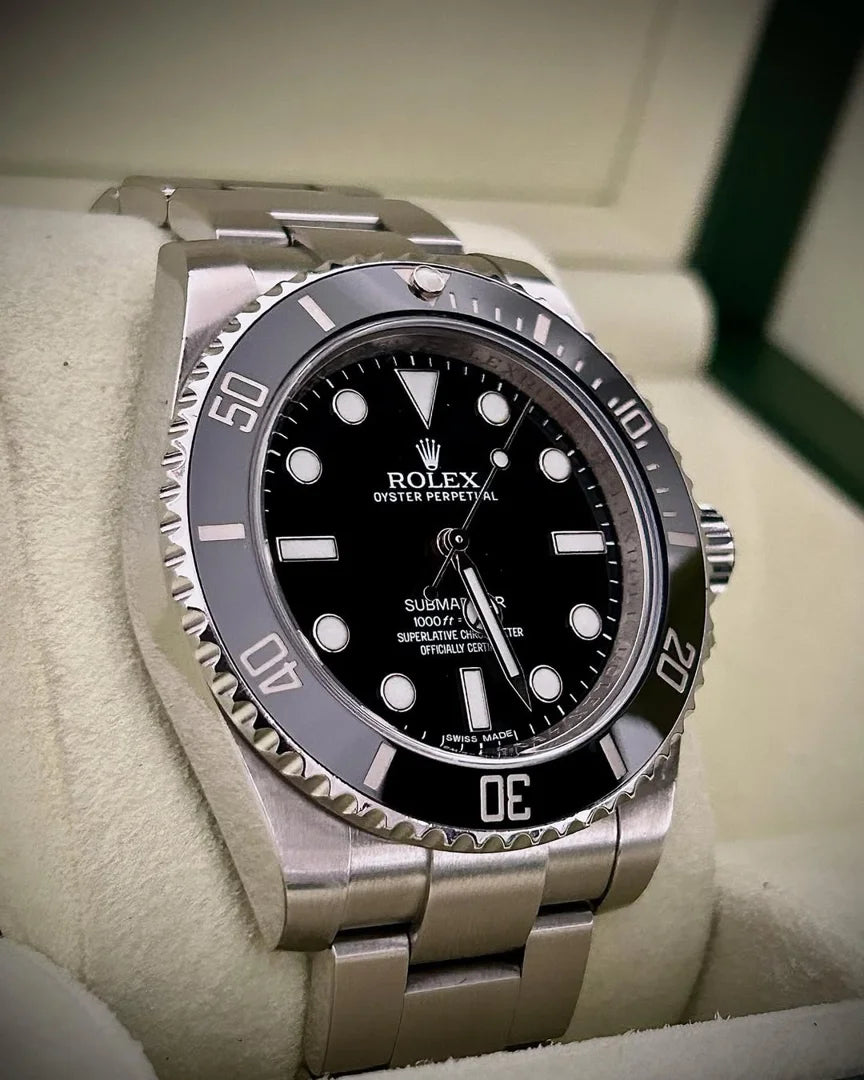
That difference is important. A vintage Rolex Submariner ref. 1680 or Rolex Submariner ref. 5513 with softened case lines will usually be viewed less favourably than a comparable example with crisp lugs, clear bevels, and natural wear. The same logic applies to later sports models such as the Rolex Submariner Date ref. 16610, where the shape of the lugs and bracelet condition still tell part of the ownership story.
Original Parts and Mechanical Performance
A good condition grade should never rely on appearance alone. The dial, hands, bezel insert, date wheel, bracelet, clasp, and movement all need to make sense for the model and period.
Movement checks also matter. A watch may look tidy but still need attention if its timing is inconsistent, the amplitude is weak, or the service history is unclear. Timegrapher results, a recent service record, and clear comments from a qualified watchmaker can make a listing much easier to assess.
Dial and handset originality are especially important on many collectible watches. On dress pieces such as the Patek Philippe Calatrava ref. 5196, a repainted dial or incorrect handset can change collector interest even if the watch still presents neatly.
Bracelet condition is another detail worth checking. Over time, metal bracelets can develop lateral play from wear inside the links and pins. That stretch affects comfort, appearance, and how confidently the watch presents on the wrist.
Papers, Accessories, and Listing Clarity
Original presentation boxes, booklets, guarantee cards, service records, and spare links can all support buyer confidence. They are not a substitute for condition, but they help tell a clearer story about the watch.
If you are comparing two similar watches, the more transparent listing is usually easier to judge. Clear photos of the case, lugs, bracelet, dial, clasp, caseback, and movement details can reveal far more than a short grade label.
A practical check before buying or selling is to ask:
- Has the case been polished or refinished, and do the original lines still look sharp?
- Are the dial, hands, bezel insert, date wheel, bracelet, and clasp correct for the reference and era?
- Are there recent timing results or service records?
- Does the bracelet show stretch, and are the original links included?
- Are the box, guarantee card, manuals, and service documents available?
For a broader explanation of ownership records and presentation sets, read the Box and Papers Guide. If you are still learning how the broader pre-owned market works, the Pre-Owned Luxury Watches Guide is a useful next step.
Getting a Clear Valuation for Your Watch
Condition grading is most useful when it leads to a clear, well-supported valuation. If you are selling, that means sharing honest photos, describing any known service history, and being upfront about polishing, missing accessories, or replaced components.
Private selling can leave you dealing with subjective opinions, delays, and uncertain buyers. WristWorks is built around direct-to-dealer outright purchases as the primary service, so Australian sellers can receive a considered valuation without managing listings or negotiations themselves.
WristWorks owns 95% of its inventory directly, handles payments directly, and holds any selected consignment pieces accepted through its secondary consignment service. That keeps outright selling at the centre of the process while still allowing consignment only where it genuinely suits the watch and seller.
If you are preparing to sell, start with clear photos in natural light, include any paperwork or service records you have, and avoid polishing the watch before it is assessed. Then request a direct appraisal through WristWorks so the grade, condition notes, and valuation can be considered together.