How to Sell a Luxury Watch Safely Without Getting Scammed
If you are deciding how to sell a luxury watch, a direct-to-dealer or outright sale is generally the clearest path when security and a straightforward process matter most. You provide the watch details, receive an assessment, and complete the handover through an established business rather than negotiating with unknown buyers.
Key Takeaways
- A direct-to-dealer sale keeps the process focused on one verified business, a clear assessment, and an agreed handover.
- Gather the box, papers, service history, spare links, and any relevant accessories before requesting an assessment.
- Keep the watch in its current condition unless a professional advises otherwise. Modern and vintage pieces should be handled differently.
- Use recent completed sales and the exact reference details to set realistic expectations about market value.
- For practical preparation steps, read WristWorks’ guide to selling your watch safely.
Why an Outright Sale Is the Safer Starting Point
A direct-to-dealer sale is designed to remove much of the uncertainty that comes with selling privately. Instead of managing a public listing, screening messages, arranging meetings, and coordinating delivery with an unfamiliar person, you work with one business through a defined process. That makes it easier to understand what information is required, what happens at handover, and when the transaction is complete.
An outright sale is different from an advertised retail listing. A dealer takes responsibility for holding the watch, preparing it for resale, and managing future market movement. In return, the seller receives a clear route to completing the sale without waiting for a private buyer to appear. For many owners, that trade-off is worthwhile because it reduces the operational work and uncertainty attached to the sale.
Online marketplaces, auction houses, and peer-to-peer sales can look appealing because they place the owner closer to the public market. However, they also leave the owner responsible for photographs, enquiries, negotiations, delivery arrangements, and disputes. A buyer may change their mind, question condition after delivery, or delay the process. These routes are best understood as comparison points, not as the preferred route for a seller who wants a more controlled experience.
Where Consignment Fits In
Consignment can be a secondary option when a seller is comfortable waiting for the right buyer and prefers their watch to be marketed on their behalf. It is not the same as an outright sale because the watch remains available for sale until an end buyer is found. That can mean a less predictable timeline and a longer period before the transaction is finalised.
At WristWorks, direct-to-dealer purchases remain the primary service. Consignment is available as an optional arrangement where appropriate, with consigned pieces held by WristWorks and payments handled directly. This gives sellers a clear point of contact while keeping the emphasis on the simpler outright route.
Avoiding Common Selling Scams
Private selling can create risks that are difficult to manage alone. Examples include altered payment records, requests to ship before funds are confirmed, unexpected claims after delivery, and meetings arranged in unsuitable locations. The issue is not that every private buyer is problematic, but that the seller has to carry the responsibility for checking every step.
A professional dealer process reduces that exposure by setting the terms before the watch changes hands. Ask how the watch will be assessed, where the handover will occur, how delivery is handled if you are selling interstate, and what documentation you will receive. Clear answers and consistent communication are useful signs that the process is properly organised.
Preparing Your Watch for a Secure Sale
Good preparation helps a dealer assess the watch accurately and prevents avoidable delays. Start by collecting everything connected to the piece, then photograph the watch in natural light before it is packed or handed over. This gives you a useful record of its condition and makes it easier to answer follow-up questions.
Gather the Complete Set
Bring together the original inner and outer boxes, papers, booklets, service records, spare bracelet links, and any original accessories. A complete set gives the dealer a fuller picture of the watch’s history and configuration. If an item is missing, be open about it rather than trying to replace it with something that does not belong to the reference.
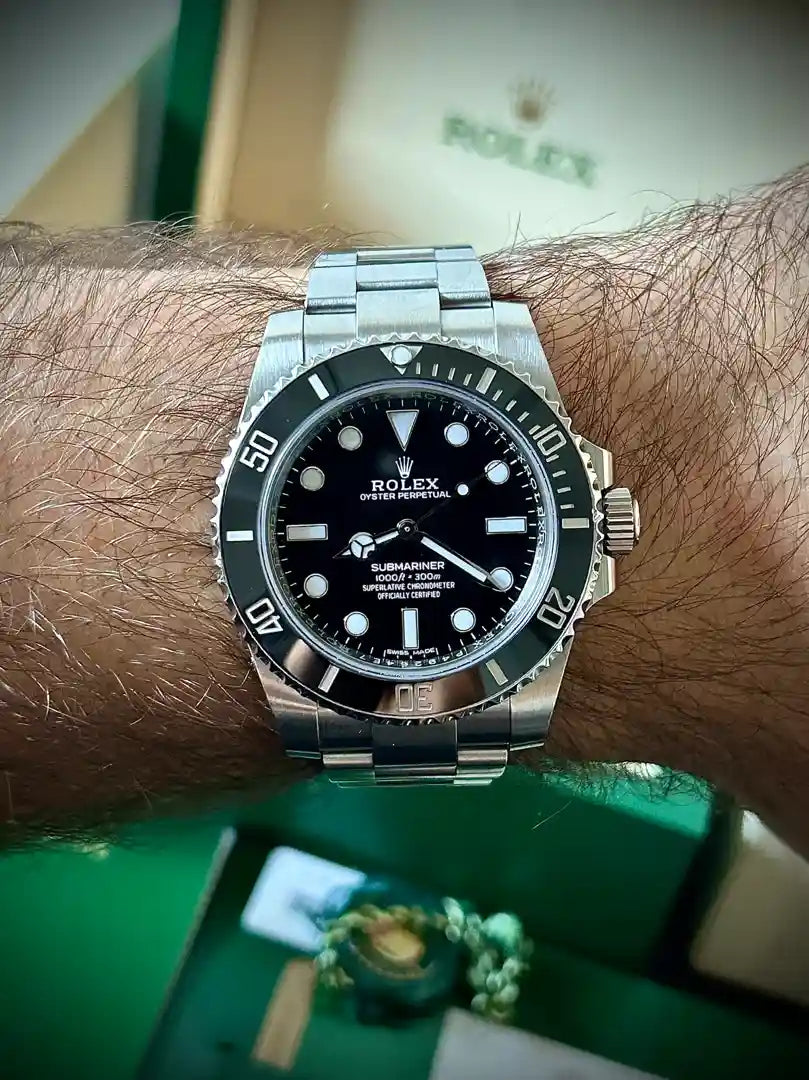
Also note the reference number, serial details where relevant, purchase date, and any service work you know about. You do not need to become an expert on every technical detail, but accurate information helps the assessment move forward. If you are unsure of the exact configuration, manufacturer resources such as the Rolex watch collection can help you compare visible features with the correct family of models.
Condition matters as much as completeness. Be direct about marks, dents, bracelet stretch, replaced components, or previous repairs. Small issues are usually easier to discuss before inspection than after the watch has been delivered. Honest information helps ensure the initial assessment is based on the same watch that arrives for review.
Modern and Vintage Watches Need Different Care
Avoid rushing to polish a watch before selling it. For a modern watch, light professional refinishing can be appropriate when it is carried out carefully and the owner understands the effect on the finish. For a vintage watch, polishing is generally best avoided because the original case lines, edges, and proportions are often part of its appeal to collectors.
Do not attempt DIY polishing with abrasive cloths, pastes, or household products. These can soften edges and create uneven surfaces that are difficult to correct. A gentle clean with a soft dry cloth is usually enough before appraisal. If the watch has a significant condition concern, explain it and let the dealer advise on the next step.
Establish a Realistic Market Position
Market value is based on the exact reference, condition, completeness, service history, and current demand in Australia. Two watches with the same model name can be viewed differently if their dials, bracelets, production periods, or accompanying items differ. That is why broad online searches often provide only a starting point.
When comparing listings, focus on watches that closely match your own and treat public asking prices with caution. An advertised figure is not necessarily the amount a watch changes hands for. A dealer will also consider how readily a particular reference is moving and how much preparation may be required before it can be offered again.
This is where a direct assessment is useful. It turns a collection of online comparisons into a conversation about your actual watch, its condition, and the practical route to selling it. You can begin by sharing clear photographs and reference details through the WristWorks watch selling page.
Completing a Safe Direct-to-Dealer Sale
Once you have agreed to proceed, follow the handover instructions carefully. If you are meeting in person, bring the watch and its accessories together, along with the documents you discussed. If you are sending it from elsewhere in Australia, use the dealer’s agreed shipping process and retain the tracking and packing records.
For a remote handover, take a short continuous video of the watch operating, its visible identifying details, the included accessories, and the packing process. Place the watch and its box inside a plain, sturdy outer carton with enough protective material to stop movement. Do not write anything on the outside that suggests the contents are valuable.
After receipt, the dealer will compare the watch with the information supplied during the initial assessment. This usually includes reviewing condition, movement performance, and the accompanying set. If there is a material difference from the description, discuss it openly and ask for a clear explanation of how it affects the transaction.
A well-run direct-to-dealer sale should feel organised from first enquiry to completion. You should know who you are dealing with, what information is being reviewed, how the watch will be transferred, and what the next step is at each point. That clarity is one of the main advantages over managing a private sale alone.
If you are ready to discuss your watch, you can contact WristWorks or submit the details through the watch enquiry form for a no-obligation assessment.