Omega Watches: What to Know Before You Buy
Why This Omega Buying Guide Matters
An Omega buying guide is useful if you are considering one of Switzerland's most established watch brands. With a history dating back to 1848, Omega is known for landmark achievements, from supplying watches for NASA missions to serving as the official timekeeper for the Olympic Games.
Omega’s catalogue is centred on four main collections: the Speedmaster (chronographs), Seamaster (dive and sports watches), Constellation (dress-leaning with integrated bracelets), and De Ville (refined and classic designs). Modern models often feature technical developments such as the Co-Axial escapement, which is designed to improve long-term accuracy, and Master Chronometer certification, which includes testing for resistance to magnetic fields up to 15,000 gauss.
Buying privately or on peer-to-peer platforms can sometimes lead to lower headline prices, but it also places the burden of confirming the watch's details, negotiation, and after-sale risk on you. Working directly with a trusted dealer such as WristWorks offers a different path: you gain a curated selection, open discussion of condition and pricing, and a thorough inspection process carried out before the watch ever reaches the website. This direct-to-dealer approach can reduce uncertainty and give buyers and sellers clearer expectations from the outset.
An Introduction to Omega’s Iconic Collections
Omega has been part of Swiss watchmaking since the mid-19th century. Over time, the brand has built a reputation for reliable timekeeping, robust sports watches, and refined dress pieces. Today, its range is organised around four main collections, each with its own character and history.
Understanding these families is a useful starting point before you decide whether to hunt for a specific reference on your own or to work with a dealer who can help source the right piece.
The Seamaster: An Icon of Land and Sea
The Seamaster is Omega's longest-running collection, launched in 1948. Early models were water-resistant dress watches with roots in military designs, and the line later evolved into a professional dive watch with the Seamaster 300 in 1957. Since 1995, its appearance on the wrist of James Bond has helped introduce the brand to a wider audience.
Key sub-collections include:
- Diver 300M: The modern Bond watch, known for its wave-pattern dial, 300-metre water resistance, and a blend of professional dive features with everyday versatility.
- Planet Ocean: A more substantial diver with 600 metres of water resistance, it is a thicker, tool-focused watch available as a three-hand model or a chronograph.
- Aqua Terra: A versatile sports watch with 150 metres of water resistance, a cleaner design, and the distinctive 'teak deck' dial pattern on many models.
- Ploprof: A highly specialised professional diver with a unique case and locking bezel, designed for saturation diving.
For a deeper look at the Seamaster's history, you can read more at Omega’s Seamaster Heritage Gets a Second Life Online.
The Speedmaster: The Legendary Moonwatch
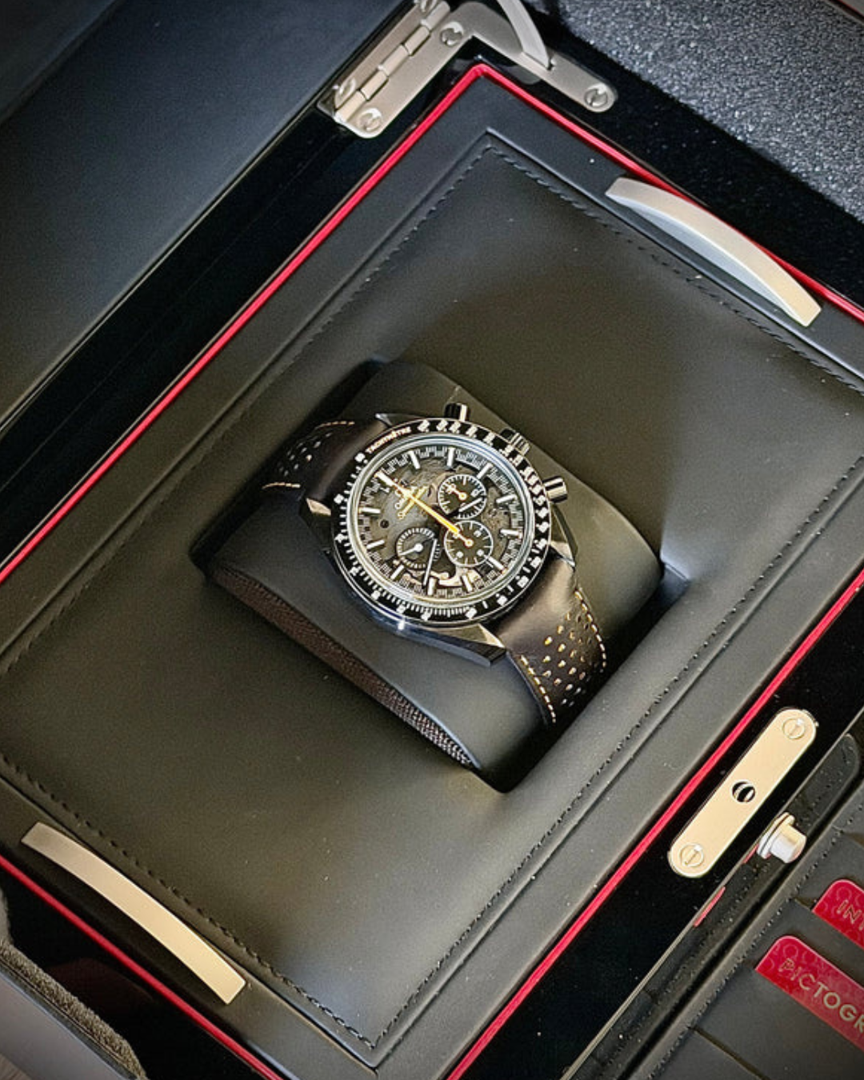
Introduced in 1957 as a racing chronograph, the Speedmaster later became closely linked with space exploration. After passing NASA’s testing, it was certified for all manned space missions and was worn during the Apollo 11 moon landing in 1969, earning the 'Moonwatch' nickname.
Notable lines within the collection include:
- Moonwatch Professional: The modern equivalent of the historic space-worn model, featuring a manually wound movement and its classic dial layout.
- Calibre 321 models: Models housing a movement based on the early space-era calibre, appealing to those who value historical continuity.
- Heritage '57: Designs recalling the original 1957 Speedmaster, with straight lugs and vintage details.
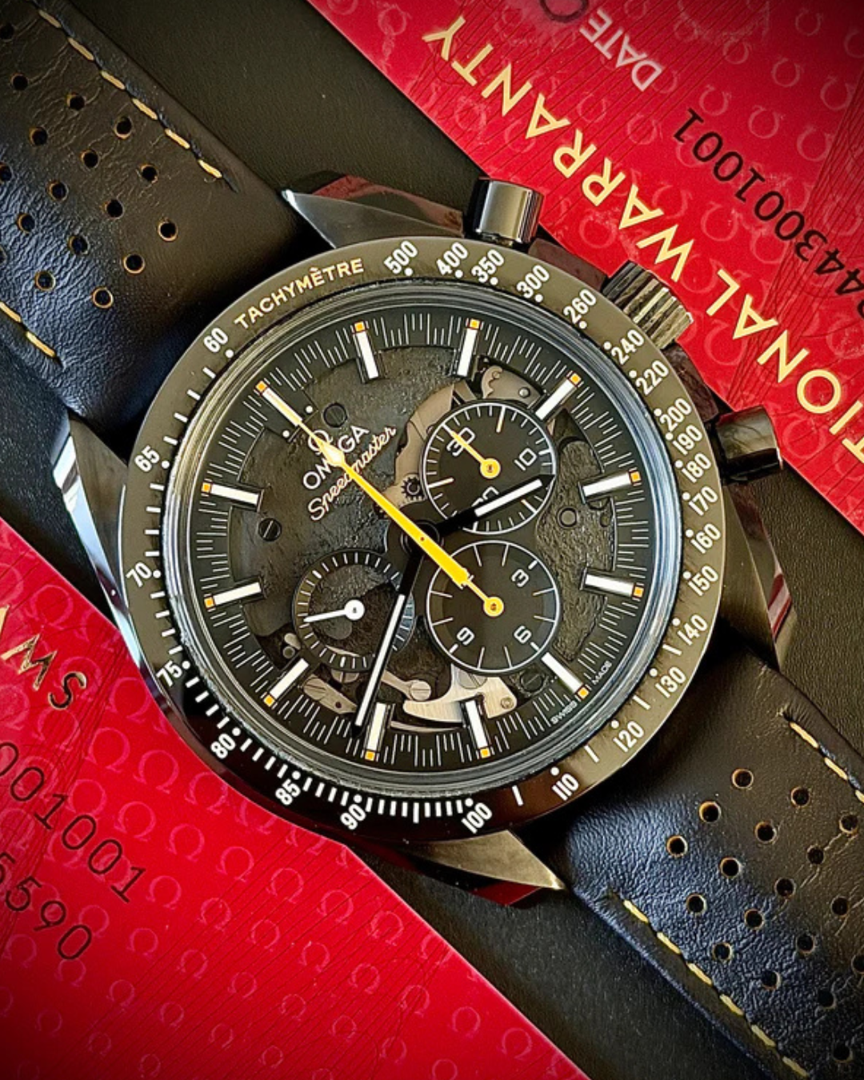
- Dark Side of the Moon: A contemporary series using black ceramic cases and modern finishes to reinterpret the Speedmaster.
To explore more about this collection, see 3 Must-Have Omega Speedmaster Models.
The Constellation & De Ville: The Essence of Elegance
While the Seamaster and Speedmaster are sport-focused, the Constellation and De Ville collections offer dressier, more understated designs.
The Constellation is known for its 'griffes' (claws) on the bezel and integrated bracelet. Its Globemaster sub-collection revives the classic 'pie-pan' dial from the 1950s and was one of the first to receive Master Chronometer certification, blending vintage style with modern technology.
The De Ville line is Omega's platform for classic watchmaking, being the first to use the Co-Axial escapement in 1999. The range includes the slim Trésor, the contemporary Hour Vision, and complex models, showcasing the brand's approach to formal watches.
If you are building your knowledge before buying, our Essential Guide to Understanding Timepieces provides further context on movements, case designs, and what to look for when comparing options.
Your Complete Omega Buying Guide: Key Considerations
Investing in an Omega means buying into a long-running name in Swiss watchmaking. The brand offers strong build quality, recognised designs, and modern technical developments. For many buyers, the decision is not just which model to choose, but whether to handle the search and purchase themselves or partner with a dealer who can simplify the process.
Understanding Omega’s Technical Excellence
Omega's reputation is supported by technical choices that improve performance and reliability:
Co-Axial Escapement: This movement design, acquired from watchmaker George Daniels, reduces friction compared to traditional lever escapements. This supports more stable accuracy over time and can allow for longer service intervals.
Master Chronometer Certification: This standard from the Swiss Federal Institute of Metrology (METAS) goes beyond typical chronometer testing. Watches must pass eight tests, including resistance to magnetic fields up to 15,000 gauss—a practical advantage in a world full of electronic devices.
Omega also uses materials like ceramic, titanium, and proprietary alloys such as O-Megasteel, designed for greater durability and scratch resistance. You can learn more about one of the brand's most significant innovations at The story of the Co-Axial escapement.
A First-Timer’s Omega Buying Guide: Vintage vs. Modern
A common decision is whether to pursue a vintage Omega or a modern reference. Each route has merits, and your choice may influence whether you go it alone or work through a dealer.
Vintage Omega Watches from the mid-20th century, like early Seamaster and Constellation models, offer classic designs at accessible prices. However, they come with considerations:
- Water resistance is often less reliable than modern standards.
- Originality is key; many older pieces have replacement parts, and watches with mixed components are not uncommon.
- While natural ageing (patina) adds character, heavy polishing can soften case lines and reduce value, so it is generally avoided on vintage pieces.
Researching references and inspecting movements can be done independently, but it requires a cautious approach. Buying vintage through a dealer who clearly explains a watch’s history and condition can reduce some of that legwork.
Modern Omega Watches feature the latest calibres, including the Co-Axial escapement and Master Chronometer certification. They offer better durability, stronger water resistance, and straightforward servicing, making them well suited to daily wear. For modern watches, careful polishing during a service is generally acceptable to refresh the finish.
If you prefer to manage the process yourself, marketplaces and private listings offer a wide field of choices but require you to handle all checks, negotiation, and shipping. Using a dealer like WristWorks narrows the selection to pieces that have already been inspected, photographed, and described, saving time and reducing risk.
For more tips on navigating the online watch market, explore our Complete Guide to Buying Watches Online. If you are curious about older models in particular, you can also explore vintage Seamaster examples to get a feel for the variety and pricing.
Making a Secure Purchase: An Omega Buying Guide Checklist
Whatever route you choose, a simple checklist can help you keep security and value in focus.
-
Decide on Your Buying Path:
- DIY approach: Searching private listings can uncover sharp prices, but you take on the work of vetting sellers, confirming a watch's history, and resolving any issues.
- Direct-to-dealer approach: Working with a specialist like WristWorks means the watch has already undergone condition checks. Pricing, photos, and descriptions are presented upfront, and you deal with a single, established business.
-
Condition and History:
- Ask for detailed photos of the dial, case, caseback, movement, and bracelet.
- Look for clear descriptions of any servicing, replacement parts, or modifications.
-
Full Sets and Documentation:
- Original box and papers help support provenance and can improve resale appeal. Many buyers seeking long-term value favour complete sets.
-
Transparent Pricing and Fees:
- On peer-to-peer marketplaces, factor in platform fees, shipping, insurance, and potential customs charges.
- A dealer such as WristWorks lists watches with clear, GST-inclusive pricing, so the amount you see is the amount you pay.
Why Choose a Trusted Dealer like WristWorks?
WristWorks operates as an online-first dealer in Australia, focusing on clarity for buyers and sellers. Most inventory is owned outright, purchased directly from clients. This direct-to-dealer model is our primary service and allows for instant quotes, straightforward negotiations, and prompt payment to sellers. Consignment is also available, with all watches held securely at our Perth facility for inspection and photography. This structure means any Omega listed on the site has already been through a detailed condition review. For sellers, it offers a choice: sell directly to WristWorks for speed and certainty, or use consignment if you are comfortable waiting for the right buyer.
By following this checklist and choosing the path that best fits your risk tolerance and time, you can approach your Omega purchase with more confidence. Learn more about navigating the market at Master the Market: How to Buy and Sell Watches Like a Pro or explore our curated collection of Omega watches.
Conclusion & Next Steps
Choosing an Omega is rewarding, whether you favour a vintage Seamaster or a modern Speedmaster. As this Omega buying guide has outlined, understanding the main collections, technical features, and the differences between vintage and modern pieces is key before you commit.
You can manage the search and negotiations on your own, particularly if you enjoy research. Alternatively, working with a trusted dealer simplifies the transaction by presenting a selection of carefully described watches.
WristWorks specialises in a direct-to-dealer model for buying and selling in Australia, with consignment as a secondary option. All watches are held and processed through our secure facility in Perth. This approach gives clients clear information, straightforward pricing, and confidence that every Omega listed has been through a rigorous inspection process.
Call to Action: Ready to find your perfect Omega? Browse our collection, get a valuation, or contact WristWorks for practical, one-on-one guidance on your next watch purchase or sale.