Article: Is Your Rolex Actually a Good Investment?
Is Your Rolex Actually a Good Investment?

Checking your Rolex investment value starts with the details that make your watch distinct, including its reference, condition and original documentation. It also helps to understand how readily similar watches are changing hands in Australia.
Key Takeaways
- Start with the exact reference, production period and configuration rather than the model name alone.
- Original box, papers and service history help tell a clearer ownership story.
- Compare like-for-like watches in similar condition, not broad listings that may not match your piece.
- For practical preparation before selling, see our guide to watch buying.
- A direct sale to a specialist offers a secure, straightforward path when you are ready to move on from your watch.
I am Brad Purdy, founder of WristWorks. My hands-on experience buying, inspecting and valuing pre-owned watches in Australia informs the careful, practical approach used for every Rolex investment value check.
You do not need to be an experienced collector to begin the process. Start by recording what you can see, keep the paperwork together and ask questions when a detail is unclear. A careful review gives you a stronger basis for deciding whether to hold the watch or prepare it for sale.
Keep a simple written timeline of ownership, servicing and storage, as this can help explain the watch's background clearly.
Keep copies of any correspondence as well, especially where it confirms servicing or explains a documented change to the watch over time.
How to Assess a Rolex Before You Sell
A useful Rolex investment value check is less about broad headlines and more about the exact watch in front of you. By looking at its reference, condition, documentation and current buyer interest, you can build a more realistic picture of where it sits in the Australian pre-owned market.
Identify the Exact Reference and Configuration
Start with the model, bracelet, bezel, dial, production period and any documented service work. Small differences can matter, so compare your watch with examples that share the same configuration and condition. The model name on its own is rarely enough to describe what a buyer will be considering.
Check the reference and serial details against the documentation you hold. Then note features that can separate one example from another, such as the bracelet type, dial variation, bezel insert, clasp code and whether original parts remain in place. Clear photographs of these details can make an early discussion with a specialist much more useful.
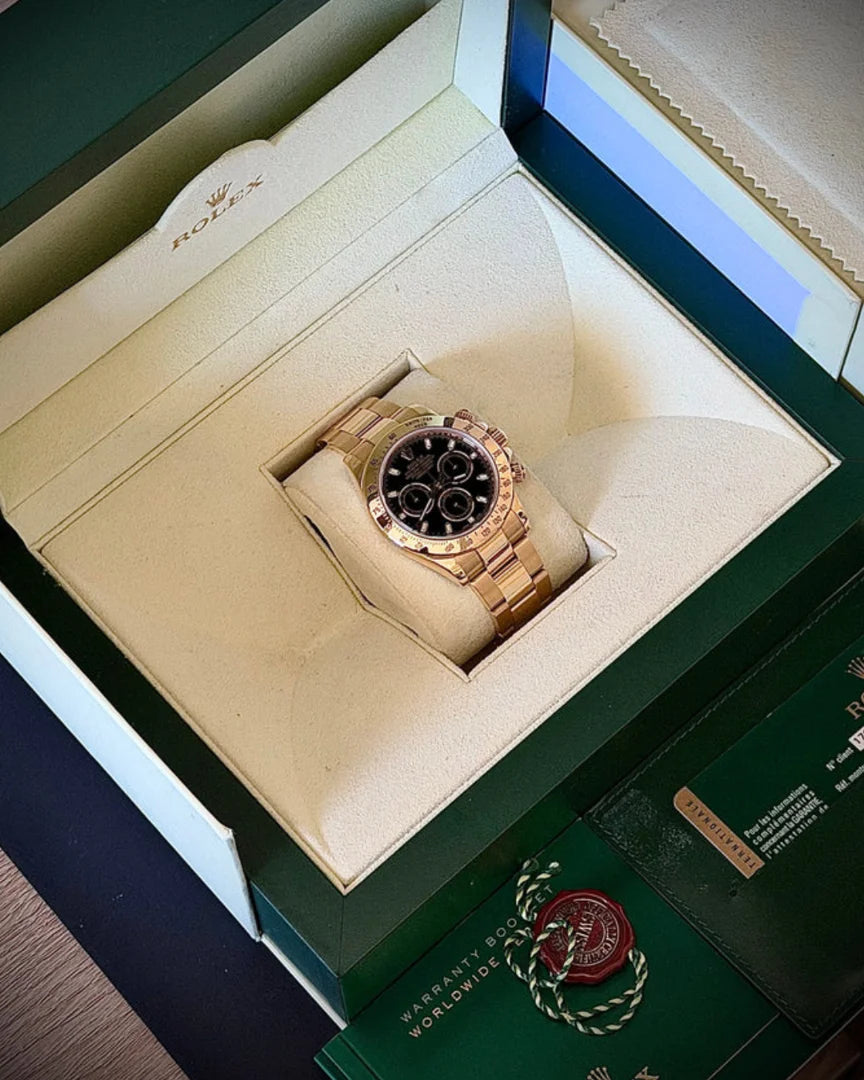
- Cosmograph Daytona is a modern stainless steel chronograph with strong collector interest and active demand.
- Submariner Date is a widely recognised diving watch that is often sought after in complete, well-kept condition.
- GMT-Master II, known for its red-and-blue bezel, attracts collectors when its configuration and documentation are clear.
- Datejust 41 can appeal strongly in sought-after dial and bracelet combinations, while each example should be assessed on its own details.
For more context on the factors that influence demand over time, read our Rolex value retention guide.
Check Condition, Service History and Provenance
Condition is easiest to judge when you take a methodical approach. Look for crisp case lines, an original dial and hands where relevant, a bracelet with appropriate stretch for its age, and a movement that has been properly maintained. Also note any visible marks, replacement components, moisture damage or signs of rough handling.
Modern watches can benefit from careful, factory-standard polishing when it is appropriate. Vintage pieces are different: collectors generally value original case lines, clear chamfers and period-correct patina, so unnecessary polishing can reduce their appeal. A light mark does not automatically make a watch less desirable, particularly when its history is clear and the case has not been overworked.
Service records can be just as helpful as the watch itself. They show how the watch has been looked after and may clarify when work was completed. Keep invoices, service pouches and any written notes together with the watch so the next owner can see a consistent record.
Original box, guarantee card, booklets, swing tags and service records create a more complete ownership record. If you are gathering documents before a sale, our guide to how important a full set is when buying a watch explains why these details matter.
Compare Like for Like in the Australian Market
Avoid treating a broad online listing as a direct match for your watch. Instead, consider recent activity for comparable references with similar condition, completeness and provenance. A specialist can also help you understand whether your watch is likely to attract interest from collectors or everyday buyers.
It is worth separating well-documented watches from examples with uncertain histories. A complete modern sports model may draw attention for different reasons than an older piece with an original dial and untouched case. The best comparison is one that reflects the same era, materials, dial and overall state of preservation.
You should also consider timing. Interest in particular references can change as new releases arrive, collector tastes shift or supply changes. That does not mean every watch follows the same pattern, which is why a reference-specific review is more helpful than relying on a general market statement.
This approach keeps the assessment grounded in the qualities that are visible, verifiable and relevant to the watch you own.
Before you decide what to do next, set aside time to compare the watch's details with your paperwork in good light. Photograph the dial, case sides, bracelet, clasp and any reference markings without altering the watch. These notes give a specialist a useful starting point and help ensure that important details are not missed during an initial conversation. They can help you describe the watch clearly if you seek more than one assessment.
Preparing for a Confident Rolex Sale
Once you understand your watch's reference, condition and provenance, you can decide how to move forward with greater confidence. A clear record of the watch and its history makes discussions with prospective buyers or specialists more straightforward.
Prepare the Watch and Documentation
Before arranging a sale, gather the watch, box, papers, service records and any supporting material you have retained. Take clear photographs and note any marks, changes or recent servicing so the watch can be assessed accurately.
If the watch has been stored away for some time, check that it is secure and that the documents are easy to find. Avoid cleaning the case aggressively or changing parts before an assessment. It is better to present the watch honestly and allow its condition to be reviewed as it is.
Secure handling also matters. Keep the watch protected, use a reputable insured delivery service when needed, and make sure every handover is documented. If you are meeting someone in person, choose a setting that allows the watch and paperwork to be inspected without rushing.
Choose a Secure, Straightforward Sale Route
For most owners, a direct-to-dealer outright sale is the recommended route for security and simplicity. A specialist can inspect the watch, explain the assessment and manage the transaction without the uncertainty that can come with dealing with unknown buyers.
This route is particularly useful if you would prefer a clear process from first contact to final handover. You can provide the reference, photographs and paperwork, then discuss the watch with a business that regularly handles pre-owned luxury watches in Australia. The result is a more controlled experience, with clear communication at each stage.
Private classifieds, enthusiast forums and open online auctions can be useful comparison points, but they may involve buyer disputes, non-payment concerns and delivery risks. Consignment remains an optional service for owners who are comfortable waiting for a suitable buyer, while an outright sale is the clearer route when speed and security are the priority.
Work With a Perth-Based Specialist
A local specialist can help you work through the details of a Rolex investment value check without reducing the discussion to a generic online estimate. At WristWorks, we look at the watch's specification, condition, provenance and supporting records so you can make an informed decision about your next step.
If you are ready to take the next step, read our guide to selling a pre-owned Rolex or sell your watch directly through WristWorks.
At WristWorks, we are based in Perth, Western Australia, and operate an online-first model focused on clear communication and careful handling. Ninety-five percent of our inventory is owned directly by WristWorks, consigned pieces are held securely in our physical custody, and payments are handled directly.
Take your time when choosing who will handle the watch. Ask how the inspection, transport and handover will work, and keep written confirmation of the agreed steps. A well-organised process lets you focus on the decision rather than trying to manage uncertain arrangements on your own from a distance.