How to Find Authentic Luxury Watches in Australia
Why Finding Luxury Watches in Australia Is Harder Than It Looks

If you're shopping for a luxury watch in Australia: whether you're buying your first piece or adding to an existing collection, the market can be more complicated than it first appears. The shift to online selling has improved access and pricing, but it has also increased the risk of unclear histories, inconsistent condition grading, and sellers who can't properly support a high-value transaction. In a country as geographically vast as ours, the logistics of high-value trade require a level of precision that many casual marketplaces simply cannot provide. The Australian market has its own unique set of challenges, from the tyranny of distance between major capitals like Perth and Sydney to the specific regulatory environment that governs high-end commerce.
Finding a timepiece that meets your standards involves navigating a landscape filled with varying levels of professional oversight. For many Australian enthusiasts, the challenge is not just finding the watch, but finding a seller who takes full responsibility for the item. A practical way to reduce risk is to focus on the process around the watch, not just the listing. In most cases, that means choosing a professional dealer who can control the full transaction end-to-end, from the initial intake to the final delivery at your doorstep. This level of control is essential when dealing with items that represent significant financial and emotional value.
Key checks buyers commonly use in Australia to ensure a smooth experience:
- Buy from established dealers with a verifiable track record and clear, local contact details
- Favour listings with original box, papers, and documented service history where available
- Confirm pricing is GST-inclusive and all associated fees are clearly disclosed before commitment
- Be cautious with private marketplace listings that lack detailed documentation or professional inspection reports
- Ask how the watch is checked before sale, including whether it is opened, tested for timekeeping, and reviewed for mechanical health
I'm Brad Purdy. After working in the car industry and learning firsthand how costly poor processes can be, I built WristWorks to provide a more transparent way to buy and sell pre-owned luxury watches in Australia. Our focus is on clear communication, careful checks, and handling transactions directly. We recognise that for most people, a luxury watch is a significant investment, and the experience of acquiring one should reflect that importance. By specialising in a direct-to-dealer model, we remove the friction and uncertainty often found in peer-to-peer trades. Our organisation is built on the principle that the seller should take the burden of risk, not the buyer.
Related guides:
Navigating the Market for Luxury Watches in Australia
The way Australians buy and sell luxury watches has changed significantly over the last decade. While traditional boutiques still play an important role in the ecosystem, many buyers now compare options online and look to the pre-owned market for broader choice and, in many cases, better value. The trade-off is that the quality of listings and seller practices varies widely across the country. It is worth understanding how pricing, sourcing, and after-sale support typically work in the Australian context to ensure you are making an informed decision. The rise of digital platforms has democratised access, but it has also made it harder to discern between a professional operation and a casual hobbyist.
Pricing in Australia: Boutique vs. Pre-Owned
Price differences between retail and pre-owned are often driven by overheads, supply, and demand for specific references. Pre-owned pricing can be competitive, but it's not automatically "cheap"—popular models may trade close to retail, or even above it, depending on global availability and local desirability. In Australia, the market is often influenced by our currency fluctuations and the relative scarcity of certain high-demand models compared to larger markets like Europe or the United States. When the Australian Dollar (AUD) weakens against the Swiss Franc or US Dollar, we often see a corresponding rise in local pre-owned prices as replacement costs for dealers increase.
Independent feedback can be helpful when assessing dealers and service standards. For example, reviewing customer feedback on luxury watch transactions and broader insights into global watch marketplace trends can give a sense of common issues buyers and sellers encounter. These reviews often highlight the importance of clear communication and the value of a seller who stands behind their product. In the Australian context, look for mentions of shipping reliability and how the dealer handles the unique logistics of our region.
We operate online from Perth and ship nationally using fully insured courier services. This model can reduce some traditional retail costs, but the more important point for most buyers is process control: who has the watch in hand, who checks it, and who is responsible if there's an issue. By maintaining a centralised operation, we ensure that every watch is handled with the same level of care and attention to detail. This is particularly important for buyers in regional areas who may not have access to a physical boutique.
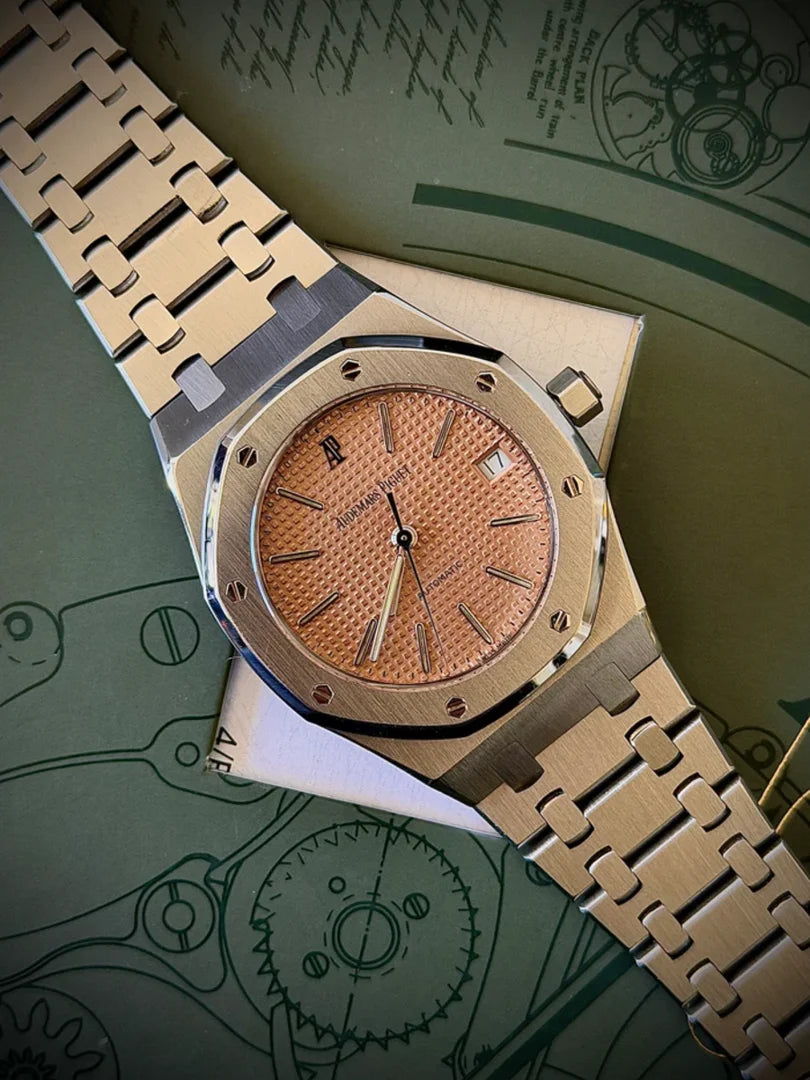
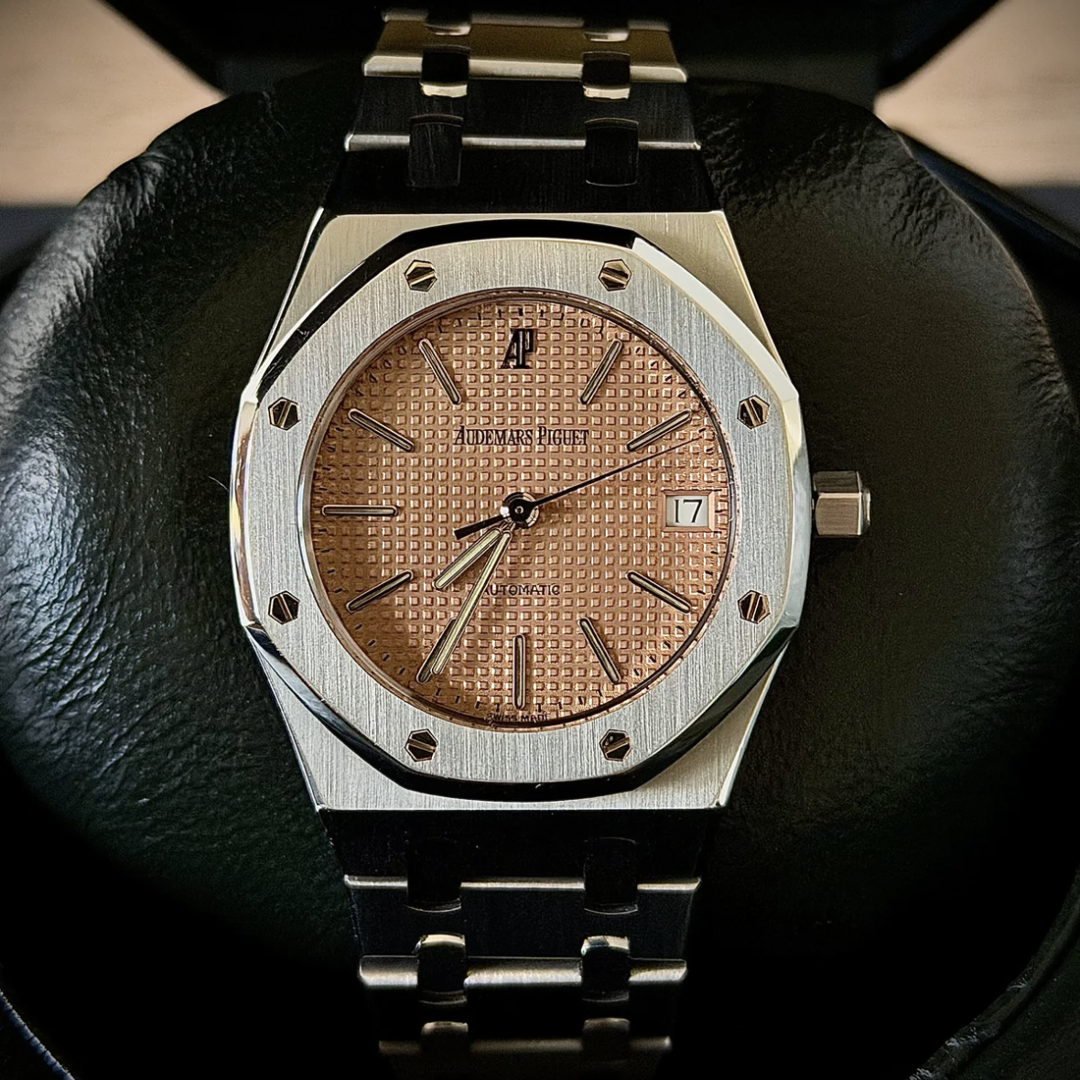
If you're comparing high-end pieces, this guide to buying pre-owned Audemars Piguet watches in Australia covers practical considerations specific to that segment, including the nuances of integrated bracelet designs and movement complexity.
What Good Dealer Processes Look Like
A reliable dealer should be able to clearly explain how each watch is assessed before it is listed for sale. This is a meticulous process that goes beyond a simple visual check. At WristWorks, we believe that transparency is the foundation of a successful transaction. This typically includes:
- Verifying the reference details match the exact configuration being sold, including dial variations and bezel types
- Inspecting the movement using a timegrapher to check amplitude, beat error, and daily rate performance
- Assessing the dial, hands, bezel, and case condition under high magnification and in various natural light settings
- Checking bracelet stretch, clasp function, and ensuring all spare links are accounted for or disclosed
- Reviewing serial numbers and matching them against documentation where available to ensure a clear history
- Testing water resistance to ensure the seals are performing as intended for the specific model
These rigorous processes are what separate a professional dealer from a casual seller. Every piece goes through this kind of structured assessment before it reaches a listing—giving buyers a clear picture of what they're getting without having to do the legwork themselves. Many buyers start by learning common red flags on popular models; this guide on how to spot fake Rolex sets out practical visual and build-quality checks that are useful when comparing listings.
Selling in Australia: Outright Sale vs. Consignment
For most owners, the biggest decision is how to sell their timepiece. Broadly, there are two primary approaches, and understanding the difference is crucial for a smooth experience:
1) Sell directly to a dealer (Outright Sale): This is our primary and recommended model at WristWorks. It is generally the simplest and most secure option because the transaction is handled by a business that specialises in high-value goods. When we buy a watch outright, we take immediate ownership and handle the entire process from there. This provides the seller with a definitive outcome and avoids the uncertainty of waiting for a third-party buyer. It is a straightforward process designed to respect the seller's time and provide a professional exit from their investment. For those looking for a clean break and immediate liquidity, the outright sale is the gold standard.
2) Consignment: We offer consignment as a secondary option for certain unique or high-value pieces. In this model, the watch is held by WristWorks in our secure facility, and we manage the marketing and sale on your behalf. The watch is never left with the owner while listed, ensuring that we can respond to buyer enquiries and facilitate inspections immediately. While this can sometimes result in a higher net return, it requires more patience as the timing depends on market demand. We only suggest this for pieces where the market is highly specific or the value is exceptionally high.
Our approach is also reflected in how we stock the business: around 95% of our inventory is owned by WristWorks, which supports consistent handling and faster fulfilment. This high level of ownership means we have a vested interest in the quality and condition of every watch in our collection. It also means we are not just a middleman; we are the actual owners of the stock we sell.
For a broader overview of buying and selling locally, these guides may help: luxury watches in Australia: a modern guide to buying, owning, and selling and pre-owned luxury watches complete guide.
GST and Import Costs: What Changes for Australians
When comparing Australian stock with overseas listings, it's worth doing the full landed-cost calculation. For imports, Australians are liable for 10% GST on items valued over $1,000, along with possible customs duties and processing fees. Exchange-rate movements can also change the final cost between the time of order and the final settlement. The Australian Border Force provides current guidance on duties and thresholds for personal imports, and it is often more complex than buyers initially realise. Often, a watch that looks like a bargain on a US or European site ends up costing significantly more once it clears customs in Sydney or Melbourne.
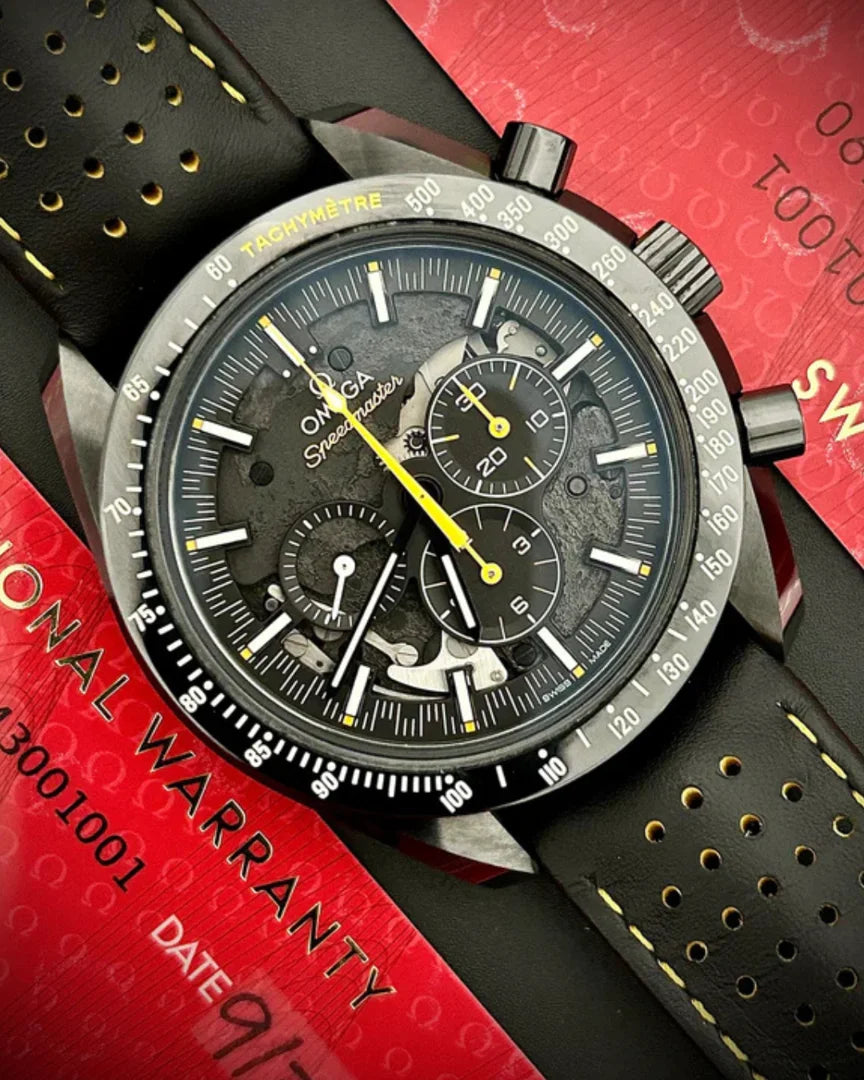
Buying locally often simplifies this. We list our prices GST-inclusive and ship fully insured within Australia, so buyers can compare like-for-like without hidden surprises. If you're researching specific brands, these pages offer brand-focused context for local buyers: pre-owned Rolex Australia and pre-owned Omega watches.
Full Sets, Documentation, and Long-Term Value
In the pre-owned market, documentation can significantly affect demand and future resale outcomes. A "full set" is highly prized by collectors and commonly includes:
- Outer and inner presentation boxes
- Original papers or guarantee cards (stamped by an authorised dealer)
- Instruction manuals and any service receipts from the watch's history
- Hangtags, bezel protectors, and all original spare bracelet links
A watch can still be a fantastic purchase without these items, but complete documentation can make it easier to sell later and may support stronger pricing. If Rolex is on your shortlist, this guide to buying Rolex explains what to look for when comparing sets and why certain components add more value than others. We always recommend keeping every piece of paper and plastic that comes with a new purchase, as the secondary market in Australia places a high premium on these items.
Condition, Servicing, and Polishing: Modern vs. Vintage
Condition is one of the most common sources of disappointment in online purchases. Two sellers may describe the same level of wear very differently, which is why clear, high-resolution photos and an honest, professional assessment matter. Our approach to polishing is consistent and designed to honour the original design of the watch:
- Modern watches: Light, professional polishing can be appropriate to present a clean, well-finished watch that looks its best for the new owner. We use specialised equipment to ensure the factory lines are maintained.
- Vintage watches: Polishing is generally avoided, as collectors often prefer sharp case lines, original geometry, and the natural patina that comes with age over a "like-new" finish. Over-polishing a vintage piece can significantly reduce its market value.
Before any watch is listed, we assess its overall mechanical health and exterior condition so buyers have a clear idea of what they're receiving. This level of detail ensures that there are no surprises when the watch box is opened for the first time. For more on how condition is typically graded and presented in the industry, see the pre-owned luxury watches complete guide.
Get Your Luxury Watch with WristWorks
Buying or selling a luxury watch in Australia is a journey that is made much smoother when you focus on process, documentation, and the reputation of the person or business on the other side of the table. While private listings can work for experienced sellers who are prepared to manage the inherent risks and time commitments, for most people, selling directly to a dealer (outright) is the more secure, convenient, and professional option. It provides an immediate solution and removes the complexities of the open market, allowing you to move on to your next acquisition with confidence.
At WristWorks, outright purchases are our primary service, supported by clear handling procedures and an inventory model where around 95% of stock is owned by WristWorks. This ensures we have full control over the quality of our collection and the speed of our service. Consignment is available as a secondary option for suitable pieces, with the watch held by us and all aspects of the sale handled directly by our team. We are committed to providing a service that reflects the high standards of the Australian watch community and ensures every transaction is handled with the utmost professionalism.
If you’d like to browse what’s available or discuss your options for selling a piece from your collection, Explore our collection of watches or get in touch to arrange a professional valuation and discuss the next steps in your horological journey.