Is Your Rolex Real? The Ultimate Guide to Spotting a Fake
If you are learning how to identify an original Rolex watch, start with the simple checks you can do before money changes hands. A genuine Rolex should feel consistent in the hand, show precise finishing under magnification, and come from a seller who is comfortable with careful inspection.
Key Takeaways
- Compare the watch against the correct reference, not against a generic Rolex photo.
- Check the weight, bracelet feel, cyclops lens, rehaut engraving, and crystal coronet before opening the case.
- Use a loupe, UV light, and timing check where possible, then have the movement inspected by a qualified watchmaker.
- Treat private sales and marketplace listings cautiously if the seller resists inspection or cannot explain the watch’s history.
- For safer buying, review WristWorks’ guide to buying Rolex before comparing listings.
The difficult part is that modern counterfeits are no longer easy to dismiss at a glance. Some look convincing in photos, and a tidy dial shot can hide problems with the case, bracelet, movement, or paperwork. That is why the process below focuses on practical checks rather than guesswork.
At WristWorks, we approach every watch through a careful review of condition, reference details, ownership history, and mechanical behaviour. Most of our inventory is bought outright and held directly by us, with consignment treated as a secondary option. That direct-to-dealer model gives buyers a clearer path than relying on rushed private sales or listings that cannot be properly checked.
How to Identify an Original Rolex Watch in Person
When you first handle a Rolex, pay attention to how it feels before you focus on small details. A genuine watch usually has a solid, balanced feel because the case, bracelet, clasp, and movement are built to tight standards. A counterfeit can look tidy in photos but feel light, loose, sharp around the bracelet edges, or uneven when the crown is used.
Start by comparing the watch with the exact model reference. Do not judge a Submariner, GMT-Master II, Datejust, or Day-Date against a generic Rolex image. Small details can change between references and production periods, so the right comparison matters.
For steel Rolex models, the finish should look bright and clean rather than dull or rough. The bracelet should move smoothly without rattling badly, binding, or feeling hollow. Older watches can show wear, so the aim is not to expect a new-watch feel from every pre-owned piece. Instead, look for consistency between age, condition, polishing, and the seller’s explanation.
A practical inspection should include these checks:
| Area to check | What to look for | Warning sign |
|---|---|---|
| Weight and balance | Solid feel for the exact reference | Noticeably light or top-heavy feel |
| Bracelet and clasp | Smooth links, clean finishing, secure clasp | Sharp edges, excessive rattle, loose clasp |
| Dial printing | Crisp text, even markers, clean minute track | Blurred print, dust, uneven spacing |
| Crown action | Smooth screw-down and winding feel | Gritty, loose, or inconsistent feel |
| Case finishing | Clean transitions and appropriate polishing | Rounded lugs on a watch sold as crisp |
Modern polishing is not automatically a problem. A light polish can suit a modern watch if it preserves the shape of the case. Vintage pieces are different. Heavy polishing can soften the lines and reduce the character collectors expect, so vintage Rolex watches should generally be treated more cautiously.
Check the Cyclops Lens, Rehaut, and Crystal
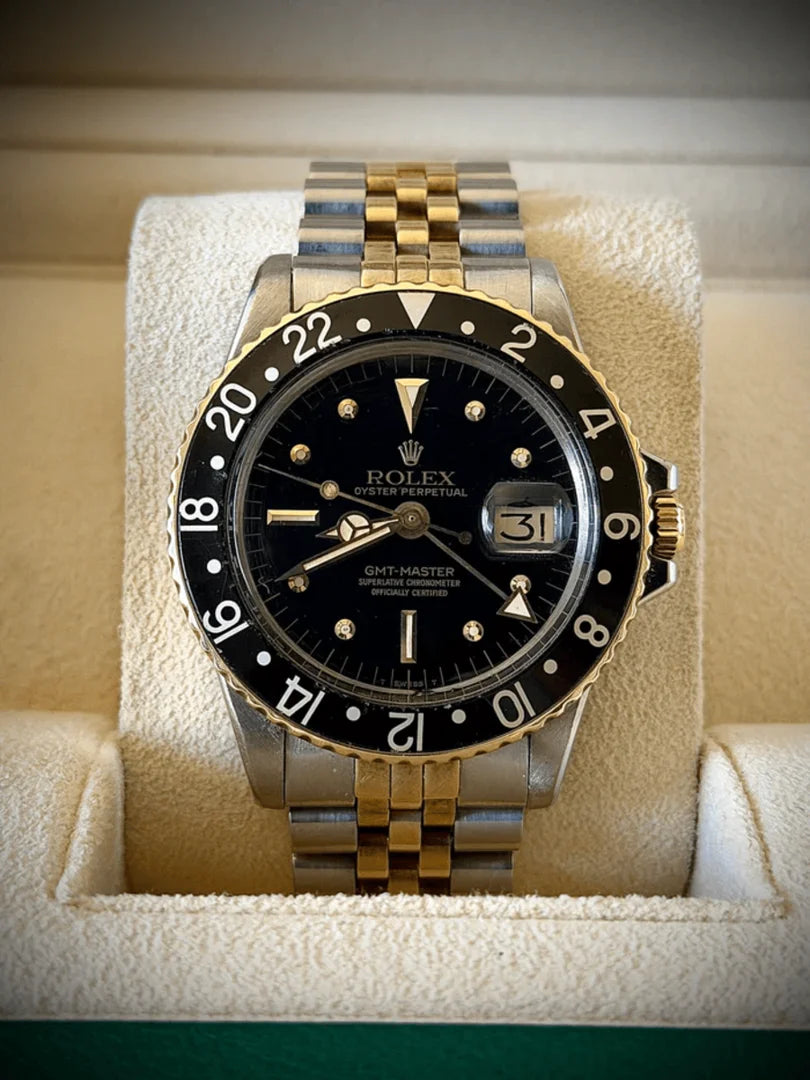
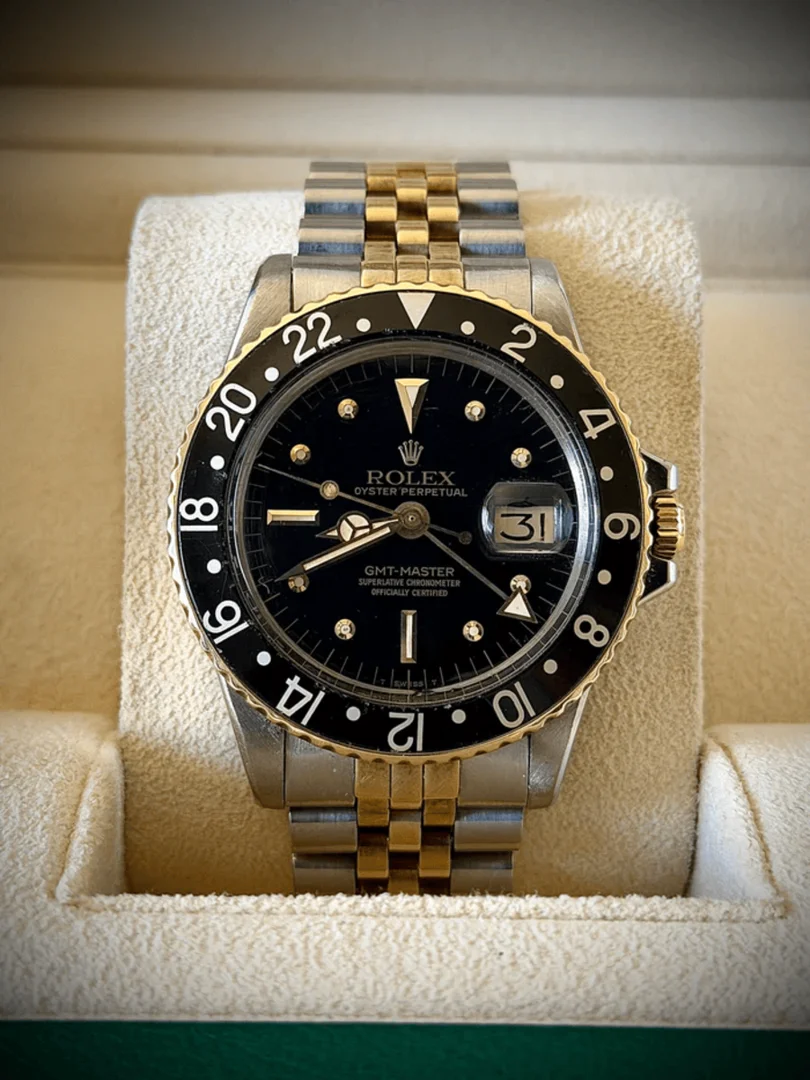
The cyclops lens over the date is one of the easiest details to inspect. On many genuine Rolex date models, the date should appear clearly enlarged and centred in the window. If the date looks small, distorted, or poorly aligned, slow down and compare it with the same reference.
Next, look at the rehaut, which is the inner ring between the dial and crystal. On many modern Rolex watches, the repeated Rolex engraving should be sharp, evenly spaced, and aligned with the dial markers. The serial engraving at 6 o’clock should also look clean rather than shallow or printed.
The tiny coronet etched into the crystal near 6 o’clock is another useful clue. It is subtle and usually needs a loupe and angled light to see properly. If it jumps out clearly to the naked eye, that can be a warning sign. A service crystal can have a small marking within the coronet, so this detail should be read alongside the rest of the watch rather than on its own.
For more external checks, see WristWorks’ guide on how to tell if a Rolex watch is real. Keep the anchor text natural and use the guide as a cross-check, not as a substitute for inspecting the actual watch in front of you.
Review Dial, Lume, and Bezel Details
A Rolex dial should reward close inspection. The text should be crisp, the markers should sit cleanly, and the minute track should look even. Under magnification, poor printing, dust beneath the crystal, uneven lume plots, or messy applied markers are all reasons to pause.
Lume colour can also help. Modern Rolex Chromalight is known for its blue glow, while older materials and different production periods can vary. Use this as a supporting clue rather than a single pass-or-fail test. If a seller claims a watch is modern but the lume behaviour looks inconsistent with that model, ask more questions.
Ceramic bezels deserve close attention too. Engraved numerals should look sharp and properly filled. On many modern sports models, the bezel should not look flat, painted, or cheaply finished. Rotate the bezel if the model has one and listen for clean, precise clicks rather than loose or uneven movement.
Inspect the Movement When Possible
External checks are helpful, but the movement is where many convincing counterfeits fall apart. If you are serious about buying, have the caseback opened by someone with the right tools. Do not let an unprepared seller or casual buyer open it with the wrong equipment, because that can damage the watch.
Inside, a genuine Rolex movement should match the reference and production period. The finishing, rotor, bridge layout, balance system, and engravings should all make sense for that model. Counterfeit movements can imitate the general look, but they often miss the finer details or use parts that do not match the claimed reference.
A timing machine can add another layer of evidence. A healthy modern Rolex should show stable performance, but timing results still need context. Service history, age, magnetisation, and wear can affect the numbers, so a poor result does not automatically mean the watch is fake. It does mean the watch needs closer review before you proceed.
Be Careful With Private Sales
Private sales can look appealing, but they also place more responsibility on the buyer. If the seller is genuine, they should be comfortable with reasonable checks. Be cautious if they rush the conversation, refuse an independent inspection, avoid clear photos, or cannot explain the watch’s ownership history.
Useful documentation can include the original box, papers, purchase details, service records, and clear photos of the actual watch. These items do not prove the watch is original by themselves, but they help build a more complete picture.
Avoid making a decision based only on a low asking price or polished listing photos. A safer process gives you time to compare the reference, check the physical details, and have the movement reviewed where needed. If you are buying through an Australian dealer, look for clear condition notes, actual watch photography, and a process that gives you confidence before you commit.
A Safer Way to Buy a Pre-Owned Rolex
Knowing how to identify an original Rolex watch gives you a stronger starting point, but it should not leave you carrying all the risk alone. The safest path is to combine your own checks with a seller who welcomes scrutiny and can explain how each watch has been reviewed.
At WristWorks in Perth, Western Australia, we focus on transparency and direct ownership. Around 95% of the watches we sell are owned directly by us rather than being consigned, and any consigned pieces are still held by WristWorks with payments handled directly. That keeps the process clear for buyers who want to understand exactly who they are dealing with.
We also present watches with attention to condition. Modern pieces may be lightly polished when appropriate, while vintage pieces are handled more carefully because over-polishing can soften important case lines.
If you are comparing pre-owned Rolex options, start with a careful inspection, ask for clear information, and avoid any seller who makes the process feel rushed. You can explore pre-owned Rolex watches through WristWorks, or submit a watch enquiry if you would like help assessing your next step.