Do Rolexes Tick or Sweep Like Clockwork?
Yes, Rolexes tick: most mechanical Rolex watches move the seconds hand in eight very small increments each second, so it looks like a smooth sweep rather than the single jump you see on a typical quartz watch. That movement is useful context when you are looking at a pre-owned watch, but it is only one part of a careful assessment; compare the hand’s motion with the correct model and era in good light.
Key Takeaways
- Mechanical Rolex models do tick, usually eight times per second, creating a smooth-looking seconds-hand sweep.
- A once-per-second jump is normal on Rolex Oysterquartz models and some historic electronic references.
- The seconds hand does not truly glide because a mechanical escapement releases energy in tiny steps.
- Movement rhythm alone cannot confirm a watch's origin or condition; it should be considered alongside the case, dial, reference details and service history.
- For a closer look at the manufacturer’s technology, see Rolex’s Watch Movement Guide.
Do Rolexes Tick? How Rolex Seconds Hands Move
A mechanical Rolex does not move with a completely continuous glide. Its seconds hand advances in rapid micro-steps that most people read as a sweep. Modern Rolex mechanical movements generally run at 28,800 beats per hour, or 4 Hz. That works out to eight beats per second.
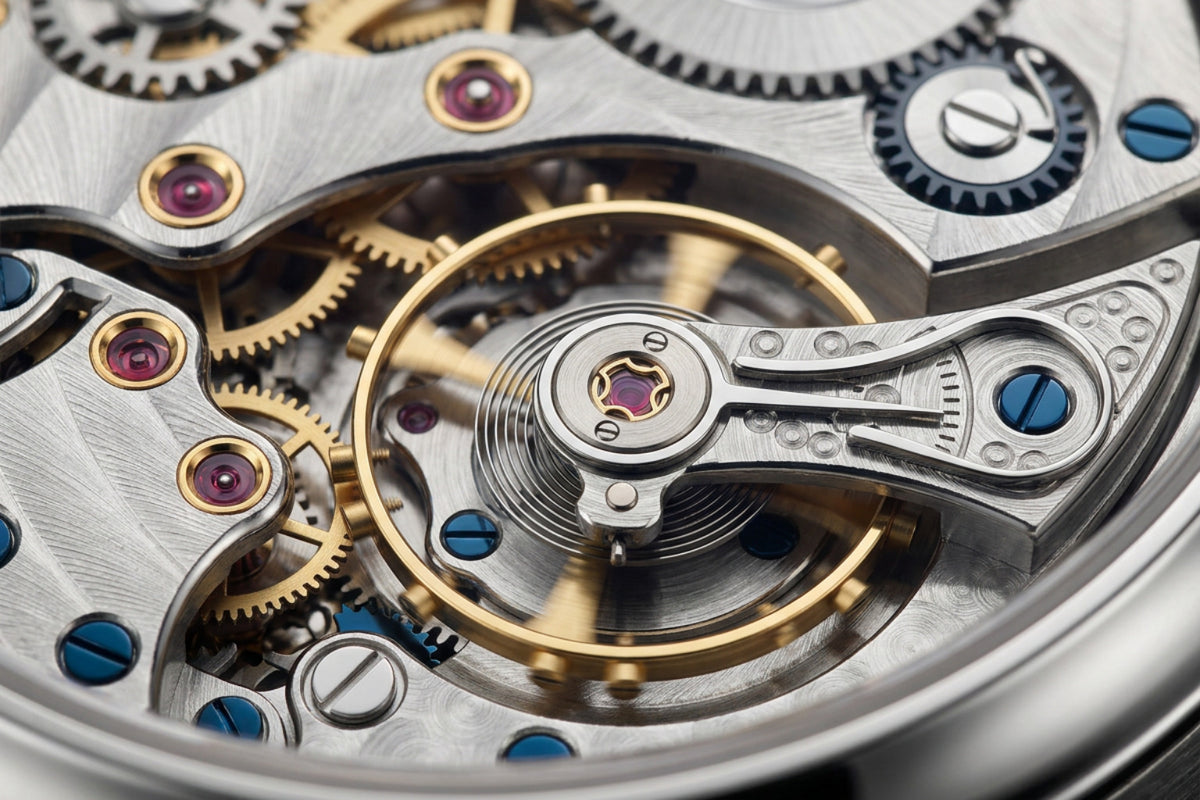
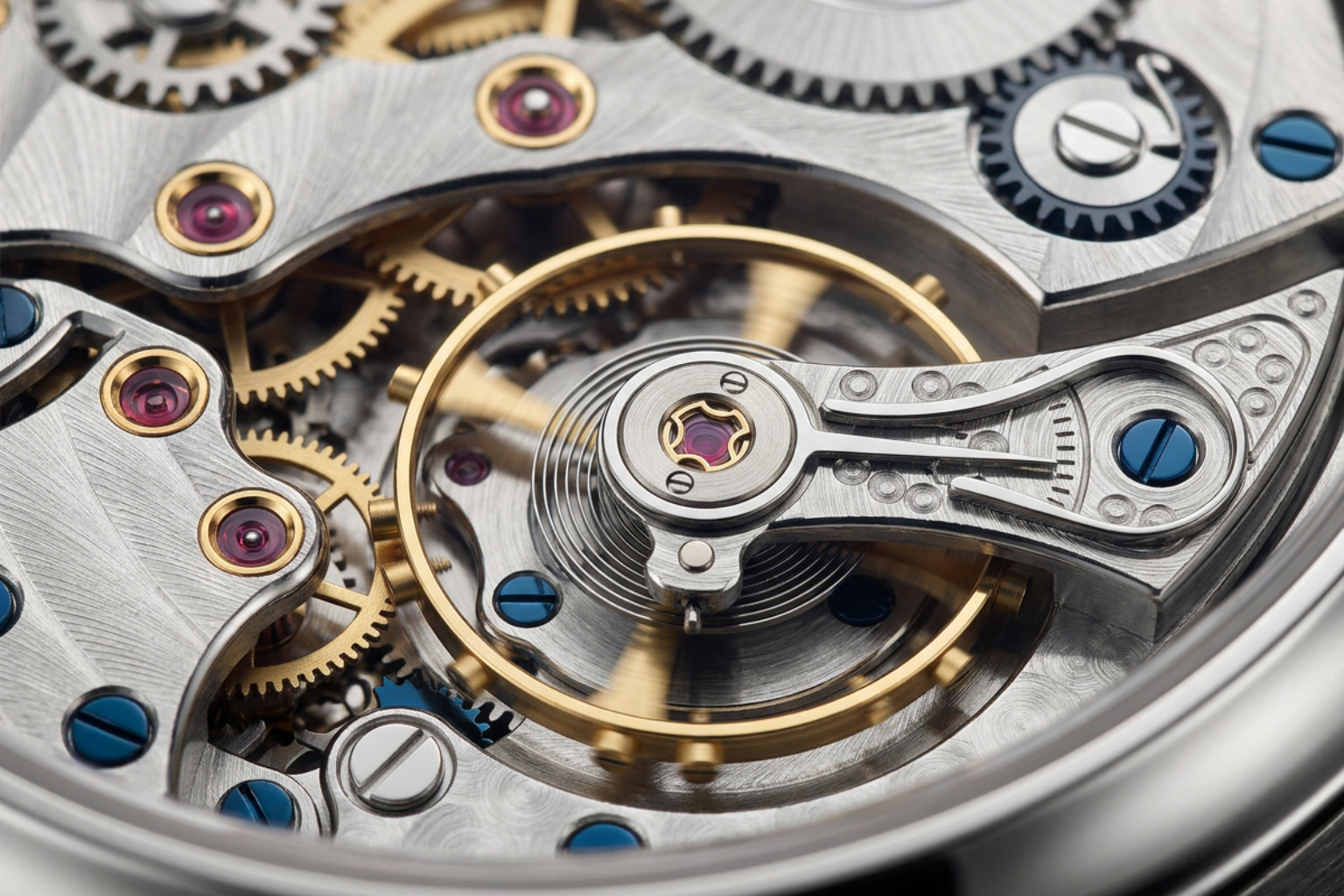
The movement begins with energy stored in the mainspring. As it releases through the gear train, the escapement controls that energy in small, even releases. The pallet fork and balance wheel work together to regulate those releases, moving the seconds hand forward in tiny increments. This is why the hand can look fluid without ever being truly continuous.
Why Does a Mechanical Rolex Look So Smooth?
The visual effect comes down to speed. A basic quartz watch commonly sends one pulse per second to a stepping motor, producing one noticeable jump. A mechanical Rolex divides that second into several smaller movements. From normal viewing distance, your eye tends to blend those movements together.
Lighting, the dial colour and the length of the seconds hand can also change how clearly those individual steps appear. Under close inspection, even a high-frequency mechanical movement shows small advances rather than a perfectly sliding motion. That is normal behaviour, not a defect.
This does not mean every mechanical Rolex has the same visual rhythm. Older calibres can run at a lower frequency, so their seconds hands may look slightly more stepped. For example, Calibre 1570 operates at 19,800 beats per hour, while later calibres such as 3035, 3135 and 3235 operate at 28,800 beats per hour. The difference is visible, but neither pattern should be judged in isolation.
The balance wheel also affects timing stability. Its hairspring expands and contracts as the wheel swings back and forth, while the escapement releases the gear train one tooth at a time. This is the source of both the rapid hand movement and the faint sound you may hear when the watch is held close in a quiet room.
Which Rolex Models Tick Once Per Second?
The major exception is the Oysterquartz range. Rolex introduced Oysterquartz models in the late 1970s, including the Datejust Oysterquartz Ref. 17000 and the Day-Date Oysterquartz Ref. 19018. Their quartz movements use an electronic timing system and stepping motor, so the seconds hand moves once each second.
Another notable reference is the Rolex Quartz Date Ref. 5100, often called the Texan. Produced in 1970, it used the Beta 21 movement. Like other quartz watches, it has a distinct once-per-second motion.
There is also the Rolex Tru-Beat Ref. 6556, a mechanical model designed to make the seconds hand advance once per second. It is an unusual specialist reference rather than the pattern for mainstream mechanical Rolex watches. As with Oysterquartz, the reference number matters before drawing conclusions from the hand alone.
Can You Hear a Rolex Ticking?
Usually, only faintly. A mechanical movement makes a quick, light rhythm as the escapement operates, but the Oyster case reduces much of that sound. You are unlikely to hear it from wrist distance in an ordinary setting.
If a mechanical watch has a loud, slow one-second tick, that is a reason to look more closely at the movement and reference details. It does not, by itself, provide a final answer. Condition, servicing and component history can all affect what you see and hear. A quiet room and a watch held near your ear are more useful for this observation than listening while it is being worn.
Using Movement Motion as One Inspection Clue
Seconds-hand motion can be a helpful starting point when assessing a pre-owned Rolex, especially if a watch is presented as a modern mechanical model. However, it is not a standalone test. Some non-original movements can imitate a smooth sweep, while historic Rolex quartz and Tru-Beat references legitimately move once per second.
A more reliable inspection considers several details together:
- Confirm the reference number and compare it with the movement type expected for that model.
- Check whether the seconds-hand motion matches the period and calibre.
- Inspect the dial, hands, case profile, engravings and bracelet for consistent production details.
- Review available service documentation and look for signs of replacement components or heavy alteration.
- Assess the watch’s running behaviour over time rather than relying only on a brief visual check.
It also helps to take a measured approach to everyday observations. A watch that appears to pause briefly may simply have a dirty crystal, a loose seconds hand or an angle that makes the movement harder to see. Likewise, a movement that seems unusually smooth is not automatically a sign of quality. The expected behaviour depends on the calibre and the watch’s era.
When you can, compare the watch with reliable reference photographs and the published specifications for its exact model number. Look for consistency rather than a single decisive clue. The dial layout, date change, hand shape, bracelet code and case details can be just as useful as the seconds hand. A seller who can clearly explain the watch’s history and provide detailed images also gives you more information to assess. If a detail conflicts with the stated reference, pause before making a decision and seek a fuller inspection.
When winding a mechanical Rolex, the crown should turn with controlled, consistent resistance. Automatic models use a rotor to wind the mainspring during wear, but a stopped watch may simply have exhausted its power reserve. In that situation, unscrew the crown, wind it clockwise around 30 to 40 turns, then secure the crown before wearing it again.
If the watch stops soon after being wound, runs erratically, or its seconds hand appears to stutter, it may need closer assessment. Age, dry lubricants, impact damage and worn parts can affect performance. A proper examination should focus on the whole watch rather than treating one movement symptom as decisive. Keeping notes on when the issue occurs can also make a later assessment more useful.
The same care applies to case condition. Light polishing can be suitable for many modern Rolex sports models, where restoring an even finish may be appropriate. With vintage models, original case lines, chamfers and bevels are usually best preserved, so polishing is generally avoided.
What Seconds-Hand Motion Can Tell You
Knowing how a Rolex seconds hand should move gives you a practical way to ask better questions about a watch. A fast mechanical sweep is typical for many modern models, while a clear one-second tick can be correct on Oysterquartz, Tru-Beat and certain historic electronic references. The key is to assess that movement in the context of the exact reference rather than treating it as a single pass-or-fail test.
If you are considering selling a Rolex, a direct-to-dealer or outright sale provides a straightforward way to have the watch assessed as a complete piece. This approach avoids the uncertainty of private listings and lets the condition, reference and movement be reviewed together. Consignment can be available as a secondary option when it suits a particular watch, but it is not the main route for most sellers.
WristWorks is an online-first business based in Perth, Western Australia. It owns 95% of its inventory directly, holds all consigned pieces in its physical custody, and handles payments directly through its business accounts.
If you would like a clear and practical assessment of your Rolex or another luxury watch, Contact WristWorks to discuss an outright sale or request a valuation.